Read on PBS News
Oklahoma's Political Landscape Shifts as Senate Vacancy Looms
President Donald Trump's nomination of U.S. Senator Markwayne Mullin for Homeland Security secretary has created an unexpected Senate vacancy in Oklahoma. Governor Kevin Stitt will appoint a replacement, promising a 'strong, small government conservative voice' to support the President. This political shift, governed by a new state law, will trigger a special election and reshape the state's political dynamics, with several prominent Republicans expected to vie for the seat.
The political landscape in Oklahoma is poised for significant change following President Donald Trump's decision to nominate the state's junior senator, Markwayne Mullin, for the role of Secretary of Homeland Security. This move creates an unexpected vacancy in the U.S. Senate from a deeply conservative state, setting in motion a unique appointment and election process that will test the cohesion of the Republican Party in Oklahoma.
The Vacancy and Appointment Process
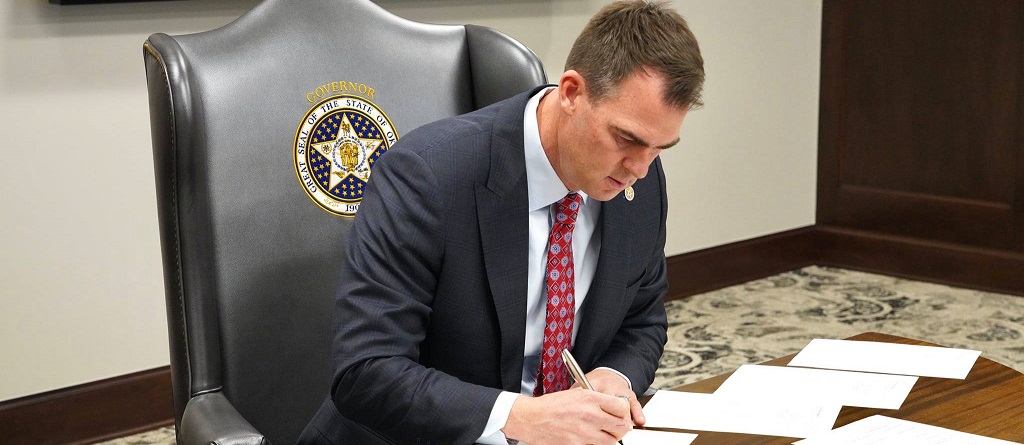
Under a recently enacted Oklahoma law, Governor Kevin Stitt holds the authority to appoint a replacement for Senator Mullin should he be confirmed as DHS Secretary. Governor Stitt has already signaled his intentions, stating he will seek to appoint "a strong, small government conservative voice to support President Trump." This statement underscores the governor's alignment with the former president's agenda and sets a clear ideological benchmark for the potential appointee.
Legal Constraints on the Appointment
The new state law introduces a critical constraint designed to prevent the appointee from gaining an unfair electoral advantage. The individual selected by Governor Stitt will be prohibited from running in the subsequent special election to fill the seat permanently. This provision, as noted by lawmakers, aims to preserve a level playing field and prevent the power of incumbency from skewing the electoral contest. The special election is scheduled for November, meaning the appointed senator will serve for only a matter of months.
Political Dominoes Begin to Fall
The creation of this Senate vacancy is expected to trigger a cascade of political maneuvering within Oklahoma's Republican ranks. Several high-profile figures are anticipated to consider a run for the seat. Potential candidates include U.S. Representatives Kevin Hern of Tulsa and Stephanie Bice of Oklahoma City, as well as former Oklahoma House Speaker T.W. Shannon, who was defeated by Mullin in a GOP primary runoff in 2022. The three-day filing period for candidates begins on April 1.
Context and Historical Precedent
This is not the first time Senator Mullin's seat has been part of a special appointment process. Mullin himself was first elected in 2022 to complete the unexpired term of the late Senator Jim Inhofe, meaning he has not yet served a full six-year term. The rapid succession of vacancies highlights the fluid nature of Oklahoma's federal representation in recent years. Given the state's strong Republican leanings, the GOP is heavily favored to retain control of the seat in the November election.
Conclusion
The nomination of Markwayne Mullin has set the stage for a brief but intense period of political transition in Oklahoma. Governor Stitt's upcoming appointment will place a staunch conservative in the Senate for a short tenure, while the looming special election will determine the state's long-term representation. This process will serve as a key test of Republican unity and strategy ahead of the broader national elections, with the outcome closely watched as an indicator of the party's direction in a solidly red state.