The Unavoidable Energy: Why You Can Never Truly Empty a Box
The concept of a truly empty space is a scientific impossibility due to the quantum mechanical principle of zero-point energy. Even if you remove all visible matter, gases, and hypothetical dark matter from a container, it remains filled with a fundamental, irreducible energy. This ground-state energy, inherent to both quantum fields and particles, prevents complete emptiness and has profound implications for our understanding of physics, from molecular vibrations to the structure of the universe itself. The phenomenon, first explored by Planck and Einstein, reveals that the vacuum is not nothing but a sea of potential.
Imagine the most advanced laboratory in existence. Your goal is simple yet profound: to create a perfect void, to truly empty a box. You meticulously remove every speck of dust, every molecule of gas using powerful vacuum pumps. You even employ speculative technology to evacuate undetectable entities like dark matter. According to classical intuition, the box should now contain nothing—absolute emptiness. Yet, quantum mechanics presents us with a fundamental and unavoidable truth: the box is still teeming with energy. This irreducible residue is known as zero-point energy, or ground-state energy, and it represents a cornerstone of our quantum understanding of reality.
The Quantum Nature of Emptiness
Zero-point energy manifests in two primary forms, as detailed in the reference from Quanta Magazine via Wired. The first is associated with quantum fields, like the electromagnetic field that permeates all space. The second is tied to discrete particles, such as atoms within a molecule. In both cases, the core principle is confinement and the Heisenberg uncertainty principle. This fundamental law of quantum mechanics states that you cannot simultaneously know both the exact position and the exact momentum (or velocity) of a particle. To have zero energy, a particle would need to be perfectly still (zero momentum) at a precise location—a condition the uncertainty principle forbids.
This is analogous to a ball resting at the very bottom of a valley. Even in its lowest possible energy state, the ball retains some inherent jitter or vibration. For a confined particle or a field mode, this means there is always a minimum, non-zero amount of energy present. As physicist Peter Milonni notes, this energy is an unavoidable feature of any confined structure. Your efforts to empty the box, therefore, only remove the excess, classical energy, leaving this quantum bedrock untouched.

Historical Discovery and Observable Effects
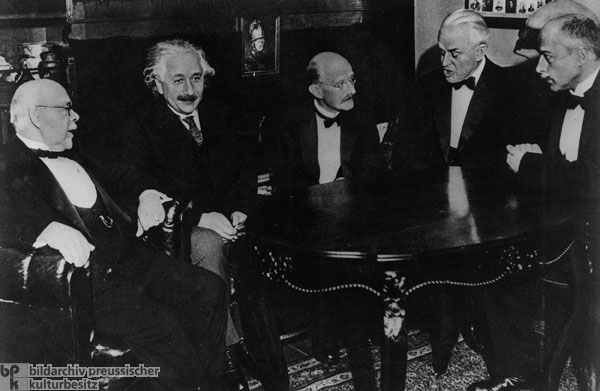
The concept was first introduced by Max Planck in 1911 and later taken seriously by Albert Einstein. They and others used it to explain real-world phenomena that classical physics could not. For instance, molecules and crystal lattices exhibit subtle vibrations even at their absolute coldest possible states. Furthermore, liquid helium remains a liquid under normal pressure even at temperatures infinitesimally close to absolute zero, defying expectation to become a solid—a behavior directly linked to its zero-point motion.
Modern experiments continue to reveal its signatures. A 2025 study on the organic molecule iodopyridine, cooled nearly to absolute zero and then broken apart with a laser, showed that the motions of the freed atoms were correlated. This indicated that the molecule was vibrating in its ground state before being shattered, a direct observation of zero-point energy in action.
The Casimir Effect and the Problem of Infinity
Perhaps the most famous macroscopic demonstration of zero-point energy is the Casimir effect, predicted in 1948. When two electrically neutral, parallel metal plates are placed extremely close together in a vacuum, they experience a slight attractive force. The standard explanation is that the plates act as boundaries for the electromagnetic field, restricting the types of quantum fluctuations that can exist between them. This creates an imbalance in the zero-point energy density inside versus outside the plates, resulting in a net force that pushes them together.
This leads to one of the most perplexing issues in theoretical physics. Quantum field theory describes the vacuum as containing an infinite number of field oscillators, each with its own zero-point energy. This suggests the vacuum holds an infinite amount of energy. While physicists can often manage these infinities by calculating energy differences, gravity presents an intractable problem. As physicist Sean Carroll explains, all forms of energy, including vacuum energy, should gravitate. An infinite vacuum energy would generate a gravitational field so powerful it would tear the universe apart. The fact that our universe is relatively stable is a major unsolved mystery in cosmology, often called the cosmological constant problem.

The Vacuum as a Sea of Potential
Beyond being a stubborn residue or a mathematical challenge, zero-point energy redefines our concept of "nothing." The quantum vacuum is not an inert void but a dynamic substrate brimming with potential. As Peter Milonni describes it, even in the absence of any real particles, the vacuum contains the essence or potentiality of every possible particle and field—"electronness," "quarkness," and forms of matter we have yet to discover. It is "nothing infused with the potential to be anything."
This ground-state energy is therefore more than just the reason you can't empty a box. It is a fundamental feature of spacetime itself, influencing everything from the stability of atoms to the large-scale fate of the cosmos. It tells us that at the most fundamental level, complete stillness and true emptiness are illusions. The universe, even in its quietest state, is always subtly alive with quantum activity.