Ancient Microbes May Have Used Oxygen 500 Million Years Before Atmosphere Filled
New research from MIT suggests life on Earth may have evolved to use oxygen hundreds of millions of years before the Great Oxidation Event permanently filled the atmosphere. By tracing the evolutionary history of a key oxygen-processing enzyme, scientists discovered that aerobic respiration likely emerged during the Mesoarchean era, around 3.2 to 2.8 billion years ago. This finding challenges traditional timelines and suggests early microbes living near oxygen-producing cyanobacteria quickly consumed the gas as it formed, potentially delaying atmospheric oxygen accumulation for hundreds of millions of years.
The story of oxygen on Earth has long been told as a dramatic, singular event: the Great Oxidation Event approximately 2.3 billion years ago, when oxygen permanently accumulated in the atmosphere and paved the way for complex life. However, groundbreaking research from MIT is rewriting this narrative, suggesting that life's relationship with oxygen began far earlier and was far more dynamic than previously imagined.

A study published in Palaeogeography, Palaeoclimatology, Palaeoecology presents molecular clock evidence that a crucial enzyme for aerobic respiration evolved hundreds of millions of years before the Great Oxidation Event. This discovery not only pushes back the timeline for oxygen use but also offers a compelling explanation for why it took so long for oxygen to become a stable atmospheric component.
The Great Oxygenation Mystery
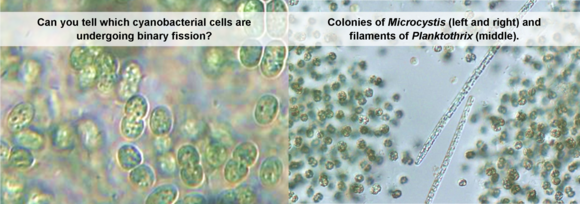
For decades, scientists have puzzled over a significant gap in Earth's oxygenation timeline. Geological evidence indicates that cyanobacteria—the first known oxygen producers—evolved around 2.9 billion years ago. These microbes developed photosynthesis, harnessing sunlight and water to produce energy while releasing oxygen as a byproduct. Yet, oxygen did not permanently accumulate in the atmosphere until approximately 2.3 billion years ago during the Great Oxidation Event.
This 600-million-year gap presented a fundamental question: if oxygen was being produced for so long, why did it take so long to build up? Traditional explanations focused on chemical reactions with rocks and minerals that would have absorbed the oxygen. The MIT research introduces a new, biological player in this ancient drama: early microbes that evolved to consume oxygen almost as soon as it became available.
Tracing the Enzyme Through Time
The MIT team, led by postdoctoral researcher Fatima Husain and associate professor Gregory Fournier, focused their investigation on heme copper oxygen reductases. This enzyme is essential for aerobic respiration because it converts oxygen into water, and it's found in most oxygen-breathing organisms today, from bacteria to humans.
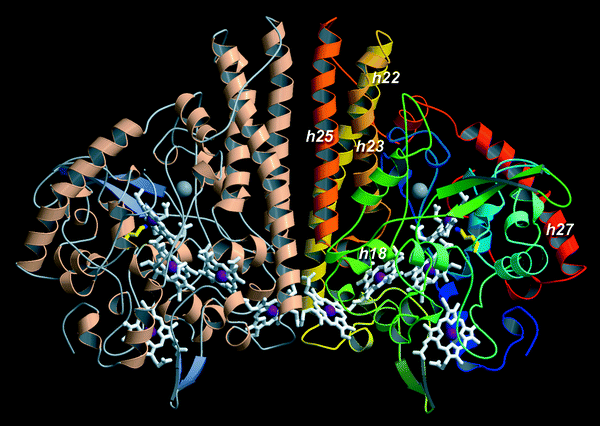
"We targeted the core of this enzyme for our analyses because that's where the reaction with oxygen is actually taking place," Husain explained in the research publication. The researchers identified the enzyme's genetic sequence and searched massive genome databases containing millions of species to find matching sequences.
The challenge, according to Fournier, was the sheer volume of data. "This enzyme is just everywhere and is present in most modern living organisms," he noted. "So we had to sample and filter the data down to a dataset that was representative of the diversity of modern life and also small enough to do computation with, which is not trivial."
Molecular Clock Analysis Reveals Ancient Origins
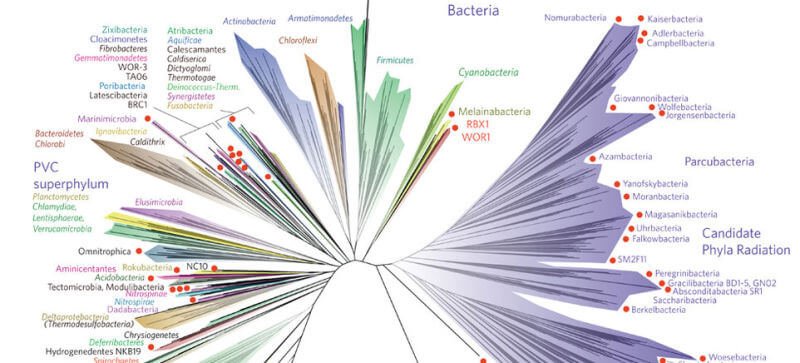
After narrowing their data to several thousand species, the researchers placed the enzyme sequences onto an evolutionary tree of life. By using fossil evidence to anchor specific branches of the tree and applying multiple fossil-based time points, they refined their estimates for when the enzyme first evolved.
Their molecular clock analysis traced the enzyme's origins back to the Mesoarchean era, which spanned from 3.2 to 2.8 billion years ago. This timeframe places the emergence of aerobic respiration capabilities several hundred million years before the Great Oxidation Event.
Implications for Earth's Oxygen History
The findings suggest a revolutionary scenario for early Earth. Shortly after cyanobacteria began producing oxygen around 2.9 billion years ago, other microorganisms living in proximity evolved the enzymatic machinery to consume it. These early aerobic organisms would have acted as biological sponges, quickly absorbing the oxygen as it was released through photosynthesis.

This biological consumption, combined with chemical reactions with rocks, could have created a powerful buffer that prevented oxygen from accumulating in the atmosphere for hundreds of millions of years. Only when oxygen production eventually outpaced both biological and geological consumption did the Great Oxidation Event occur.
"This does dramatically change the story of aerobic respiration," Husain stated. "Our study adds to this very recently emerging story that life may have used oxygen much earlier than previously thought. It shows us how incredibly innovative life is at all periods in Earth's history."
Redefining Life's Adaptability
The research underscores the remarkable adaptability of life on Earth. Rather than waiting passively for environmental conditions to change, early microbes appear to have evolved rapidly to exploit new resources as they became available. This capacity for innovation in the face of changing conditions has been a hallmark of life throughout Earth's history.
The MIT study represents a significant step in filling the gaps in our understanding of Earth's oxygenation process. "Considered all together, MIT research has filled in the gaps in our knowledge of how Earth's oxygenation proceeded," Husain observed. "The puzzle pieces are fitting together and really underscore how life was able to diversify and live in this new, oxygenated world."
This research, supported in part by the Research Corporation for Science Advancement Scialog program, not only rewrites our understanding of Earth's distant past but also highlights the sophisticated methods modern scientists use to unravel ancient mysteries. By combining genomics, evolutionary biology, and geochemistry, researchers can now peer further back in time than ever before, revealing the intricate dance between life and its environment that has shaped our planet for billions of years.