Read on nature.com
Observing Quantum Gyroscopic Motion: A Levitating Magnet's Spinning Effect
In a groundbreaking experiment, physicists have directly observed a 'gyroscopic' quantum spinning effect in a microscopic, levitating ferromagnet. This phenomenon, first theorized by James Clerk Maxwell in 1861, demonstrates a fundamental connection between magnetism and angular momentum at the quantum scale. By suspending the magnet in a superconducting trap, researchers have opened a new window into quantum mechanical behavior, offering potential pathways for advanced sensing technologies and a deeper understanding of condensed matter physics.
For over a century and a half, a subtle prediction linking magnetism to rotational motion has remained a theoretical curiosity. Now, modern physics has brought it into the laboratory. Researchers have achieved a landmark observation: the quantum gyroscopic motion of an isolated, levitating magnet. This experiment, detailed in a recent publication, validates a principle first envisioned by the legendary physicist James Clerk Maxwell and provides a striking demonstration of quantum mechanics in action.
The Maxwellian Prediction and Modern Realization
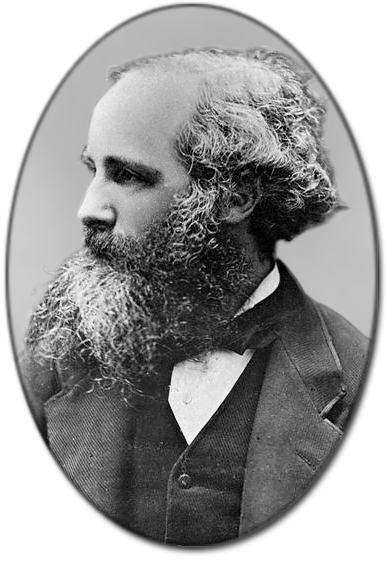
The core of this discovery lies in a concept proposed by James Clerk Maxwell in 1861. Maxwell theorized that a magnetic body should exhibit a gyroscopic effect—a resistance to being tilted, much like a spinning top—due to the intrinsic connection between its magnetic moment and angular momentum. Observing this effect directly in a single, isolated magnet, however, required overcoming immense technical challenges related to isolation from environmental noise and precise measurement at microscopic scales.
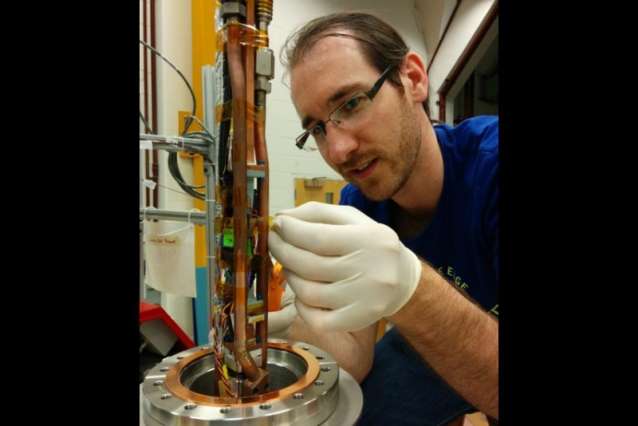
The recent breakthrough, as reported in Nature and based on work by researchers Ahrens and Vinante, involved levitating a microscopic ferromagnet within a superconducting trap. This setup effectively isolates the magnet from most external disturbances, allowing its pure quantum mechanical behavior to be studied. The observation of its gyroscopic precession confirms Maxwell's intuition and provides a clean platform for exploring the quantum dynamics of magnetic systems.
Implications for Quantum Science and Technology
The successful observation of this quantum spinning effect is more than a historical footnote; it has significant implications for several frontiers of physics and engineering. Firstly, it offers a new and highly sensitive method for probing quantum phenomena. A levitating magnet acting as a quantum gyroscope can be exquisitely sensitive to external forces, torques, and fields, potentially surpassing the capabilities of other sensor technologies.
This advancement sits at the intersection of condensed-matter physics and quantum physics, providing a tangible system to study the interplay between magnetic order, angular momentum, and quantum coherence. Furthermore, the techniques developed for trapping and measuring the magnet could inform the design of future quantum devices, including components for quantum computers or networks where precise control over magnetic states is crucial.
Future Directions and Broader Context
This discovery opens several avenues for future research. Scientists can now investigate how this gyroscopic behavior changes under different conditions, such as varying temperatures or magnetic fields, or in different magnetic materials. It also connects to broader efforts in quantum sensing and the ongoing exploration of macroscopic quantum systems.
The work underscores the enduring power of foundational theoretical physics and the remarkable capabilities of modern experimental techniques to test long-standing predictions. As researchers continue to refine their control over such quantum systems, the levitating magnet may become a key tool for both fundamental discovery and technological innovation, bridging a gap between a 19th-century idea and 21st-century quantum science.