Read on France 24
Jesse Jackson's Legacy: A Constitutional Law Professor's Perspective on His Enduring Impact
The passing of civil rights icon Reverend Jesse Jackson has sparked profound reflection on his legacy and the future of the movement he helped shape. In an interview with FRANCE 24, Professor Gloria J. Browne-Marshall, a constitutional law expert and author, argues that Jackson's death will serve as a catalyst to reignite collective action. She posits that this moment can 'harness the power of the people' to advance a vision of America rooted in diversity and democratic participation, countering the influence of concentrated wealth and power. This analysis explores the potential for Jackson's legacy to inspire a new chapter in the nation's ongoing struggle for equality and justice.
The death of Reverend Jesse Jackson, a towering figure in the American civil rights movement, represents more than the loss of a leader; it marks a pivotal moment for reflection and potential renewal. According to constitutional law scholar Professor Gloria J. Browne-Marshall, this event holds the power to mobilize a new generation. In an exclusive interview with FRANCE 24, she suggested that Jackson's passing could 'harness the power of the people again to go forward with a vision of the country that is diverse and not just run by oligarchs'. This perspective frames Jackson's legacy not as a conclusion, but as a rallying point for the continued pursuit of a more equitable and participatory democracy.
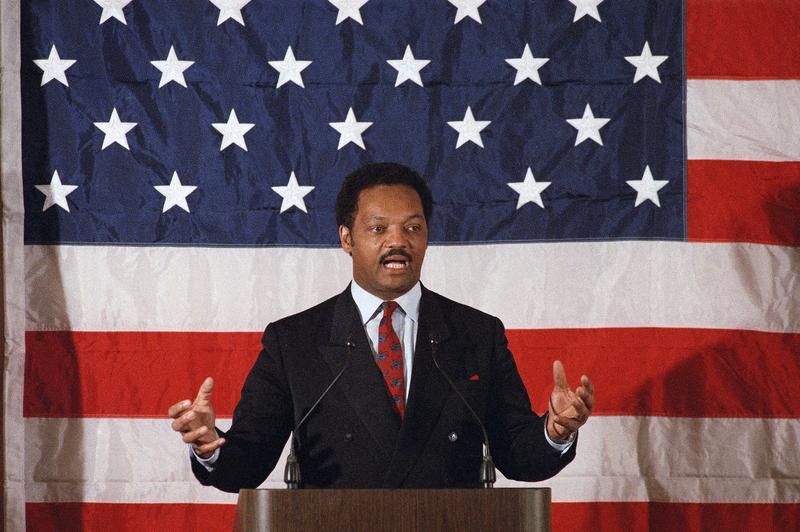
The Constitutional Scholar's Analysis
Professor Gloria J. Browne-Marshall brings a unique lens to this moment. As a Professor of Constitutional Law at John Jay College of Criminal Justice and the author of 'A Protest History of the United States', her analysis is grounded in both legal precedent and historical social movements. Her statement to FRANCE 24 underscores a belief in the cyclical nature of protest and progress. She views moments of profound loss for social movements not as endpoints, but as catalysts that can consolidate purpose and re-energize grassroots power. This interpretation aligns with historical patterns where the martyrdom or passing of a leader has often galvanized their cause, transforming grief into organized action.
Harnessing People Power for a Forward Vision
The core of Browne-Marshall's argument lies in the phrase 'harness the power of the people'. This concept speaks to the foundational American ideal of popular sovereignty—that government derives its power from the consent of the governed. Jackson's life work, from his leadership in the Southern Christian Leadership Conference (SCLC) alongside Dr. Martin Luther King Jr. to his founding of the Rainbow PUSH Coalition, was dedicated to organizing and amplifying that people power, particularly among marginalized communities. His death, in this view, creates a symbolic vacuum and a moment of collective attention that can be channeled into renewed civic engagement and political mobilization.

Confronting Oligarchic Influence with Diverse Democracy
A critical component of the vision Browne-Marshall references is its direct contrast to a nation 'run by oligarchs'. This highlights a central tension in contemporary American politics: the influence of concentrated wealth on political processes and outcomes. Jackson's advocacy was consistently aimed at broadening economic opportunity and political access for African Americans, the working poor, and other disenfranchised groups. His legacy, therefore, provides a framework for challenging systems that prioritize the interests of a powerful few over the needs of the many. The push for a 'diverse' nation is not merely about demographic representation but about building a political and economic system that reflects and serves its entire populace.
The Path Forward: Legacy as a Launchpad
For those inspired by Jackson's life, the challenge and opportunity lie in translating this moment of reflection into sustained action. This involves studying the strategies of past movements—voter registration drives, economic boycotts, coalition-building—and adapting them to modern contexts. It means engaging with the legal and political systems to advocate for policies that promote racial and economic justice. Ultimately, Professor Browne-Marshall's analysis suggests that the most fitting tribute to Jesse Jackson is not passive mourning, but active participation in shaping the country's future, ensuring his decades of struggle fuel the next chapter of progress.