Read on the Guardian
Targeting Russia's Oil Lifeline: Bill Browder's Strategy to End the Ukraine War
Bill Browder, the prominent Kremlin critic and architect of the Magnitsky Act sanctions, has proposed a new strategy to financially cripple Vladimir Putin's regime and end the war in Ukraine. He identifies refineries in China, India, and Turkey as critical nodes funnelling up to $1 billion daily to Moscow by processing Russian crude oil. Browder argues that sanctioning these plants is the most direct way to cut off Putin's war funding, a move he believes could force an end to the conflict within six months. This article examines his proposal, the stalled efforts to seize frozen Russian assets, and the geopolitical complexities of targeting third-country refineries.
For over a decade, financier-turned-activist Bill Browder has waged a relentless financial war against Vladimir Putin's regime. His efforts, stemming from the 2009 death of his lawyer Sergei Magnitsky in a Moscow prison, have evolved into a global campaign for sanctions and accountability. As the war in Ukraine approaches its fourth year with no clear end in sight, Browder has shifted his focus to what he calls the Kremlin's "financial jugular": the international refineries processing Russian crude oil. He argues that without this daily infusion of hundreds of millions of dollars, Putin's ability to sustain his military campaign would collapse.

The $1 Billion-a-Day Lifeline
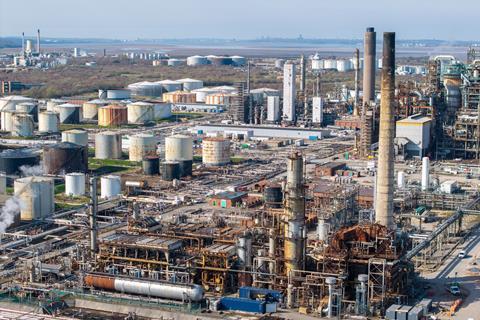
According to analysis presented by Browder, a select group of eight refineries across China, India, and Turkey are collectively funnelling between $500 million and $1 billion daily to the Russian state. These plants purchase Russian crude oil, process it into petrol, diesel, and jet fuel, and provide the hard currency that funds Moscow's war machine. "It's just the most straightforward, obvious thing I've ever seen," Browder stated in an interview covered by The Guardian. "How does Putin afford this war? And it's with the sale of crude oil."
Browder's strategy is starkly simple: impose secondary sanctions on the owners of these refineries. By cutting off their access to Western financial systems and markets, the goal is to force them to stop purchasing Russian oil. He contends that if these three primary buyers were removed from the market, Russian oil would become a pariah commodity—"the oil equivalent of blood diamonds"—and would sell at a catastrophic discount. "I believe in six months' time, Putin would be pretty much out of business," he predicts.
Beyond the Shadow Fleet
Recent Western efforts have concentrated on disrupting Russia's "shadow fleet" of tankers, which use opaque ownership structures to evade sanctions and transport oil. Browder views this as an indirect and complex approach. "You can either go to the people who buy the oil and they don't buy it, or you can go to the 200 ships that are transporting the oil and they don't transport it," he argues. "It's easier to get the people." Targeting the refineries themselves, he suggests, applies pressure at the point of purchase, a more efficient choke point than interdicting transportation.
There are tentative signs this market pressure may be having an effect. Reports indicate that deliveries of Russian crude to Indian ports fell to their lowest level in over three years in December, suggesting some refiners are beginning to reassess their reliance on Russian supplies due to reputational and regulatory risks.
The Stalled Asset Seizure and Geopolitical Realities
Browder's refinery proposal comes as another of his major campaigns—to have over $200 billion in frozen Russian sovereign assets transferred to Ukraine—has hit a significant roadblock. These assets, largely held at the Belgian depository Euroclear, have been the subject of tortuous negotiations. While Europe agreed in late 2023 to lend Ukraine €90 billion, the outright seizure of the frozen principal remains off the table.
Belgian Prime Minister Bart De Wever has been a primary opponent, arguing that confiscating sovereign assets would constitute "an act of war" that Europe, officially not a combatant, cannot undertake. Browder dismisses this reasoning, accusing De Wever of prioritizing personal safety—the Prime Minister has faced threats over the issue—over strategic necessity. Browder points out that Europe is already handing the interest earned on these frozen assets to Kyiv, making a transfer of the principal a logical extension of existing policy.

The Intractable Nature of the Conflict
Browder's urgency stems from a bleak assessment of the war's dynamics, shared by other observers like Finnish President Alexander Stubb. They argue Putin has no viable exit strategy. "Putin has no ability to stop the war because he started the war as a war of distraction against his own incompetence," Browder explains. For Putin, the war serves to create a foreign enemy and divert domestic discontent. Stopping it would likely mean losing power and facing dire consequences. Conversely, Ukraine cannot stop defending itself, knowing the brutal fate that awaits under occupation, as witnessed in Bucha.
This creates a deadly stalemate where financial pressure becomes one of the few viable tools to alter the calculus. President Stubb noted at Davos that Russia's exhausted finances, economic stagnation, and high inflation mean it "cannot afford" to end the war, highlighting the regime's financial vulnerability.
Conclusion: A Financial Path to Peace?
Bill Browder's campaign to sanction refineries in China, India, and Turkey presents a high-stakes, controversial strategy to end Europe's largest conflict since WWII. It moves the sanctions battlefield from shadowy tankers to fixed, identifiable industrial facilities in third countries, challenging the international community to enforce secondary sanctions on a new scale. While politically and diplomatically fraught, the proposal underscores a central reality: as long as hundreds of millions of dollars flow daily from global refineries to the Kremlin, Putin's war chest remains funded. Disrupting this lifeline may be, as Browder insists, the most direct financial path to peace.