Read on bbc.com
Malian Lawmaker Jailed in Ivory Coast for Insulting President: A Diplomatic Tension Case
Malian lawmaker Mamadou Hawa Gassama has been sentenced to three years in prison by an Ivorian court for publicly insulting President Alassane Ouattara. The case highlights the ongoing diplomatic tensions between Mali's military junta and neighboring Ivory Coast, stemming from Mali's 2020 coup and subsequent foreign policy shifts. This article examines the legal proceedings, the political context of strained West African relations, and the broader implications for free speech and regional diplomacy.
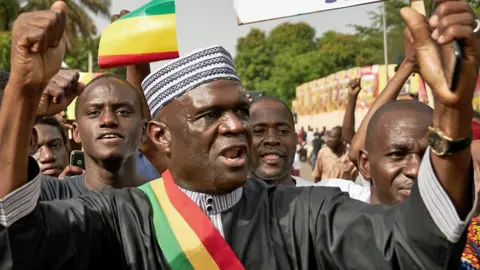
The sentencing of a Malian parliamentarian by an Ivorian court has brought into sharp focus the fragile diplomatic relations between two West African neighbors. Mamadou Hawa Gassama, a member of Mali's transitional parliament established by the ruling military junta, received a three-year prison term in Ivory Coast for publicly describing President Alassane Ouattara as a "tyrant" and "an enemy of Mali." This legal action represents more than a simple defamation case—it serves as a manifestation of deeper political fractures that have developed since Mali's military seized power in 2020.
The Legal Case and Arrest
According to BBC reporting, Gassama was arrested in July 2025 while visiting Ivory Coast. Prosecutors presented evidence that the lawmaker had made derogatory statements about President Ouattara in interviews and on social media platforms. The court determined that his remarks extended beyond acceptable political criticism and constituted deliberate attempts to undermine Ivorian institutions and sow discord between the two nations. Gassama's lawyer, Mamadou Ismaila Konate, described the three-year sentence as "excessive" and "very severe," arguing that the punishment did not fit the alleged offense.
Political Context and Regional Tensions
The case cannot be understood in isolation from the broader political landscape of West Africa. Since the Malian military overthrew the civilian government in 2020, relations with Ivory Coast have been notably strained. President Ouattara, a key ally of France—the former colonial power in both nations—has been openly critical of the coup and subsequent military takeovers in the region. This political divergence has created a diplomatic chill that now manifests in legal confrontations like the Gassama case.

Historical Precedents and Diplomatic Rows
This incident follows a previous diplomatic crisis that erupted two years after Mali's coup, when 49 Ivorian soldiers were sentenced to 20 years in prison by a Malian court for allegedly undermining state security. Ivory Coast maintained that the soldiers were part of a United Nations peacekeeping mission combating militant Islamists in Mali. The soldiers were eventually released following mediation efforts led by Togo, but the episode left lasting scars on bilateral relations. These consecutive incidents illustrate how legal systems can become instruments of political tension between neighboring states.
Broader Implications for Regional Politics
The Gassama case raises significant questions about freedom of expression, diplomatic immunity for foreign officials, and the intersection of law and international relations. As reported by the BBC, the Malian authorities have remained notably silent on the matter since Gassama's arrest, suggesting either a deliberate diplomatic strategy or internal divisions about how to respond. The situation also reflects Mali's shifting foreign policy priorities under military rule, which has seen the country distance itself from traditional French partnerships while strengthening ties with Russia, including the deployment of Russian mercenaries to address security challenges in the Sahel region.
Conclusion
The imprisonment of Mamadou Hawa Gassama represents a significant moment in West African diplomacy, highlighting how political disagreements between nations can translate into legal consequences for individuals. As Mali continues its transitional government period and Ivory Coast begins President Ouattara's fourth term, the relationship between these neighboring countries will likely remain complex and potentially contentious. This case serves as a reminder that in an interconnected region, words spoken in one nation can have serious repercussions in another, particularly when they touch upon sensitive political relationships and national pride.