Zelenskyy Welcomes Potential Pause in Attacks as Ukraine Battles Winter Crisis
Ukrainian President Volodymyr Zelenskyy has welcomed a potential seven-day pause in Russian attacks on Kyiv and other cities, announced by U.S. President Donald Trump. This development comes as Ukraine faces a severe humanitarian crisis, with hundreds of residential buildings in the capital lacking heating amid plummeting temperatures. The pause, reportedly discussed during ceasefire talks in the United Arab Emirates, is seen as a critical step for civilian safety during extreme winter conditions, though broader ceasefire prospects remain uncertain.
Ukrainian President Volodymyr Zelenskyy has described a potential temporary halt in Russian attacks as an "important statement" for civilian security, as Ukraine grapples with a dire winter emergency. The announcement follows U.S. President Donald Trump's claim that Russian President Vladimir Putin agreed to a week-long pause in bombing Kyiv and other towns due to severe cold. This development highlights the intersection of geopolitical negotiations and immediate humanitarian needs in the ongoing conflict.
The Announcement and Diplomatic Context
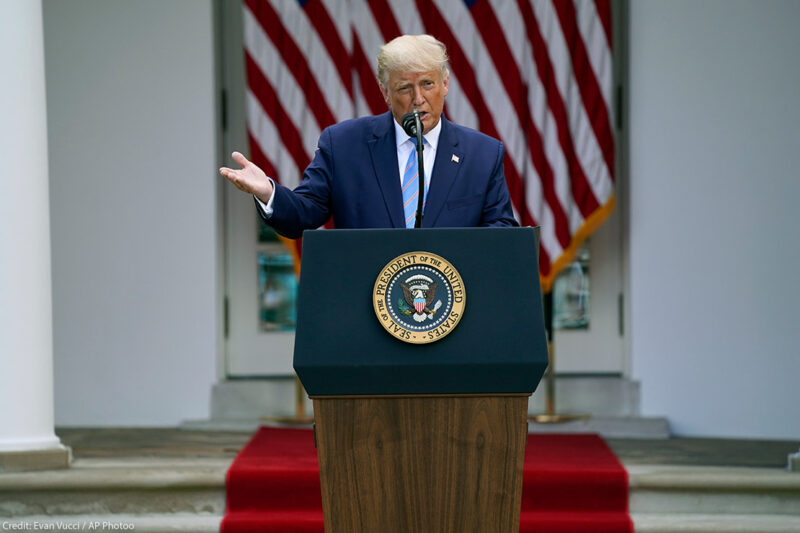
On January 30, 2026, U.S. President Donald Trump stated at a cabinet meeting that he had personally requested Russian President Vladimir Putin refrain from attacking Kyiv and various Ukrainian towns for one week. Trump cited the "extraordinary cold" affecting the region as the primary reason for this request, to which Putin reportedly agreed. This announcement was framed as a humanitarian gesture in response to extreme winter conditions.
Ukrainian President Volodymyr Zelenskyy responded via social media, welcoming Trump's comments as a significant development. Zelenskyy indicated that such a pause had been a topic of discussion among negotiators during recent ceasefire talks held in the United Arab Emirates. He expressed expectation that these agreements would be implemented, stating that "de-escalation steps contribute to real progress toward ending the war." This sequence of statements suggests a coordinated, though informal, diplomatic effort to address the immediate winter crisis.
The Humanitarian Crisis in Ukraine
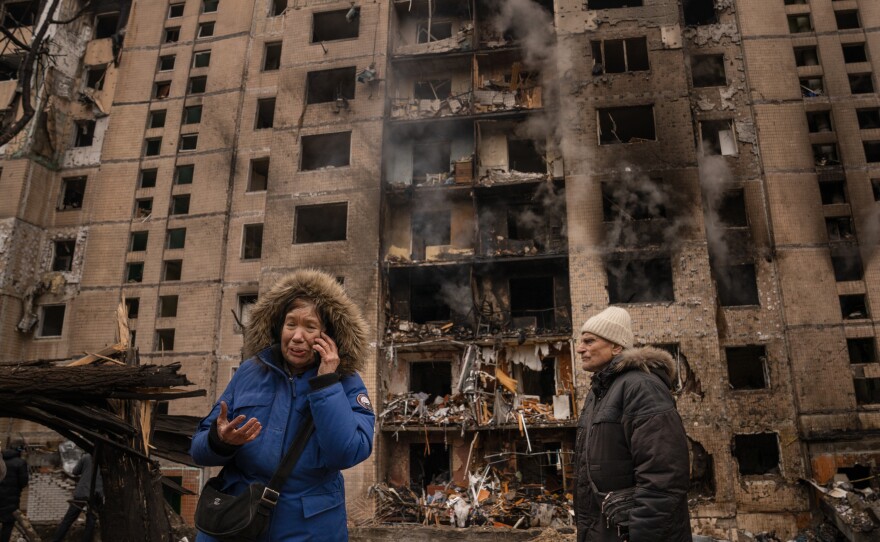
The potential pause in attacks comes against a backdrop of severe infrastructure damage and civilian suffering. Kyiv Mayor Vitali Klitschko reported on January 30 that 454 residential buildings in the capital remained without heating. This situation is a direct result of repeated Russian bombings targeting Ukraine's power and heating infrastructure in recent weeks, crippling the country's ability to maintain basic services during winter.
Temperatures in Kyiv were forecast to drop to -23 degrees Celsius (-9.4 degrees Fahrenheit) overnight, creating life-threatening conditions for residents without reliable heating. In response to the crisis, the Ukrainian government has established aid points where residents can warm up, charge devices, receive hot drinks, and access psychological support, as documented by Reuters on January 25, 2026. The scale of the humanitarian need underscores the urgency of the proposed bombing pause.

Broader Ceasefire Prospects and Challenges
While the potential seven-day pause represents a temporary humanitarian measure, broader prospects for a lasting ceasefire remain uncertain. On the same day as the announcements, Russian Foreign Minister Sergey Lavrov expressed skepticism about ceasefire negotiations. According to Russia's state TASS news agency, Lavrov claimed Moscow had not yet seen a revised 20-point ceasefire plan that Ukraine and its allies had reportedly "reworked."
Lavrov further accused Ukraine of using previous brief pauses in fighting to "push" people to the front lines, suggesting a deep lack of trust between the negotiating parties. This context indicates that while short-term humanitarian arrangements might be feasible, significant obstacles remain for a comprehensive peace agreement to end the nearly four-year conflict.
Parallel Developments and Regional Context
Other developments on January 30 included the exchange of bodies of soldiers killed in the war, with officials from both Russia and Ukraine confirming the return of 1,000 Ukrainian soldiers' remains. Such exchanges have occurred during previous rounds of talks but have not led to a breakthrough in ending the war.
The winter crisis is not confined to Ukraine. Russia's capital, Moscow, experienced its heaviest snowfall in 200 years during January 2026, according to the meteorological observatory of Lomonosov Moscow State University. This extreme weather across the region adds a layer of environmental pressure to the already complex geopolitical situation, potentially influencing the calculus of all parties involved.

Analysis and Implications
The proposed bombing pause represents a rare instance of potential cooperation on humanitarian grounds within a protracted conflict. If implemented, it would provide a critical window for repair crews to restore heating to damaged buildings and for humanitarian organizations to deliver essential supplies to vulnerable populations. For President Zelenskyy, securing such a pause is both a practical necessity for his citizens' survival and a diplomatic achievement that could build momentum for further negotiations.
However, the temporary nature of the arrangement and the conflicting statements from Russian officials highlight the fragility of the situation. The war's ultimate resolution appears distant, with fundamental issues of territory and security unresolved. The winter of 2026 may be remembered as a period when extreme weather forced a momentary reduction in violence, offering a glimpse of what a cessation of hostilities could mean for civilian life, even as the path to a lasting peace remains fraught with challenges.