Read on Global News
U.S. Announces Reopening of Venezuelan Airspace, Signaling Diplomatic Shift
In a significant policy reversal, U.S. President Donald Trump announced on January 29, 2026, that he has instructed officials to reopen all commercial airspace over Venezuela, allowing American citizens to travel there 'very shortly.' This move follows a U.S. military raid that ousted former President Nicolás Maduro and represents a potential thaw in relations that collapsed in 2019. The announcement includes plans for American Airlines to resume service, while the State Department's travel advisory remains at its highest level, highlighting the complex and evolving situation.
In a notable development in U.S.-Venezuela relations, President Donald Trump announced on Thursday, January 29, 2026, a directive to reopen Venezuela's commercial airspace to American travel and commerce. This policy shift, reported by The Associated Press via Global News, marks a potential diplomatic thaw following years of tension and a recent U.S. military intervention. The move signals a new phase in engagement with the South American nation, though it is accompanied by significant caveats and unfolds within a complex geopolitical landscape.

The Announcement and Immediate Implications
President Trump stated he had informed acting Venezuelan President Delcy Rodríguez of the decision and had instructed U.S. Transportation Secretary Sean Duffy and U.S. military leaders to execute the reopening by the end of the day. "American citizens will be very shortly able to go to Venezuela, and they’ll be safe there," the President asserted during a cabinet meeting. This announcement directly reverses a position from November, when Trump declared the airspace "above and surrounding" Venezuela "closed in its entirety" amid escalating pressure on the Maduro regime.
Context: From Raid to Rapprochement
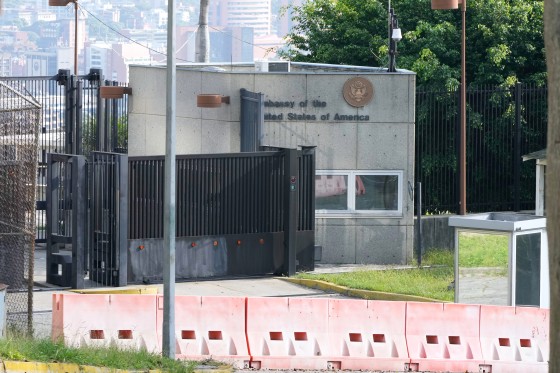
This airspace decision is not an isolated event but part of a broader, cautious effort to restore relations following the U.S. military raid that ousted then-President Nicolás Maduro. Earlier in the same week, the Trump administration notified Congress it was taking initial steps to potentially reopen the shuttered U.S. Embassy in Caracas. The State Department, in letters to congressional committees, outlined a "phased approach" involving sending temporary staff to conduct select diplomatic functions, exploring a resumption of official operations.
Commercial and Travel Realities
The practical effect of the airspace reopening is already materializing in the commercial aviation sector. American Airlines, which was the last U.S. carrier serving Venezuela before suspending flights in March 2019, announced its intention to reinstate nonstop service. Nat Pieper, American's chief commercial officer, cited a "more than 30-year history" and a goal to reunite families and foster commerce. However, the airline noted it must work with federal authorities on security assessments before finalizing plans. This commercial readiness contrasts sharply with official U.S. travel guidance. As of the announcement, the State Department's travel advisory for Venezuela remained at Level 4: "Do Not Travel," citing risks of wrongful detention, kidnapping, and crime.
Analysis of a Strategic Pivot
The decision to reopen airspace represents a strategic pivot from isolation to engagement. Diplomatic relations collapsed completely in 2019, leading to the embassy closure and the highest-level travel warnings. The recent military action created a new political reality, which the administration now seeks to stabilize through renewed diplomatic and economic channels. However, the disconnect between the President's safety assurances and the State Department's standing warnings underscores the nascent and potentially risky nature of this outreach. Venezuela's government had not issued an immediate comment on Trump's announcement, leaving its cooperation an open question.
Conclusion and Forward Outlook
The reopening of Venezuelan airspace by U.S. order is a significant symbolic and practical step toward normalizing a fraught bilateral relationship. It facilitates potential family reunifications, business links, and diplomatic presence. Yet, it is merely the opening move in a delicate and protracted process. The success of this initiative will depend on continued security assessments, the response of the Venezuelan government, and the alignment of bold presidential announcements with cautious diplomatic and security protocols on the ground. The world will be watching to see if this corridor in the air leads to more solid footing on the ground for U.S.-Venezuela relations.