Read on the Guardian
Trump's Executive Order Targets Cuba's Oil Supply with New Tariff Threats
President Donald Trump has signed an executive order establishing a framework to impose tariffs on countries that sell oil to Cuba, declaring a national emergency over the island nation's ties to hostile powers. The order escalates the administration's pressure campaign to destabilize Cuba's communist government, which is already facing severe economic strain from the loss of its primary oil supplier, Venezuela. This analysis examines the order's mechanics, its geopolitical context, and the immediate impacts on Cuba's fragile economy.
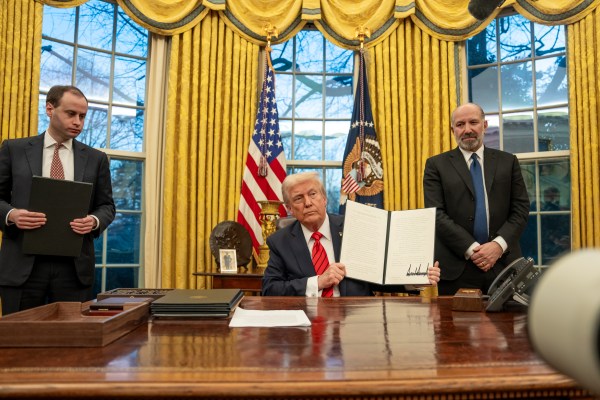
In a significant escalation of the United States' long-standing pressure campaign against Cuba, President Donald Trump signed an executive order on January 29, 2026, that lays the groundwork for imposing tariffs on nations providing oil to the Caribbean island. The order, framed as a response to a national emergency, represents a strategic pivot aimed at economically isolating the communist government in Havana by targeting its energy lifeline. This move comes as Cuba grapples with a profound economic crisis, exacerbated by the recent loss of Venezuelan oil supplies following the arrest of Nicolás Maduro. The policy underscores the Trump administration's commitment to a maximum-pressure strategy, seeking to leverage economic tools to achieve foreign policy objectives.
The Executive Order and Its Legal Framework
The executive order signed by President Trump declares that the actions of the Cuban government, specifically its alleged ties to nations and groups hostile to the United States, constitute "an unusual and extraordinary threat to US national security and foreign policy." This declaration of a national emergency provides the legal authority for the administration to implement extraordinary economic measures. The order establishes a formal process whereby the US Secretaries of State and Commerce are tasked with assessing and recommending tariffs against any country found to be selling or otherwise providing petroleum to Cuba. While specific tariff rates have not yet been announced, the mechanism is now in place, creating immediate uncertainty for Cuba's remaining trade partners.
Geopolitical Context and Cited Threats
The White House justification for the order explicitly cites Cuba's relationships with what it terms "hostile powers," including Russia, Hamas, and Hezbollah. This framing links the island's domestic governance to broader global security concerns, a tactic designed to garner domestic and international support for the punitive measures. The administration's strategy appears to be an extension of its efforts to collapse the Venezuelan government of Nicolás Maduro, which was Cuba's principal oil patron. With Maduro's arrest and extradition to the United States on drug-trafficking charges, Cuba lost access to approximately 70,000 barrels of oil per day. The new tariff threat aims to prevent other nations from filling this void, thereby intensifying the economic siege on Havana.

Immediate Impact on Cuba's Economy
Cuba, an import-dependent nation of about 11 million people with a GDP comparable to a small US state, is uniquely vulnerable to energy shocks. Even before this latest order, the country was implementing severe austerity measures, including gasoline rationing and scheduled daily electricity blackouts, due to critically low oil inventories. Reports indicate the island has only 15 to 20 days' worth of oil reserves. The loss of Venezuelan oil and the threat of tariffs on other suppliers have pushed the economy to a breaking point. President Trump himself predicted the regime's imminent failure, stating, "Cuba will be failing pretty soon... They got the oil from Venezuela. They're not getting that any more." The economic turmoil has also devastated the vital tourism sector, further depriving the government of hard currency.
International Reactions and the Case of Mexico
The order places immediate pressure on Cuba's remaining oil suppliers, with Mexico being a primary focus. Mexico has been a significant provider, supplying Cuba with roughly 20,000 barrels per day for much of the previous year. Mexican President Claudia Sheinbaum has publicly clashed with the Trump administration over the issue, asserting Mexico's sovereign right to fulfill its contractual obligations with Havana and to provide humanitarian aid. "The humanitarian aid will continue, as it does to other countries," Sheinbaum stated. "Mexico has always shown solidarity with the entire world. They are sovereign decisions." Despite this defiant stance, reports indicate that Mexican oil shipments to Cuba have been temporarily paused, suggesting the tariff threat is already influencing behavior.

Strategic Implications and Future Outlook
This executive order represents a significant hardening of US policy toward Cuba, moving beyond the decades-old embargo to actively penalize third countries for engaging with Havana. The strategy carries risks, including potential friction with allies and questions about the efficacy of economic coercion in achieving political change. Secretary of State Marco Rubio, a longtime hardline opponent of the Cuban government, is a key architect of this approach. The coming weeks will be critical as the administration defines the specific tariff rates and begins its assessments of trading partners. For Cuba, the options are dwindling. The government must find alternative energy sources, negotiate with the US, or face the prospect of deeper economic collapse and potential social unrest. The success or failure of this tariff policy will be a major test of the Trump administration's foreign policy doctrine of economic statecraft.