Read on France 24
Capgemini Under Fire: French IT Giant's Decades-Long ICE Contract Sparks Ethical Crisis
French multinational Capgemini faces intense scrutiny and political backlash over revelations that its US subsidiary has maintained a nearly two-decade relationship with US Immigration and Customs Enforcement (ICE). A controversial 'skip tracing' contract, potentially worth over $365 million, involves tracking migrants for enforcement operations. Investigations show Capgemini Government Solutions has become 'essential' to ICE's detention and deportation systems, with 65% of its US federal contracts tied to the agency. The scandal has triggered union condemnation, government demands for transparency, and an extraordinary board meeting as the company grapples with the ethical implications of its work.
The revelation of a deep, long-standing contractual relationship between French IT behemoth Capgemini and the United States' Immigration and Customs Enforcement (ICE) has ignited a firestorm of ethical and political controversy. While Capgemini's leadership claims recent awareness of a specific "skip tracing" contract through public sources, journalistic investigations paint a picture of an indispensable, nearly 20-year partnership integral to ICE's enforcement apparatus. This scandal places a European corporate giant at the heart of America's contentious immigration policies, forcing a reckoning with the moral responsibilities of global technology contractors.

The Controversial "Skip Tracing" Contract
At the center of the current scandal is a framework agreement between Capgemini Government Solutions (CGS) and ICE, first revealed by independent media. The contract, capped at over $365 million with nearly $4.8 million already committed, is for "skip tracing" services. This practice involves using data-driven techniques to locate individuals whose whereabouts are unknown. For ICE, this means verifying home and work addresses of migrants to support removal operations.
According to reporting by Wired and The Intercept, the contract's structure includes monetary performance bonuses, creating an incentive system critics equate with employing private "bounty hunters." Contractors are expected to use government case data alongside commercial databases, public records, phone and social media information, and even physical surveillance to confirm locations. The Intercept reported that at least 10 companies could collectively make well over $1 billion from the program through 2027, with Capgemini positioned for the largest potential share.

A Two-Decade Dependency
Far from being an isolated deal, the skip tracing contract is part of a profound and enduring relationship. French outlet Les Jours reported that Capgemini Government Solutions' ties with ICE stretch back nearly two decades. US government spending records show that a staggering 65% of all federal contracts awarded to CGS were with ICE. As early as 2007, contracts covered critical operational planning, including modeling the agency's detention capacity.
This dependency is reinforced by a "revolving door" of personnel between ICE and CGS, ensuring deep institutional knowledge and continuity. A former senior ICE official told Les Jours, "If you fire them, ICE would be paralysed. They've become essential to certain parts of the system, it's very hard to get rid of them." This embedded role spans detention management, deportation logistics, and individual tracking, making CGS a cornerstone of ICE's operational capabilities.
Scrutiny and Oversight Failures
The depth of this relationship has previously attracted official scrutiny. A 2021 audit by the Department of Homeland Security Office of Inspector General flagged significant performance and oversight failures in ICE's management of the Capgemini contract. The audit found that ICE "did not properly construct or monitor the contract" and that the contractor failed to specify staffing levels for key labor categories. Consequently, ICE "cannot ensure it received all services and may have overpaid $769,869 in labor cost." The watchdog also concluded ICE did not verify that CGS met requirements for staff skills, education, and experience.
Mounting Political and Union Pressure in France
The revelations have triggered a significant backlash in Capgemini's home country, where the company is partly state-owned. French unions have been vocal in their condemnation. The CFDT union strongly condemned the ICE contract and demanded more transparency, a call made more poignant as Capgemini plans to cut up to 2,400 jobs in France. The more hardline CGT union called for the "immediate and public cessation of any collaboration with ICE," arguing the agreement contradicts the company's stated values.
Political pressure is also intensifying. French Finance Minister Roland Lescure urged "full transparency," stating Capgemini must "shed light, in an extremely transparent manner, on its activities" and "question the nature of these activities." Defence Minister Catherine Vautrin called for close ethical scrutiny of such contracts. In response to the growing crisis, Capgemini has scheduled an extraordinary board meeting in Paris, with unions warning its outcome could set a precedent for how European firms engage with US security agencies.
Corporate Response and Ethical Reckoning
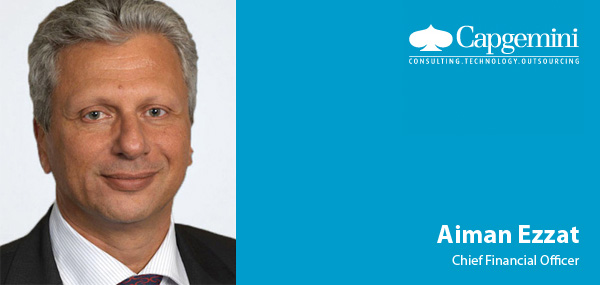
Capgemini Group CEO Aiman Ezzat addressed the controversy on LinkedIn, stating that senior management had only recently become aware of the specific skip tracing contract "through public sources." He noted the contract was "not currently being executed" and was subject to legal challenge. An internal message to staff indicated the US subsidiary had launched a process to examine the deal's contents.
This response highlights the central ethical dilemma: the conflict between lucrative government contracts and corporate social responsibility. The case forces a examination of where the line is drawn for technology companies providing services that can directly enable law enforcement actions many find morally contentious. The company's stated values now clash with the practical reality of a long-term, profitable partnership with a controversial agency.
The Capgemini-ICE scandal transcends a single contract; it exposes the intricate, often opaque relationships between global IT contractors and government enforcement agencies. As a partly state-owned French champion faces condemnation at home for work supporting US immigration policy, the episode raises fundamental questions about accountability, transparency, and the ethical boundaries of the technology services industry in an increasingly polarized world.