Read on bbc.com
Panama's Supreme Court Voids Hong Kong Firm's Canal Port Contracts Amid US-China Tensions
Panama's Supreme Court has annulled contracts allowing CK Hutchison Holdings, a Hong Kong-based company, to operate two key container ports on the Panama Canal. The ruling follows repeated claims by former US President Donald Trump that China was 'operating' the strategic waterway. While the company is not owned by the Chinese government, its operations have become entangled in the broader geopolitical rivalry between the US and China over global trade routes and influence in the Western Hemisphere. The decision could disrupt a major multi-billion dollar asset sale and highlights the growing political risks for international businesses.
In a significant development with geopolitical implications, Panama's Supreme Court has annulled the long-standing contracts of a Hong Kong-based firm to operate container ports on the Panama Canal. This ruling arrives amidst a backdrop of heightened rhetoric from the United States, particularly from former President Donald Trump, who has repeatedly claimed China exerts control over the vital maritime passage. The decision underscores the complex intersection of international business, national sovereignty, and the escalating strategic competition between global superpowers.
The Court Ruling and Its Immediate Impact
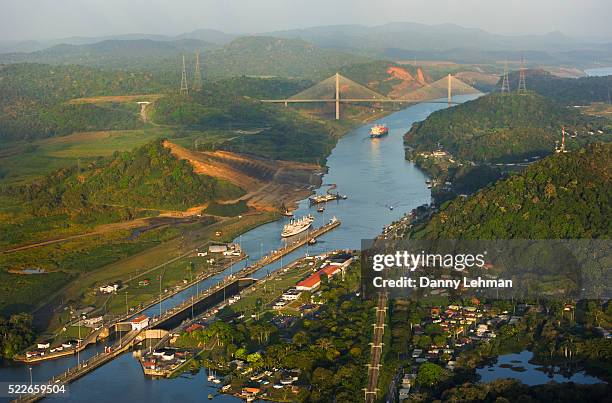
Panama's Supreme Court declared that the laws underpinning the concession contract between the state and the Panama Ports Company (PPC), a subsidiary of CK Hutchison Holdings, were unconstitutional. PPC has operated the ports of Balboa and Cristóbal since 1997, investing over $1.8 billion in infrastructure. The company swiftly rejected the ruling, stating it "lacks legal basis" and jeopardizes the stability of thousands of Panamanian families dependent on port activity. To ensure continuity, Panamanian President Jose Raul Mulino stated operations would continue without disruption, with APM Terminals Panama, a subsidiary of Danish giant Maersk, stepping in to manage the ports temporarily.
Geopolitical Context: US Claims and Chinese Presence
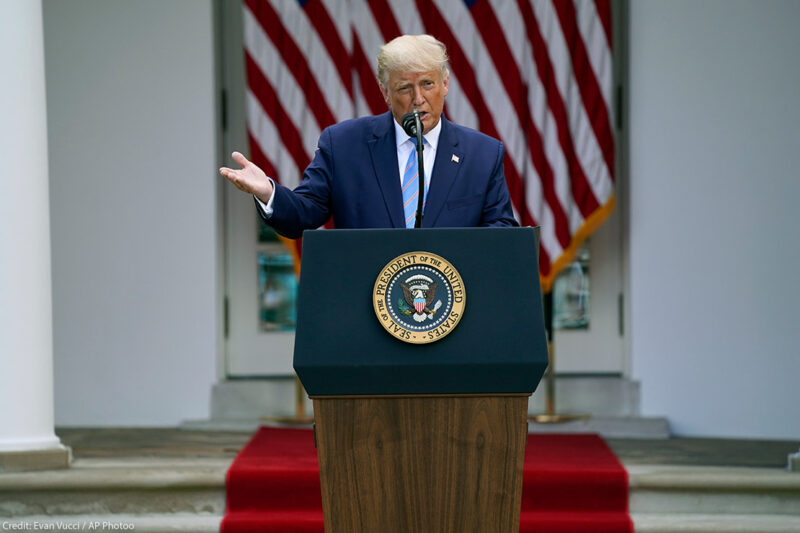
The court's decision cannot be divorced from the geopolitical climate. Former President Donald Trump has made the Panama Canal a recurring theme, notably claiming in a speech, "China is operating the Panama Canal and we didn't give it to China. We gave it to Panama and we're taking it back." US Secretary of State Marco Rubio has similarly pressured Panama to reduce Chinese "influence and control." However, Panama has consistently rejected these claims, asserting the canal "is and will remain" under its sovereign control. The Panama Canal Authority, a government agency, operates the waterway itself.

Distinguishing Between Company and State
A critical nuance in this situation is the ownership of CK Hutchison. The conglomerate was founded by Hong Kong billionaire Li Ka-shing and is not owned by the Chinese government. Despite this, Beijing's increasing political control over Hong Kong has altered how its global assets are perceived internationally. The company's extensive port and logistics network is now often viewed through the lens of broader concerns about China's strategic influence, especially against the backdrop of US-China rivalry over global trade routes.
Broader Implications for Business and Markets
The ruling has direct commercial consequences. It threatens to disrupt CK Hutchison's planned $22.8 billion sale of its global port interests to a consortium led by US investment firm BlackRock and shipping group MSC—a deal previously hailed by Trump. The market reaction was immediate: CK Hutchison's shares fell 4.6% in Hong Kong, reflecting investor anxiety over political risk. The case serves as a stark reminder of how geopolitical tensions can directly impact international business deals and asset valuations.
Conclusion: Sovereignty, Perception, and Trade
Panama's court ruling is a forceful assertion of national sovereignty over its critical infrastructure. While framed by the US as a move against Chinese influence, the reality involves a private Hong Kong-based corporation caught in a geopolitical crossfire. The episode highlights the growing challenges for multinational companies operating in strategically sensitive sectors, where business decisions are increasingly scrutinized and influenced by great power competition. As the US and China vie for influence, neutral nations and the businesses within them may face more complex pressures, balancing economic partnerships with political realities.