Read on nature.com
Navigating Religious Faith in Academia: Challenges and Paths Forward
For many academics, religious faith represents a fundamental aspect of their identity that intersects with their professional lives in complex ways. This article explores the experiences of religious scientists navigating academic environments, drawing on research and personal testimonies. We examine the challenges faced by religious minorities in higher education, from microaggressions and institutional barriers to the pressure to conceal aspects of identity. The discussion highlights how assumptions about incompatibility between science and religion create exclusionary environments, while also identifying practical steps institutions can take to foster more inclusive academic cultures where researchers can bring their whole selves to their work.
The intersection of religious faith and academic life presents complex challenges for researchers navigating environments where science and religion are often perceived as inherently incompatible. This perception creates barriers that affect everything from career choices to daily workplace interactions, particularly for scholars from religious minority backgrounds. Drawing on research from sociologists and personal testimonies from academics, this article explores the realities of being a religious scientist in contemporary academia and identifies pathways toward more inclusive academic environments.

The Perception Gap: Science vs. Religion
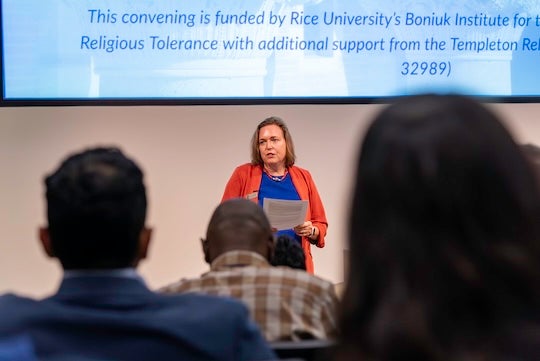
Research reveals a significant disconnect between public perception and reality regarding religious scientists. According to sociologist Elaine Howard Ecklund, who leads the Boniuk Institute for the Study and Advancement of Religious Tolerance at Rice University, approximately 50% of scientists at U.S. universities identify with a religious tradition. This number drops to less than 20% in the United Kingdom, but still represents a substantial minority. Despite these statistics, there persists a widespread public perception that scientists are predominantly irreligious or even anti-religious.
This perception gap stems from several factors, including popular writing in the early 2000s that argued scientists should not be religious and that the two domains are fundamentally opposed. As Ecklund notes in her research, "When writing is popular and widespread, then there's also the sense that there's a very large group of people who have those attitudes, and that may not be the case." This cultural narrative creates an environment where religious scientists often feel pressured to conceal their faith identities, perpetuating the very perception that makes them feel unwelcome.
Experiences of Religious Minorities in Academia
For scholars from religious minority backgrounds, the challenges are particularly pronounced. Maisha Islam, a research culture lead at the University of Southampton and a British Bangladeshi Muslim woman, describes multiple layers of alienation experienced by Muslim academics. These range from practical accommodations like the lack of prayer spaces and halal food options to more subtle forms of exclusion in academic culture.
Islam notes that alcohol-centric social events present particular barriers for Muslim academics, forcing them into what she terms "satisfied settling"—compromising their expectations of a supportive academic environment because their religious needs aren't being met. This accommodation gap extends to broader institutional practices, where religious minorities often find themselves advocating for basic accommodations while facing resistance or indifference from institutional structures.

Institutional Barriers and Microaggressions
The challenges religious academics face operate on multiple levels, from overt discrimination to subtle microaggressions. Islam describes how Muslim academics are frequently misidentified as students rather than faculty members, reflecting assumptions about who belongs in academic spaces. These microaggressions create what she calls a "precarious position" where religious minority academics feel constant pressure to prove their competence and belonging.
Beyond interpersonal interactions, institutional policies and practices often fail to accommodate religious diversity. Islam explains that while bringing concerns to institutional attention isn't necessarily difficult, "What's the problem is that we're not invited to the table to even discuss these issues." When religious minorities do advocate for change, they often face professional risks, with Islam noting, "We almost put a target on our backs for having advocated for them in the first place. We are constantly pushing at closed doors."
The Impact on Academic Careers and Research
The perception that science and religion are incompatible has tangible consequences for academic careers and research directions. Ecklund's research indicates that religious scientists often feel they must hide their faith to succeed professionally, creating what she describes as "a culture of separation" within academic science. This pressure can deter talented individuals from pursuing academic careers altogether, particularly when they perceive academia as hostile to their religious identities.
For those who do enter academic careers, the pressure to compartmentalize their identities can affect their research choices, professional networks, and overall job satisfaction. Islam's doctoral research on British Bangladeshi women in higher education revealed consistent themes of underrepresentation, invisible labor, and intersectional discrimination that shape how religious minority academics navigate their careers and form academic identities.
Toward More Inclusive Academic Environments
Creating more welcoming academic environments for religious scholars requires both cultural shifts and practical institutional changes. Ecklund advocates for academic scientists to recognize that "religious scientists can be good scientists" and to view religion as one identity among many that researchers bring to their work. This perspective acknowledges that religious identities often intersect with other aspects of identity, including race, gender, and ethnicity, and that embracing this complexity can enhance scientific work.
Practical steps institutions can take include collecting better data on religious representation in academic spaces, creating meaningful consultation processes that include religious minority voices, and developing policies that explicitly address religious accommodation alongside other diversity initiatives. As Islam suggests, institutions need to move beyond superficial inclusion efforts to address the structural inequalities that exclude religious minorities from full participation in academic life.
Conclusion: Embracing Complexity in Academic Identity
The question of whether academia can handle religious faith ultimately depends on whether academic institutions are willing to embrace the complexity of researchers' identities. Current research suggests that many religious scientists have successfully integrated their faith with their scientific work, but often do so in environments that fail to recognize or support this integration. By challenging stereotypes about the incompatibility of science and religion, academic institutions can create more inclusive environments that allow researchers to bring their whole selves to their work.
As both Ecklund and Islam emphasize, fostering religious inclusion in academia isn't just about accommodating individual beliefs—it's about recognizing how religious identities intersect with other aspects of diversity and how embracing this complexity can strengthen academic communities and enhance scientific discovery. The path forward requires both individual awareness and institutional commitment to creating academic environments where religious diversity is valued as part of the rich tapestry of perspectives that drive innovation and understanding.