A Simple Blood Test Could Spot Parkinson's Years Before Symptoms Emerge
A groundbreaking study from Swedish and Norwegian scientists reveals a promising method to detect Parkinson's disease potentially decades before its most damaging symptoms appear. By identifying subtle biological markers in the blood related to cellular stress response and DNA repair mechanisms, researchers have discovered a brief early window when Parkinson's leaves a measurable fingerprint. This discovery could lead to cost-effective, widespread screening within five years, offering hope for early intervention and treatment development while the brain is still largely intact.
Parkinson's disease, a progressive neurological disorder affecting millions worldwide, has long presented a diagnostic challenge: by the time characteristic movement symptoms like tremors and rigidity appear, significant and often irreversible brain damage has already occurred. However, a breakthrough study from researchers in Sweden and Norway offers new hope for early detection. Scientists have identified biological markers in the blood that appear during Parkinson's earliest stages, potentially years or even decades before motor symptoms manifest. This discovery, detailed in the journal npj Parkinson's Disease, represents a critical step toward developing simple, accessible screening tests that could transform how we approach this debilitating condition.
The Critical Early Window for Parkinson's Detection
Parkinson's disease develops slowly, with an early phase that can last up to 20 years before noticeable motor symptoms fully emerge. During this prolonged prodromal period, cellular changes are already underway, but they remain largely invisible to current diagnostic methods. The research team, led by scientists from Chalmers University of Technology in Sweden and Oslo University Hospital in Norway, focused on this crucial window of opportunity. Their findings suggest that by detecting Parkinson's during this early phase, interventions could potentially slow or prevent the progression of brain damage that currently affects 50-80% of relevant brain cells by the time of traditional diagnosis.
The significance of this discovery cannot be overstated. As Danish Anwer, the study's first author, explains, "By the time the motor symptoms of Parkinson's disease appear, 50-80 per cent of the relevant brain cells are often already damaged or gone. The study is an important step towards facilitating early identification of the disease and counteracting its progression before it has gone this far." This early detection capability could fundamentally alter the disease trajectory for millions of people worldwide.
Uncovering the Biological Fingerprint
The researchers focused their investigation on two key biological processes believed to play a role in Parkinson's early development: DNA damage repair and cellular stress response. These mechanisms represent how cells detect and fix genetic damage while shifting energy toward repair and defense when under stress. Using advanced machine learning and analytical methods, the team examined blood samples to identify patterns of gene activity related to these processes.
What they discovered was remarkable: a distinct pattern of gene activity appeared only in people in the early phase of Parkinson's disease. This unique biological signature was not present in healthy individuals or in patients who had already developed motor symptoms. As Annikka Polster, the study's lead researcher, notes, "This means that we have found an important window of opportunity in which the disease can be detected before motor symptoms caused by nerve damage in the brain appear. The fact that these patterns only show at an early stage and are no longer activated when the disease has progressed further also makes it interesting to focus on the mechanisms to find future treatments."

The Promise of Blood-Based Testing
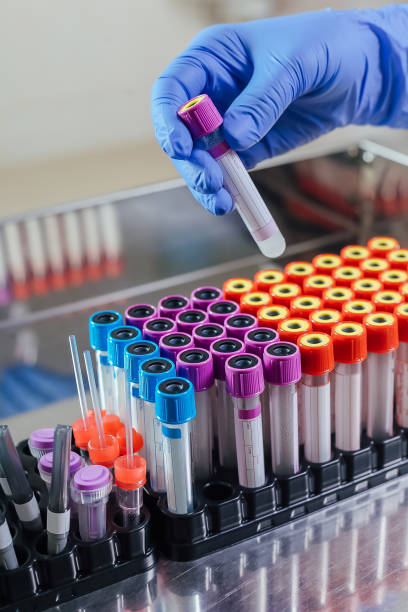
While scientists worldwide have searched for reliable early indicators of Parkinson's through various methods including brain imaging and spinal fluid analysis, none have yet yielded a validated screening test suitable for widespread use before symptoms begin. The blood-based approach identified in this study offers several distinct advantages. Blood tests are minimally invasive, cost-effective, and easily accessible compared to more complex diagnostic procedures. This accessibility could make widespread screening feasible within healthcare systems.
The researchers estimate that within five years, blood tests designed to identify Parkinson's disease at an early stage could begin to be tested in healthcare settings. This timeline represents a significant acceleration in the translation of research findings to clinical application. As Polster explains, "In our study, we highlighted biomarkers that likely reflect some of the early biology of the disease and showed they can be measured in blood. This paves the way for broad screening tests via blood samples: a cost-effective, easily accessible method."
Implications for Treatment and Prevention
Beyond early detection, this research opens new avenues for treatment development and disease prevention. By identifying the biological mechanisms active during Parkinson's earliest stages, researchers can now study these processes as they occur, potentially leading to interventions that could slow or stop disease progression. This approach may involve developing new drugs or repurposing existing medications that target the same gene activities or mechanisms identified in the study.
The global impact of such advances could be substantial. Parkinson's disease currently affects more than 10 million people worldwide and is projected to more than double by 2050 as populations age. Early detection and intervention could significantly reduce the personal, social, and economic burden of this neurodegenerative condition. The research, funded by multiple organizations including the Michael J Fox Foundation and the Swedish Research Council, represents a collaborative effort to address one of the most pressing neurological challenges of our time.

Looking Toward the Future
The next phase of research will focus on understanding exactly how these early biological mechanisms work and developing tools to make them easier to detect in clinical settings. As the scientific community builds upon these findings, the potential for transforming Parkinson's disease management grows increasingly tangible. From enabling earlier diagnosis to facilitating the development of targeted treatments, this blood-based biomarker discovery represents a paradigm shift in how we approach neurodegenerative diseases.
While challenges remain in validating and implementing these findings across diverse populations, the research provides a foundation for hope. As healthcare systems worldwide prepare for the growing impact of age-related neurological conditions, innovations like this blood test offer practical solutions for early intervention. The coming years will likely see increased research investment and clinical trials focused on translating these laboratory findings into tools that can improve lives and potentially alter the course of Parkinson's disease for generations to come.