Read on PBS News
Remembering Dr. William Foege: Architect of Smallpox Eradication
Dr. William Foege, a towering figure in global public health who played a pivotal role in the eradication of smallpox, has died at 89. As a former CDC director and co-founder of the Task Force for Global Health, Foege's innovative 'ring containment' strategy in Nigeria proved crucial to defeating one of humanity's most lethal diseases. His career, marked by leadership at The Carter Center and the Bill & Melinda Gates Foundation, earned him the Presidential Medal of Freedom and the title 'Father of Global Health.' This article explores his life, legacy, and the strategy that saved hundreds of millions of lives.
The field of global public health has lost one of its most influential pioneers. Dr. William Foege, the medical strategist whose work was instrumental in the global eradication of smallpox, died on Saturday in Atlanta at the age of 89, according to the Task Force for Global Health, an organization he co-founded. His passing marks the end of an era for a man whose calm demeanor and brilliant tactical mind helped achieve one of humanity's greatest victories over disease.
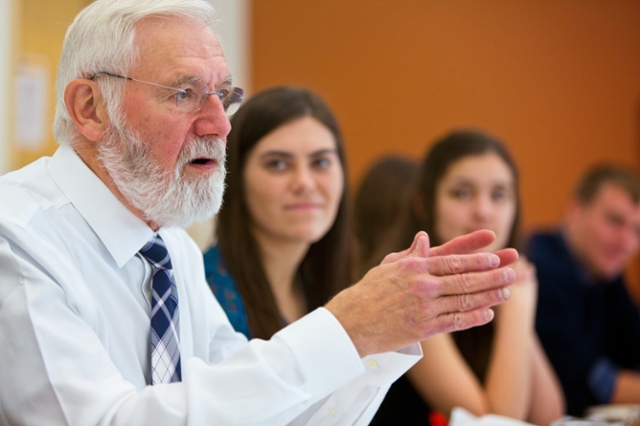
Standing an imposing 6-foot-7, Foege was a literal and figurative giant in public health. His career spanned decades and included leadership of the U.S. Centers for Disease Control and Prevention (CDC) from 1977 to 1983, followed by executive roles at The Carter Center and as a senior fellow at the Bill & Melinda Gates Foundation. However, his defining contribution came earlier, born from necessity and ingenuity in the fight against a centuries-old scourge.
The Smallpox Challenge and a Revolutionary Strategy
For centuries, smallpox was one of the most feared diseases on the planet, killing roughly one-third of those it infected and leaving survivors with severe, disfiguring scars. By the 1960s, vaccination campaigns had eliminated the disease in the United States, but it persisted in other parts of the world, and global eradication efforts were stalling. The conventional approach of mass vaccination was hampered by limited vaccine supplies and logistical challenges.
While working as a medical missionary in Nigeria during the 1960s, Foege and his colleagues faced this exact problem. With insufficient vaccine to immunize entire populations, they devised a clever alternative: the "ring containment" strategy. This method involved rapid identification of each smallpox case and then vaccinating not everyone, but specifically the ring of people around that patient—everyone the infected person might have come into contact with.

A Legacy of Eradication and Leadership
The ring containment strategy proved devastatingly effective. It relied on swift epidemiological detective work to contain outbreaks before they could spread. This tactic, detailed in Foege's 2011 book House on Fire, became a cornerstone of the global push that saw the last naturally occurring case of smallpox in Somalia in 1977. In 1980, the World Health Organization officially declared smallpox eradicated—the first and only human disease to be eliminated worldwide.
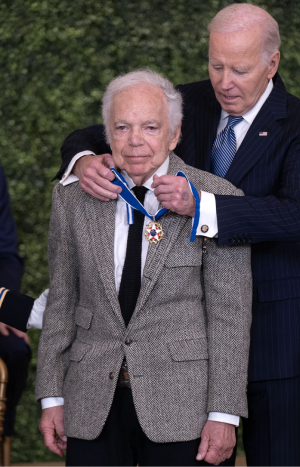
The impact of this achievement is almost incalculable. Former CDC director Dr. Tom Frieden noted that by the metric of lives saved, Foege stands in a pantheon of history's greatest figures, having prevented hundreds of millions of deaths. This legacy was formally recognized in 2012 when President Barack Obama presented Foege with the Presidential Medal of Freedom, the nation's highest civilian honor.
The Father of Global Health
Born on March 12, 1936, in Colville, Washington, Foege's path to medicine began at age 13 while working in a local drugstore. He earned his medical degree from the University of Washington in 1961 and a master's in public health from Harvard in 1965. His post-CDC career was dedicated to building the infrastructure of international health, focusing on coalition-building and applying scientific evidence to complex problems.
In 2016, Duke University President Richard Brodhead, while conferring an honorary degree, aptly called Foege "the Father of Global Health." Dr. Patrick O'Carroll, CEO of the Task Force for Global Health, summarized Foege's ethos: "Bill Foege had an unflagging commitment to improving the health of people across the world, through powerful, purpose-driven coalitions applying the best science available."
Dr. William Foege's life demonstrates how clear thinking, perseverance, and strategic innovation can change the course of history. He transformed a public health crisis with limited resources into a managed campaign, providing a timeless blueprint for combating epidemics. His work eradicated a disease, saved countless lives, and established a model of global health cooperation that continues to inspire and guide efforts against current and future health threats. His legacy is not just in the past victory over smallpox, but in the enduring framework he built for protecting humanity's health.