Read on PBS News
Saudi Airstrikes in Yemen: Escalation Threatens Fragile Coalition
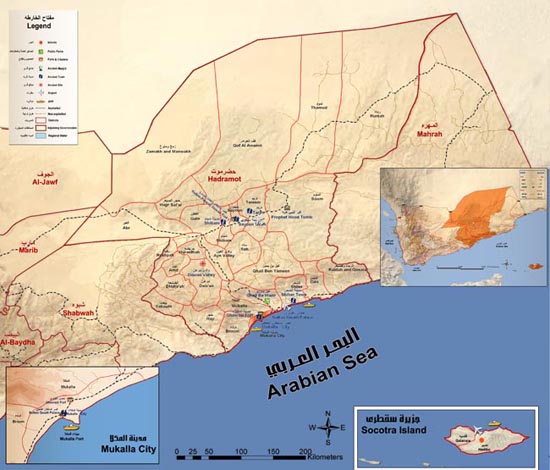
Southern Yemeni separatists have accused Saudi Arabia of launching airstrikes against their forces in the Hadramout governorate, a claim not formally acknowledged by Riyadh. The strikes follow Saudi warnings for the Emirati-backed Southern Transitional Council to withdraw from recently captured territories. This escalation threatens to fracture the fragile Saudi-led coalition fighting Houthi rebels, highlighting the complex web of regional rivalries within Yemen's decade-long conflict and raising the risk of renewed civil war.
In a significant escalation of tensions within Yemen's complex civil war, separatist forces in the country's south have accused Saudi Arabia of conducting airstrikes against their positions. The allegations, reported by The Associated Press, center on operations in the eastern Hadramout governorate and come directly after Saudi Arabia issued warnings for the separatist group to withdraw from areas it recently seized. This development not only risks reigniting internal conflict among factions nominally allied against the Houthi rebels but also exposes deepening fissures between the Gulf powerhouses of Saudi Arabia and the United Arab Emirates, who back opposing sides in southern Yemen.
The Incident and Accusations
According to statements from the Southern Transitional Council (STC), the Emirati-backed separatist group, Saudi airstrikes targeted their forces on Friday. Amr Al Bidh, a foreign affairs special representative for the Council, stated that their fighters had been operating in eastern Hadramout after facing "multiple ambushes" from gunmen that killed two STC fighters and wounded twelve others. The Saudi strikes reportedly occurred afterward. The STC's satellite channel aired mobile phone footage purportedly showing the strikes, with a voice in the video blaming Saudi aircraft.
While Saudi officials did not formally comment on the allegations, the Saudi-owned newspaper Asharq Al-Awsat, quoting unnamed sources, reported that the kingdom carried out the strikes "to send a message" to the Council, warning that "any further escalation would be met with stricter measures." This aligns with reports from local sources, such as Faez bin Omar of a Hadramout tribal coalition, who believed the strikes served as a warning for the STC to withdraw.

Broader Context: A Fracturing Coalition
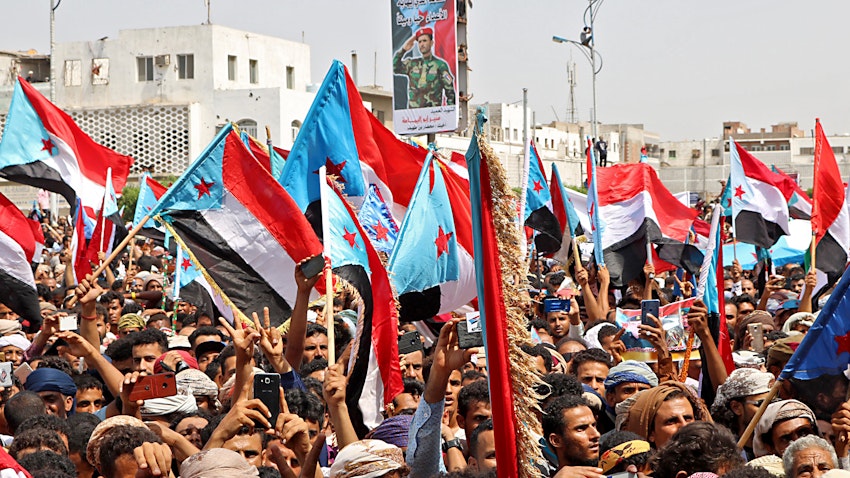
This incident did not occur in a vacuum. It is the latest flashpoint in long-simmering tensions within the anti-Houthi coalition. The STC, which seeks the secession of South Yemen, moved forces earlier this month into the governorates of Hadramout and Mahra, displacing forces affiliated with the Saudi-backed National Shield Forces. This power grab directly challenged Saudi authority in the region and followed public rallies in Aden where demonstrators flew the flag of the former South Yemen, signaling strong separatist sentiment.
The underlying conflict pits two key Gulf allies against each other within Yemen. Saudi Arabia backs the internationally recognized Yemeni government, while the United Arab Emirates supports the STC. Despite being close partners in the OPEC oil cartel, the two nations have competed for influence in the region. The UAE's statement following the strikes, which "welcomed the efforts undertaken by the Kingdom of Saudi Arabia to support security and stability" in Yemen, underscores the delicate diplomatic balancing act, but does little to mask the fundamental disagreement over the south's future.
Implications for Yemen's War and Regional Stability
The immediate risk is the collapse of the fragile coalition fighting the Houthis in the north. A renewed conflict between southern separatists and Saudi-backed forces would open a second major front, diverting resources and potentially allowing the Houthis to consolidate power. The decade-long war has already killed more than 150,000 people and created one of the world's worst humanitarian crises.
Furthermore, escalation in Yemen threatens broader regional stability. The Houthis have already disrupted global shipping with attacks in the Red Sea over the Israel-Hamas war. Increased chaos could draw in external powers again. The report notes that the United States has previously launched bombing campaigns against the Houthis, and further instability might prompt renewed military involvement. The situation also mirrors competition seen in other regional conflicts, such as in Sudan, where Saudi Arabia and the UAE also support opposing factions.

Conclusion
The reported Saudi airstrikes against southern separatists represent a dangerous pivot in Yemen's multilayered war. They are a stark demonstration of how the alliance against the Houthi rebels is fracturing under the weight of competing local and regional ambitions. For the people of Yemen, this escalation threatens to prolong a devastating conflict and deepen their suffering. For the international community, it signals that the path to any lasting peace in Yemen must address not just the north-south divide with the Houthis, but also the profound political disagreements within the anti-Houthi coalition itself. The warning strikes in Hadramout may be intended to enforce cohesion, but they risk triggering the very internal collapse they seek to prevent.