Webb's Helix Nebula: A Stunning Close-Up of Stellar Death and Cosmic Rebirth
The James Webb Space Telescope has captured a breathtaking new image of the Helix Nebula, offering an unprecedented infrared view of a dying star's final stages. This detailed observation reveals glowing knots of gas sculpted by stellar winds and a dramatic temperature gradient from the scorching core to the cooler outer regions. Located 650 light-years away, the Helix Nebula provides a crucial glimpse into the processes that recycle stellar material, supplying the essential building blocks for future planets and stars. Webb's powerful instruments allow scientists to study this familiar cosmic object with unprecedented clarity, shedding light on the eventual fate of our own Sun.
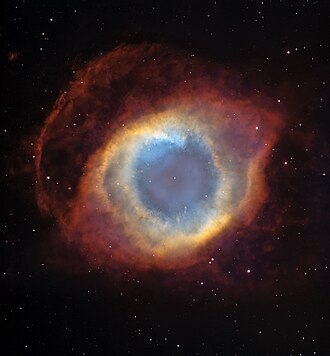
The cosmos is a theater of constant transformation, where the death of one celestial body can sow the seeds for new beginnings. In a stunning new observation, the James Webb Space Telescope has turned its powerful gaze toward the Helix Nebula, capturing a dramatic close-up of a star in its final act. This image, as detailed in a release from ESA/Webb, reveals intricate details of a dying star shedding its outer layers, providing a vivid portrait of stellar death and the subsequent enrichment of interstellar space. The Helix Nebula, one of the closest and most recognizable planetary nebulas to Earth, offers astronomers a rare laboratory to study the complex processes that occur as a star exhausts its nuclear fuel.
Unveiling the Final Breath of a Star
Webb's latest image focuses on a portion of the Helix Nebula, highlighting features that were previously indistinct. The telescope's Near-Infrared Camera (NIRCam) reveals dense, comet-like knots of gas with long trailing tails. These structures outline the inner edge of an expanding shell of material. They are formed through a violent process: fast-moving, extremely hot winds emanating from the dying star's core collide with older, cooler layers of dust and gas that were ejected earlier in the star's life cycle. This collision carves and sculpts the nebula, creating the intricate and textured appearance now visible in unprecedented detail.
A Color-Coded Map of Temperature and Chemistry
The colors in Webb's image are not merely artistic; they serve as a scientific map of temperature and chemical composition. Blue tones indicate the hottest gas, which is energized by intense ultraviolet radiation from the central white dwarf—the exposed stellar core left behind. Yellow regions show cooler areas where hydrogen atoms have bonded together to form molecules. The outermost edges, depicted in red hues, trace the coldest material where the gas thins and dust begins to coalesce. This stark visual transition, from scorching hot gas near the center to cooler regions farther out, illustrates the dynamic expansion of the nebula as it pushes material into the surrounding void.
The Cosmic Legacy: Building Blocks for New Worlds
Perhaps the most profound insight from this observation is understanding the Helix Nebula's role in the cosmic cycle of matter. The material being expelled—once part of the star itself—is rich in elements forged in its core. This stellar debris is returned to the interstellar medium, the vast space between stars. Within this ejected material, particularly in the sheltered, cooler pockets of dust clouds, more complex molecules can begin to form. These regions contain the fundamental ingredients, the raw materials, that will eventually contribute to the formation of new stars, planetary systems, and potentially, the conditions for life elsewhere in the galaxy. In this way, the death of a star is not an end, but a vital contribution to future cosmic generations.
A Preview of Our Sun's Distant Future
The Helix Nebula provides a compelling preview of what awaits our own Sun in roughly five billion years. As a star of similar mass begins to die, it will swell into a red giant before shedding its outer layers to form its own planetary nebula, leaving behind a white dwarf at its center. Webb's sharp infrared vision allows scientists to study this analog process in exquisite detail, offering clues about the mechanics, timescales, and chemical output of such a transformation. By examining the structure of gas flowing away from the Helix's central star, astronomers can refine models predicting the final stages of stellar evolution for sun-like stars across the universe.
Webb's Technological Triumph in Cosmic Observation
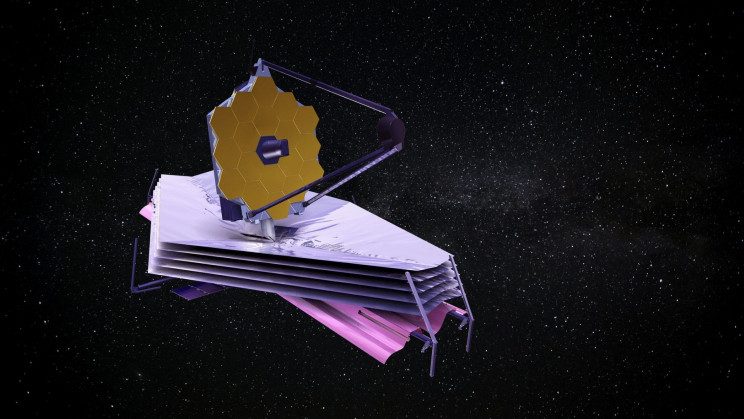
This observation underscores the revolutionary capabilities of the James Webb Space Telescope. As the largest and most powerful space telescope ever launched, Webb is a joint project of NASA, ESA, and the Canadian Space Agency (CSA). Its ability to peer in infrared light allows it to see through cosmic dust and capture the thermal signatures of celestial objects with unparalleled clarity. Compared to earlier views from telescopes like Hubble, Webb's image brings the small knots and filaments of the Helix Nebula into much sharper focus, transforming a soft, glowing ring into a landscape rich with dynamic structure and scientific information.
The new Webb image of the Helix Nebula is more than a beautiful picture; it is a detailed data set that captures a critical phase in the life cycle of stars. It reveals the violent yet beautiful process of a star's death, the intricate structures shaped by stellar winds, and the vital recycling of enriched material back into the galaxy. By studying such scenes, we gain a deeper understanding of our own cosmic origins and the interconnected processes that govern the evolution of the universe. The Helix Nebula, a familiar sight for centuries, continues to teach us new lessons, reminding us that in the vastness of space, endings are intimately connected to new beginnings.