The Evolutionary Journey of Consciousness: From Basic Survival to Avian Awareness
Consciousness, far from being a uniquely human trait, evolved in distinct stages to serve fundamental survival functions. Research from Ruhr-University Bochum reveals that basic arousal for alarm responses, general alertness for environmental learning, and reflexive self-awareness developed sequentially across evolutionary history. Surprisingly, birds demonstrate many of these conscious traits, suggesting consciousness is ancient and widespread, emerging through different brain structures than previously believed.
The nature of consciousness has long fascinated philosophers and scientists alike, but recent research provides compelling evidence about why this complex phenomenon evolved at all. According to studies from Ruhr-University Bochum, consciousness developed in three distinct stages, each serving crucial survival functions that helped organisms navigate their environments, avoid danger, and coordinate socially. This evolutionary perspective challenges traditional views that consciousness is a recent development exclusive to humans with complex brains.

The Three Evolutionary Stages of Consciousness
Albert Newen and Carlos Montemayor's research outlines three distinct forms of consciousness that evolved sequentially, each building upon the previous to create increasingly sophisticated awareness. This framework, known as the ALARM theory of consciousness, provides a structured understanding of how subjective experience developed across evolutionary time.
Basic Arousal: The Foundation of Survival
The earliest form of consciousness to emerge was basic arousal, which Newen describes as having the fundamental function of "putting the body in a state of ALARM in life-threatening situations so that the organism can stay alive." This primitive form of consciousness centers around pain perception, which serves as "an extremely efficient means for perceiving damage to the body and to indicate the associated threat to its continued life." Pain triggers immediate survival responses such as fleeing or freezing, demonstrating how even the most basic conscious experience serves vital protective functions.
General Alertness: Learning from the Environment
A later evolutionary development was general alertness, which allows organisms to focus on important signals while filtering out irrelevant information. As Carlos Montemayor explains, this form of consciousness "makes it possible to learn about new correlations: first the simple, causal correlation that smoke comes from fire and shows where a fire is located. But targeted alertness also lets us identify complex, scientific correlations." This ability to selectively attend to environmental cues represents a significant evolutionary advancement, enabling more sophisticated learning and adaptation.
Reflexive Self-Consciousness: Social Coordination
The most advanced form, reflexive self-consciousness, allows individuals to think about themselves, remember the past, and anticipate the future. Newen notes that "reflexive consciousness, in its simple forms, developed parallel to the two basic forms of consciousness. In such cases conscious experience focuses not on perceiving the environment, but rather on the conscious registration of aspects of oneself." This includes awareness of bodily states, perceptions, sensations, thoughts, and actions, which supports social integration and coordination within groups.
Birds as Conscious Beings: Challenging Traditional Views
Research by Gianmarco Maldarelli and Onur Güntürkün reveals that birds possess many conscious traits previously thought to require mammalian brain structures. Their work demonstrates that consciousness can emerge through different neurological pathways, suggesting it's a more widespread evolutionary phenomenon than previously believed.
Sensory Experience in Avian Species
Studies show that birds do more than automatically react to stimuli—they appear to have subjective experiences. When pigeons are shown visually ambiguous images, they alternate between different interpretations, much like humans do. Research on crows provides further evidence, with specific nerve cells responding in line with the animal's internal experience rather than the physical stimulus itself. This indicates that birds possess sensory consciousness beyond mere stimulus-response mechanisms.
Avian Brain Structures Supporting Consciousness
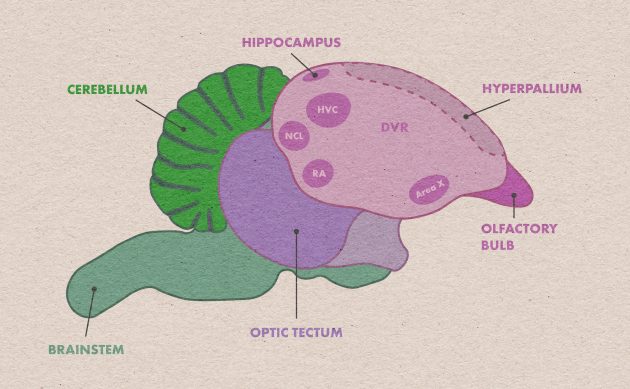
Bird brains contain structures that support conscious processing despite their anatomical differences from mammals. Güntürkün explains that "the avian equivalent to the prefrontal cortex, the NCL, is immensely connected and allows the brain to integrate and flexibly process information." He adds that "the connectome of the avian forebrain, which presents the entirety of the flows of information between the regions of the brain, shares many similarities with mammals. Birds thus meet many criteria of established theories of consciousness, such as the Global Neuronal Workspace theory."
Evidence of Self-Perception in Birds
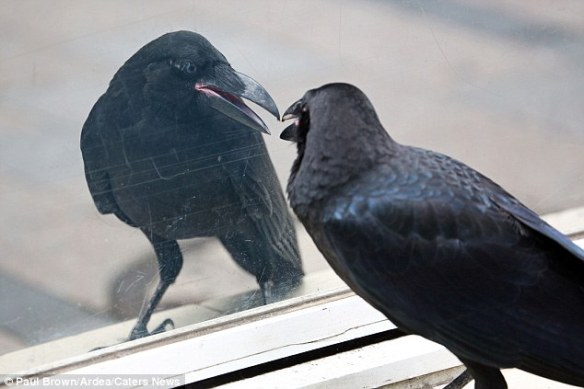
Recent experiments indicate that birds may show forms of self-perception. While some corvid species pass the classic mirror test, other studies use alternative approaches that better reflect birds' natural behaviors. Güntürkün notes that "experiments indicate that pigeons and chickens differentiate between their reflection in a mirror and a real fellow member of their species, and react to these according to context. This is a sign of situational, basic self-consciousness." These findings suggest that self-awareness exists in simpler forms across different species.
Implications for Understanding Consciousness
The discovery that birds possess conscious traits has profound implications for our understanding of consciousness evolution. It demonstrates that conscious processing can occur without a cerebral cortex and that very different brain structures can arrive at similar functional outcomes. This challenges the anthropocentric view that consciousness is a recent development exclusive to humans and closely related mammals.
The research suggests consciousness is an ancient feature of evolution that developed gradually through natural selection. Each stage—from basic arousal to self-awareness—provided survival advantages that were preserved and built upon across generations. This evolutionary perspective helps explain why consciousness exists at all: it served practical functions that enhanced organisms' ability to survive, learn, and coordinate socially.
As research continues to uncover conscious traits in diverse species, our understanding of consciousness as a biological phenomenon continues to expand. The findings from Ruhr-University Bochum, detailed in their 2025 studies published in Philosophical Transactions of the Royal Society B, represent a significant step toward understanding consciousness as a widespread evolutionary adaptation rather than a mysterious human exclusive.