Evolution's Moving Target: How Environmental Change Redefines Genetic Adaptation
New research from the University of Michigan challenges the long-standing Neutral Theory of Molecular Evolution, revealing that beneficial mutations occur far more frequently than previously believed. However, these advantageous genetic changes rarely become permanent fixtures in populations due to constantly shifting environments. This groundbreaking study introduces the concept of 'Adaptive Tracking with Antagonistic Pleiotropy,' suggesting evolution is less about achieving perfection and more about perpetually chasing a moving target. The findings have significant implications for understanding human genetics in modern environments that differ dramatically from our ancestral past.
For decades, evolutionary biology has operated under a fundamental assumption known as the Neutral Theory of Molecular Evolution. This theory posits that most genetic mutations that become fixed in populations are neutral—neither helpful nor harmful—and therefore spread quietly without strong selection pressure. However, groundbreaking research from the University of Michigan is challenging this long-standing paradigm, revealing a more dynamic and complex picture of evolutionary processes.

The study, published in Nature Ecology and Evolution, suggests that beneficial mutations actually occur surprisingly often—more than 1% of mutations in experimental organisms like yeast and E. coli show measurable advantages. The real twist, however, lies in what happens next. Changing environments prevent these helpful mutations from spreading widely before they become useless or even harmful in new conditions. This creates a scenario where evolution becomes less about reaching an optimal state and more about endlessly pursuing a target that never stops moving.
Rethinking the Neutral Theory of Molecular Evolution
The Neutral Theory, introduced in the 1960s, revolutionized how scientists understood genetic changes at the molecular level. Before this theory, evolutionary biologists focused primarily on physical traits and assumed natural selection drove most observable changes. The Neutral Theory provided an alternative explanation, suggesting that most genetic variations were effectively invisible to selection and spread through populations via random genetic drift rather than selective advantage.
Professor Jianzhi Zhang and his research team at the University of Michigan set out to test this foundational theory using modern experimental techniques. Their approach involved analyzing large datasets from deep mutational scanning experiments, where researchers deliberately create numerous mutations within specific genes and track their effects over generations. By comparing growth rates of mutated organisms against wild-type counterparts, scientists can precisely measure whether mutations provide advantages or disadvantages.

The Adaptive Tracking Framework
The research revealed a significant contradiction: beneficial mutations occur far more frequently than the Neutral Theory predicts, yet the overall rate at which mutations become fixed in populations remains much lower than expected. To resolve this paradox, Zhang's team proposed a new framework called "Adaptive Tracking with Antagonistic Pleiotropy."
This concept explains how a mutation that provides an advantage in one environmental context may become harmful when conditions change. Because environments rarely remain constant for extended periods, beneficial mutations rarely have sufficient time to spread throughout an entire population before their advantage disappears or reverses. As Zhang explains, "We're saying that the outcome was neutral, but the process was not neutral. Our model suggests that natural populations are not truly adapted to their environments because environments change very quickly, and populations are always chasing the environment."
Experimental Evidence from Yeast Studies
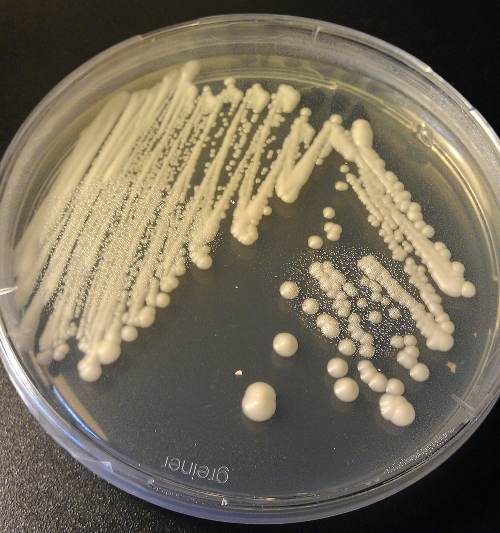
The research team conducted compelling experiments with yeast populations to test their hypothesis about environmental effects. They studied two groups: one evolving in a stable environment for 800 generations, and another evolving for the same duration but in a changing environment composed of 10 different growth media, with conditions shifting every 80 generations.
The results were striking. Yeast exposed to changing conditions showed far fewer beneficial mutations becoming established compared to those in stable environments. Even when advantageous mutations appeared, they rarely persisted long enough to spread significantly before environmental shifts rendered them less beneficial or even detrimental. This experimental evidence directly supports the Adaptive Tracking framework and helps explain the observed discrepancy between mutation rates and fixation rates.
Implications for Human Evolution and Modern Health
These findings have profound implications for understanding human genetics and health. Modern human environments differ dramatically from those our ancestors experienced, which may help explain why certain genetic traits no longer serve us optimally. As Zhang notes, "Our environment has changed so much, and our genes may not be the best for today's environment because we went through a lot of other different environments. Some mutations may be beneficial in our old environments, but are mismatched to today."
This perspective suggests that human populations are likely never fully adapted to their current environments because environmental changes occur more rapidly than complete genetic adaptation can occur. The degree of adaptation at any given moment depends on how recently significant environmental changes have taken place. This ongoing mismatch between genetics and environment may contribute to various health challenges in modern societies.
Limitations and Future Research Directions
While the study provides compelling evidence for the Adaptive Tracking framework, Zhang cautions that the research focused primarily on single-celled organisms like yeast and E. coli, where mutation effects are easier to measure precisely. Additional research will be needed to determine whether similar patterns apply to more complex multicellular organisms, including humans.
The research team is planning follow-up studies to better understand why organisms take so long to fully adapt even when environmental conditions remain stable. They also aim to explore how different rates of environmental change affect evolutionary trajectories and whether certain types of environments promote more rapid or effective adaptation than others.
Conclusion: Evolution as a Perpetual Pursuit
The University of Michigan research fundamentally reshapes our understanding of evolutionary processes. Rather than viewing evolution as a gradual march toward optimal adaptation, we must now consider it as a continuous, dynamic process of tracking environmental changes that never cease. This perspective helps explain why organisms rarely achieve perfect adaptation to their environments and why genetic changes that seem neutral in outcome may have involved significant selective processes along the way.
As environments continue to change at accelerating rates due to human activity and climate change, understanding these evolutionary dynamics becomes increasingly important. The Adaptive Tracking framework provides valuable insights into how species might respond to rapid environmental shifts and offers a more nuanced understanding of the complex relationship between genetics, adaptation, and environmental change.