Read on bbc.com
Trump's Greenland Tariff Threat Sparks Transatlantic Crisis
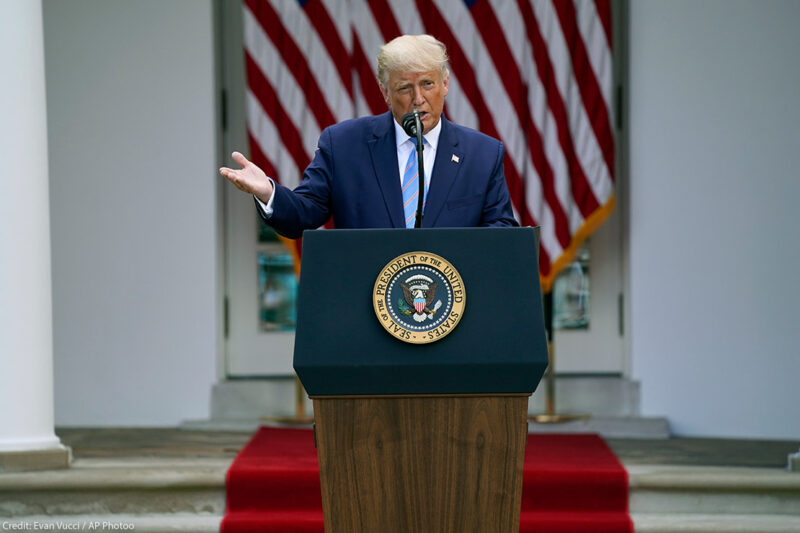
US President Donald Trump has announced a 10% tariff on goods from eight European allies, set to begin in February, in retaliation for their opposition to his proposed acquisition of Greenland. The move, described by European leaders as 'unacceptable' and 'completely wrong,' has triggered emergency EU meetings, widespread protests in Greenland and Denmark, and threatens to derail a key EU-US trade deal. This article examines the geopolitical motivations behind the threat, the unified European response, and the potential consequences for NATO and transatlantic relations.
In a dramatic escalation of geopolitical tensions, US President Donald Trump has threatened to impose punitive tariffs on eight key European allies over their opposition to his administration's renewed push to acquire Greenland. Announced via his Truth Social platform, a 10% levy on goods from Denmark, Norway, Sweden, France, Germany, the UK, the Netherlands, and Finland is scheduled to take effect on February 1st, with a potential increase to 25% by June. This move, framed by the White House as a matter of national security, has been met with swift and forceful condemnation across Europe, straining the bedrock of the NATO alliance and injecting a severe crisis into transatlantic relations.
The Geopolitical Stakes: Why Greenland?
At the heart of this dispute lies Greenland, a vast, sparsely populated, and resource-rich autonomous territory of Denmark. President Trump has consistently argued that Greenland's strategic location between North America and the Arctic is critical for US security, particularly for early warning systems against missile attacks and for monitoring maritime activity in the region. The US ambassador to the UN, Mike Waltz, reinforced this position, stating Denmark lacks the resources to secure the northern region adequately. However, this rationale clashes directly with the principle of territorial sovereignty, a cornerstone of international law fiercely defended by European nations.

A Unified European Condemnation
The European response to Trump's tariff threat has been remarkably unified and unequivocal. UK Prime Minister Keir Starmer labeled the move "completely wrong," while French President Emmanuel Macron declared such threats "unacceptable" and vowed not to be swayed by intimidation. Swedish Prime Minister Ulf Kristersson stated Sweden "won't let ourselves be blackmailed," highlighting coordinated discussions with other EU nations and the UK for a joint response. At the institutional level, European Commission President Ursula von der Leyen warned that tariffs "would undermine transatlantic relations and risk a dangerous downward spiral." The European Union promptly called an emergency meeting of ambassadors to formulate a collective stance, underscoring the severity of the crisis.
Local Opposition and the Right to Self-Determination
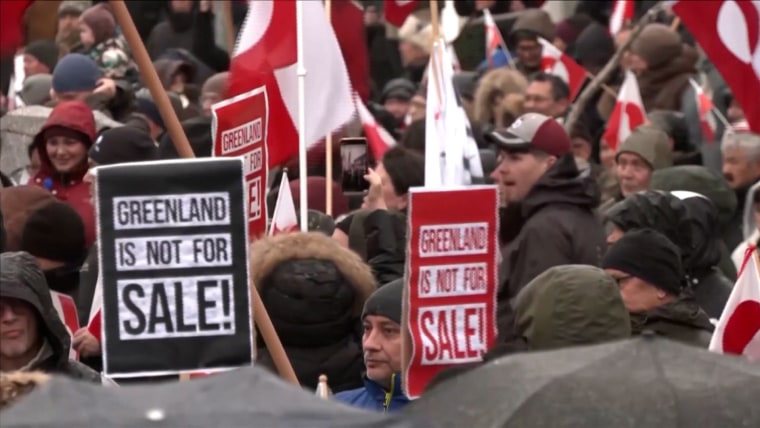
Beyond the diplomatic fallout, the strongest rejection comes from Greenland itself. Opinion polls indicate approximately 85% of Greenlanders oppose joining the United States. This sentiment was visibly demonstrated in coordinated protests across Greenland and Denmark. In Nuuk, Greenland's capital, Prime Minister Jens-Frederik Nielsen joined citizens carrying signs reading "Greenland is not for sale" in a march toward the US consulate. In Copenhagen, protesters waved Greenland's flag with placards stating "Hands Off Greenland." Camilla Siezing of the Inuit Ataqatigiit party articulated the core demand: "respect for the Danish Realm and for Greenland's right to self-determination." This grassroots opposition presents a significant moral and political obstacle to any acquisition plan.
Broader Implications for Trade and Security
The tariff threat has immediate and far-reaching consequences that extend beyond Greenland. It directly jeopardizes the recently negotiated EU-US trade deal, which had agreed to reduce tariffs significantly. Manfred Weber, head of the European Parliament's EPP group, stated that approval of the deal is "not possible at this stage" and called for the suspension of 0% tariffs on US products. Furthermore, the move undermines NATO cohesion at a critical time. European countries argue that Arctic security should be a joint NATO responsibility and have dispatched troops on a reconnaissance mission to Greenland in a show of solidarity with Denmark. EU foreign policy chief Kaja Kallas noted that adversaries like China and Russia "must be having a field day" watching divisions among allies.
Conclusion: A Dangerous Precedent
President Trump's threat to use tariffs as a coercive tool to force the sale of allied territory sets a dangerous and unprecedented precedent in international relations. It pits raw power politics against established principles of sovereignty and self-determination. While the White House frames the issue around security, the European alliance perceives it as an act of economic aggression and diplomatic bullying. The coming weeks will test the resilience of transatlantic partnerships, as the EU formulates its response and the February tariff deadline looms. The outcome will not only determine the future of Greenland but also redefine the limits of alliance diplomacy in an increasingly transactional global landscape.