Read on Global News
Trump's 28-Point Peace Proposal for Ukraine-Russia War: Key Details and Analysis
Former President Donald Trump has presented a comprehensive 28-point draft proposal to end the Russia-Ukraine war, developed in coordination with Washington and Moscow. The plan calls for significant territorial concessions from Ukraine, NATO membership restrictions, and military limitations while offering security guarantees and economic reconstruction support. This detailed framework represents one of the most substantial peace initiatives since the conflict began, though its terms appear heavily weighted toward Russian interests according to the leaked document obtained by The Associated Press.
The ongoing Russia-Ukraine conflict has taken a significant diplomatic turn with the presentation of former President Donald Trump's comprehensive 28-point peace proposal to Ukrainian officials in Kyiv. This detailed framework, developed through coordination between Washington and Moscow, represents one of the most substantial peace initiatives since the war began, though initial analysis suggests the terms heavily favor Russian interests.

Core Security Framework
The proposal establishes a comprehensive security architecture that fundamentally reshapes Ukraine's military and geopolitical positioning. Central to this framework is Ukraine's constitutional commitment to forego NATO membership, coupled with NATO's agreement to formally exclude Ukraine from future membership consideration. This represents a significant concession that addresses one of Russia's primary security concerns that precipitated the conflict.
The military limitations imposed on Ukraine include capping the Ukrainian Armed Forces at 600,000 personnel and prohibiting NATO troop deployments on Ukrainian territory. In return, Ukraine would receive security guarantees from the United States, though these come with strict conditions. According to the leaked document, the U.S. guarantee includes provisions for compensation and could be invalidated if Ukraine launches missiles at Moscow or St. Petersburg without cause.
Territorial Arrangements
The territorial provisions represent some of the most controversial elements of the proposal. The plan calls for international recognition of Crimea, Luhansk, and Donetsk as Russian territory, while Kherson and Zaporizhzhia would be frozen along current contact lines. Ukrainian forces would withdraw from parts of Donetsk Oblast they currently control, creating a neutral demilitarized buffer zone.
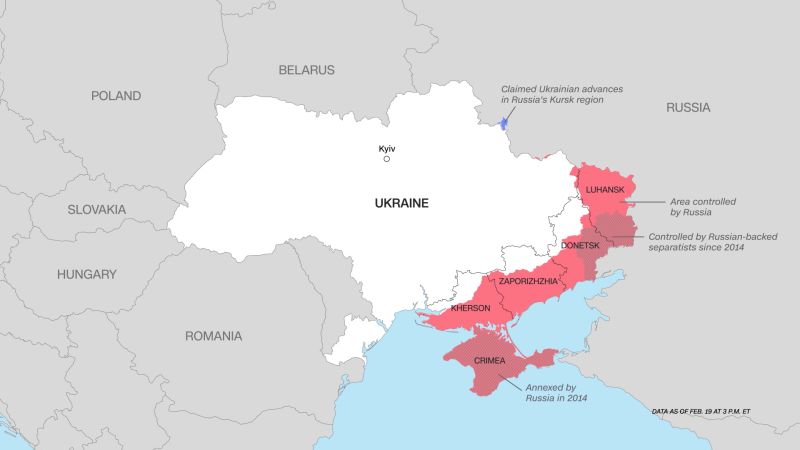
These territorial concessions would formalize Russian control over significant portions of eastern Ukraine that were internationally recognized as Ukrainian territory before the 2014 annexation of Crimea. The agreement includes a mutual commitment not to alter these arrangements by force, with security guarantees becoming void if this provision is violated.
Economic and Reconstruction Components
The economic framework offers substantial reconstruction support for Ukraine while reintegrating Russia into the global economy. A Ukraine Development Fund would invest in technology, data centers, and artificial intelligence, with the United States cooperating on rebuilding gas infrastructure and modernizing war-affected areas.
Russia's reintegration includes staged lifting of sanctions, long-term economic cooperation agreements, and invitation to rejoin the G8. The proposal outlines using $100 billion in frozen Russian assets for Ukraine reconstruction, with the U.S. receiving 50% of profits from this venture. Europe would contribute an additional $100 billion to reconstruction efforts.
Implementation and Oversight
The proposal establishes robust implementation mechanisms, including a joint American-Russian working group on security issues and a Peace Council headed by President Trump to monitor compliance. Ukraine would hold elections within 100 days of agreement, and all parties would receive full amnesty for actions during the war.
The humanitarian provisions include prisoner exchanges on an "all for all" basis, return of civilian detainees and children, family reunification programs, and educational initiatives promoting cultural understanding. The Zaporizhzhia Nuclear Power Plant would resume operations under IAEA supervision, with electricity distributed equally between Russia and Ukraine.
This comprehensive proposal represents a significant diplomatic effort to resolve the Ukraine conflict, though its terms have generated concern among Ukrainian allies who view the territorial and security concessions as disproportionately favoring Russian interests. The plan's implementation would fundamentally reshape European security architecture and Ukraine's geopolitical orientation for decades to come.