Read on bbc.com
Jack Smith Defends Trump Investigations in Congressional Testimony
Former Special Counsel Jack Smith testified before Congress about his two criminal investigations into President Donald Trump. In a closed-door hearing, Smith defended his work, stating his team developed proof beyond a reasonable doubt that Trump engaged in a scheme to overturn the 2020 election and mishandled classified documents. The hearing, led by House Judiciary Chairman Jim Jordan, highlighted deep partisan divisions over the prosecutions, which ended after Trump's re-election. Smith's appearance marks a significant moment in the ongoing political and legal battles surrounding the former president.
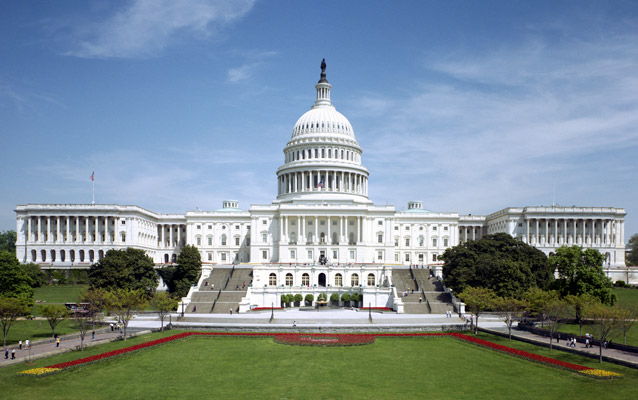
Former US Special Counsel Jack Smith appeared before Congress in a high-stakes, closed-door hearing to address questions about his two defunct criminal investigations into President Donald Trump. The testimony, held on Capitol Hill, centered on Smith's prosecutions related to alleged efforts to overturn the 2020 election and the mishandling of classified documents. This hearing represents a critical examination of one of the most significant legal endeavors in recent US political history, pitting a career prosecutor against a congressional committee deeply divided along partisan lines.

The Core of Smith's Testimony
In his opening statement, obtained by CBS News, Smith told lawmakers that his investigations were based entirely on President Trump's actions. He asserted that his team "developed proof beyond a reasonable doubt" that Trump "engaged in a criminal scheme" to overturn the 2020 election results. Smith emphasized that the evidence was substantial and directly tied to Trump's conduct, leaving no ambiguity about the basis for the charges.
Regarding the classified documents case, Smith stated investigators uncovered "powerful evidence" that Trump had retained sensitive materials and obstructed government efforts to retrieve them. This dual focus—election interference and document mishandling—formed the backbone of Smith's legal strategy, which he defended as legally sound and factually rigorous during his congressional appearance.
Political Context and Republican Criticism
The hearing took place before the House Judiciary Committee, currently chaired by Representative Jim Jordan, a staunch Trump ally. Jordan has been a vocal critic of Smith's investigations, describing them as "partisan and politically motivated." In an October letter to Smith, Jordan accused the prosecutor of employing "disturbing tactics," reflecting the deep political polarization surrounding these cases.
Republicans on the committee expressed particular concern about Smith's decision to subpoena phone records of several Republican lawmakers as part of the election investigation. This move has been characterized by Trump's supporters as an overreach, further fueling accusations of partisan bias. The closed-door nature of the hearing meant the public could not witness Smith's testimony in real time, a point of contention given the significant public interest in these investigations.
Democratic Perspective and Procedural Issues
Democrats on the Judiciary Committee approached the hearing with different objectives. Congressman Jamie Raskin, the panel's top Democrat, told Politico that Democrats wanted to "hear exactly what he found, and what he did." This suggests Democrats viewed the testimony as an opportunity to understand the investigative process and validate the seriousness of the allegations against Trump.
According to Smith's attorney, Peter Koski, the special counsel had volunteered to testify in an open hearing. Koski expressed disappointment that this offer was rejected, stating that "the American people will be denied the opportunity to hear directly from Jack on these topics." This procedural decision has implications for transparency and public understanding of these consequential investigations.
Broader Implications and Legal Precedents
Smith's testimony occurs against a backdrop of escalating tensions between Trump and the Department of Justice. Since returning to office, Trump has demanded investigations of officials who criminally charged him, including Smith. Trump has labeled Smith a "criminal" and suggested he should be "investigated and put in prison" along with other DOJ officials involved in the 2020 election inquiry.

The legal landscape has seen recent developments that may influence perceptions of Smith's work. In September, the Department of Justice indicted former FBI Director James Comey based on his 2019 congressional testimony, though a federal judge tossed out the case in November after finding the prosecutor was improperly appointed. These events highlight the complex interplay between law enforcement, congressional oversight, and political accountability in contemporary American governance.
Conclusion: A Nation Divided Over Accountability
Jack Smith's congressional testimony represents more than a routine oversight hearing; it encapsulates the deep divisions in American politics regarding presidential accountability and the rule of law. While Smith defended his investigations as legally justified and evidence-based, Republican critics viewed them as politically motivated overreach. The closed-door nature of the proceedings limited public transparency, yet the substance of the testimony—and the reactions it provoked—will likely influence ongoing debates about the appropriate boundaries of presidential power and prosecutorial independence in the United States.