Assessing the Prospects for a Ukraine Ceasefire: Why Experts Remain Skeptical
Despite recent high-level diplomatic talks in Berlin and optimistic statements from US President Donald Trump, experts caution that a sustainable ceasefire agreement to end the Russia-Ukraine war remains distant. Key sticking points, including territorial control, security guarantees, and incompatible war aims, present significant obstacles. This analysis examines the recent negotiations, the positions of Ukraine, Russia, and Western mediators, and why a resolution may not be as close as some political leaders suggest.
The prospect of a ceasefire to end Russia's protracted war in Ukraine has resurfaced in international discourse, fueled by a recent flurry of high-level diplomatic meetings. While political rhetoric suggests progress, a closer examination reveals a landscape fraught with unresolved fundamental issues. Experts analyzing the negotiations express significant doubt that a sustainable peace agreement is imminent, pointing to deep divisions over territory, security, and the core objectives of the conflict.
The Berlin Talks and Proposed Security Framework
The latest diplomatic push centered on meetings in Berlin attended by Ukrainian President Volodymyr Zelenskyy, US envoys, and key European leaders. The discussions aimed to formulate a package of "robust security guarantees" for Ukraine, potentially in lieu of NATO membership. According to reports from Al Jazeera, European leaders and the United States proposed a European-led "multinational force" to operate inside Ukraine, assist in rebuilding its military, and secure its airspace and seas. This force concept was described by US officials as offering "Article 5-like" protections, referencing NATO's mutual defense clause.
Ukrainian officials, however, have approached these guarantees with caution. President Zelenskyy emphasized the need for clarity on the guarantees before making decisions on territorial concessions under any peace settlement. History informs this skepticism; Ukraine received security assurances from the West after its independence in 1991, which did not prevent Russia's annexation of Crimea in 2014 or the full-scale invasion in 2022. German Chancellor Friedrich Merz noted the US had offered "considerable" legal and material guarantees, but Russia has not formally responded to the proposals.
Persistent Sticking Points: Territory and Incompatible Aims
The most significant barrier to a ceasefire remains the question of territory. Russia currently controls nearly 20 percent of eastern Ukraine, including Crimea and large parts of the Donbas region. Ukrainian polling indicates strong domestic opposition to ceding these lands, with approximately 75 percent of Ukrainians rejecting withdrawal from Donbas. Zelenskyy has recently been firm on this point, while Moscow's aim appears to be control of the entire Donbas.

Experts argue the war aims of Russia and Ukraine are fundamentally incompatible. Keir Giles of Chatham House told Al Jazeera that the two sides' objectives are "so far apart that they are exceptional in terms of modern wars." He posits that Russia will only agree to stop fighting if it believes it gains more from a ceasefire than from continuing its assault, viewing any agreement as a temporary pause to be violated at will. For Ukraine, accepting significant territorial loss is politically untenable and seen as rewarding aggression.
Political Rhetoric Versus Strategic Reality
US President Donald Trump has claimed a deal is "closer than ever," citing support from European leaders. His administration has pressured Ukraine for concessions and opposed its NATO membership bid. However, experts view these statements with skepticism. "Trump has repeatedly claimed that a peace deal is close without sustainable agreement," noted Giles. Similarly, foreign policy expert Nathalie Tocci stated it is "extremely unlikely that a ceasefire is going to be reached now" due to the unresolved core issues.
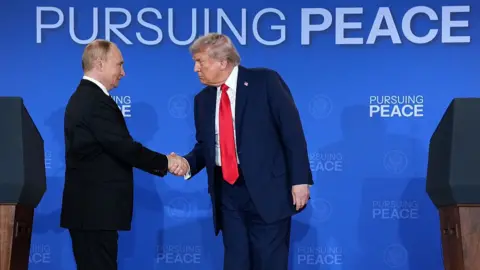
Further complicating the picture is the existence of parallel negotiation tracks—between the US and Ukraine, and between Ukraine and European nations—without clear evidence of full coordination. Past efforts, including a Trump-Putin summit in Alaska and various draft proposals, have failed to halt the fighting. Zelenskyy's recent adoption of Trump's phrase "stop the killing" indicates diplomatic maneuvering but not necessarily breakthrough.
Conclusion: A Long Road Ahead
In summary, while diplomatic activity provides a veneer of progress, the path to a durable ceasefire in Ukraine remains obstructed by intractable problems. The conflict's resolution hinges on bridging a vast gap between Ukrainian sovereignty and Russian imperial objectives, a challenge that recent talks in Berlin have not overcome. Until there is a fundamental shift in the military situation or political will, particularly in Moscow, the grim assessment of experts is likely to hold: the war will continue, and a true peace remains a distant hope. The international community must balance support for Ukraine's defense with rigorous, realistic diplomacy that acknowledges these profound challenges.