Read on nature.com
How Scientific Thinking Fuelled Success on The Great British Sewing Bee
Success in creative competitions like The Great British Sewing Bee often stems from unexpected sources. This article explores how the rigorous, iterative mindset of a scientist—encompassing research, experimentation, and systematic problem-solving—can be directly applied to the art of sewing. By viewing fabric, patterns, and construction through a scientific lens, contestants can achieve precision, innovation, and resilience under pressure, turning a craft into a competitive advantage.
The intersection of science and art is often more profound than it appears. For contestants on shows like The Great British Sewing Bee, victory is not solely about innate creative talent or manual dexterity. Increasingly, success is being attributed to a methodical, analytical approach—one that is fundamentally scientific. The skills honed in the laboratory, from hypothesis-driven experimentation to meticulous data analysis, translate surprisingly well to the sewing room, providing a structured framework for creativity and problem-solving under the intense pressure of competition.
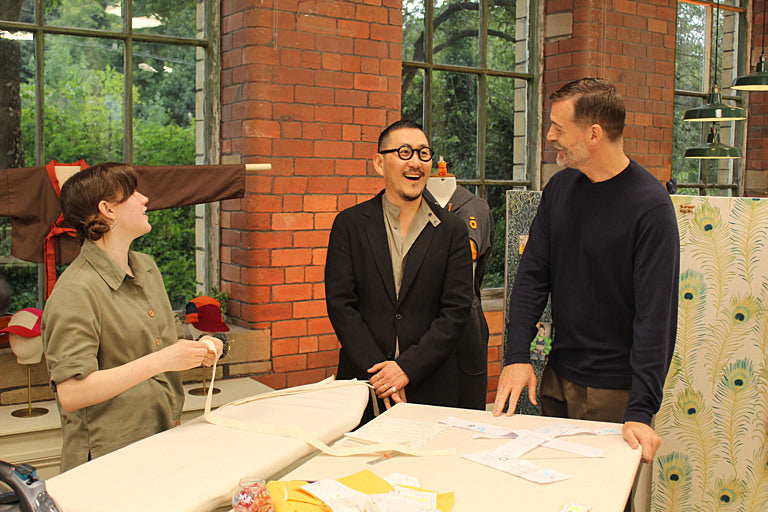
As noted in a Nature Careers Community article, sewing and science share core procedural similarities. Both are iterative processes built upon research and experimentation, applying knowledge gained from previous work—whether one's own or that of others in the field. This foundational parallel suggests that a scientific background offers more than just niche knowledge; it provides a versatile toolkit for tackling complex, open-ended challenges.
The Scientific Method in Fabric Form
At its heart, the scientific method is a cycle of observation, hypothesis, experimentation, and analysis. This cycle maps directly onto the workflow of a sewing bee challenge. A contestant first observes the brief—the pattern, the fabric, the time constraint—much like a scientist reviews existing literature. They then form a hypothesis: "If I use this particular seam finish and adjust the dart here, the garment will have a cleaner drape." The construction phase becomes the experiment, testing this hypothesis against the materials and the clock. Finally, the finished garment is analyzed, both by the judges and the contestant themselves, with insights feeding directly into the approach for the next challenge.
Core Scientific Skills for Sewing Success
Several discrete competencies from scientific training prove invaluable in a sewing competition.
Precision and Measurement
Science demands exactitude, whether in measuring reagents or calibrating instruments. This translates perfectly to sewing, where a discrepancy of a few millimetres in a seam allowance or pattern piece can compromise the entire garment. A scientist's comfort with precise measurement tools and techniques ensures accuracy from the first cut.
Systematic Problem-Solving
When an experiment fails, a scientist systematically troubleshoots: Is it the protocol, the temperature, the sample? Similarly, when a sleeve doesn't set correctly or a zipper puckers, a methodical approach is key. Instead of panicking, a scientifically-minded sewer will deconstruct the problem, test potential solutions on a scrap, and implement the fix—a process that saves precious time during timed challenges.

Iterative Development and Resilience
Scientific research is rarely linear; it involves setbacks, learning, and iteration. This builds resilience—a crucial trait for any reality TV contestant. A scientist understands that a "failed" toile (a test garment) is not a waste of time but a vital source of data. This mindset reduces fear of failure and encourages rapid prototyping and adaptation, allowing for continuous improvement throughout the competition.
Research as a Creative Foundation
Beyond technique, science instills a deep respect for research. For a sewing bee contestant, this means not just understanding how to execute a Victorian tailoring technique, but also why it was developed, how it has evolved, and what alternatives exist. This historical and technical context, gathered through diligent research, allows for more informed and innovative design choices. It empowers a sewer to adapt classic principles to modern aesthetics or functional requirements, often leading to standout pieces that impress judges with their intelligent fusion of tradition and innovation.
Conclusion: A Formula for Creative Victory
The journey on The Great British Sewing Bee is, in essence, a series of complex, timed experiments. Success therefore favours those who can blend creative vision with analytical rigour. The scientific mindset provides a powerful framework for this blend, offering tools for precision, a methodology for innovation, and the resilience to learn from every stitch. It demonstrates that the distance between the lab bench and the sewing machine is shorter than it seems, and that the quest for knowledge—whether about molecular biology or the behaviour of silk dupioni—follows a wonderfully similar path of curiosity, experimentation, and discovery.