Read on nature.com
Navigating the Future: Safety Regulations for Cloning and the True North Compass
This article explores two distinct yet profound technological frontiers: the evolving global safety regulations governing human cloning and the development of a compass that finds true north. We examine the ethical, legal, and scientific frameworks being established to manage the risks of cloning, drawing on historical scientific discourse. Simultaneously, we look at the technological advancements behind modern navigation tools that promise unprecedented directional accuracy. Understanding both areas is crucial for navigating the complex future of biotechnology and geospatial technology.
The intersection of groundbreaking biotechnology and advanced geospatial tools presents unique challenges for modern society. Two such areas—human cloning and precision navigation—are at the forefront of scientific and regulatory discussions. While cloning pushes the boundaries of life science and ethics, the quest for a perfect compass tackles fundamental questions of orientation and truth in our physical world. This article provides a concise overview of the safety regulations emerging around cloning and the technological principles behind finding true north.
The Regulatory Landscape for Human Cloning
Human cloning remains one of the most ethically charged and heavily regulated areas of scientific research. The primary concern driving global policy is safety—not just for potential clones, but for society's ethical framework. Most nations have enacted strict bans or moratoriums on reproductive human cloning, citing unresolved risks of genetic abnormalities, psychological harm, and profound ethical dilemmas. Regulatory bodies focus on establishing clear boundaries for research, often permitting therapeutic cloning under stringent oversight while prohibiting reproductive applications entirely.
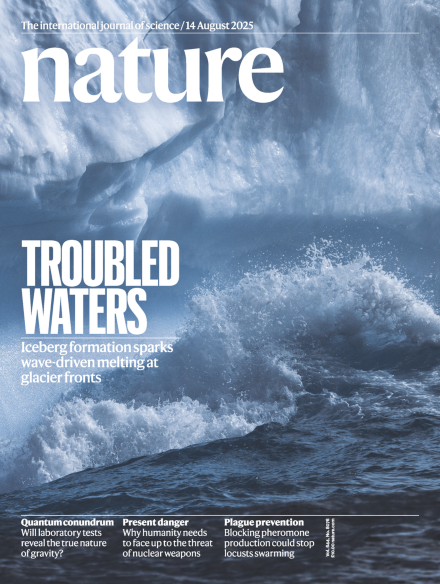
The discourse around cloning is deeply rooted in scientific history and ongoing debate. As noted in archives from publications like Nature, the scientific community has long grappled with the implications of manipulating life. Modern regulations aim to balance scientific curiosity with a precautionary principle, ensuring research does not outpace our understanding of the consequences. This involves international treaties, national legislation, and institutional review boards that collectively form a multi-layered safety net.
The Technology of Finding True North
In contrast to the biological complexity of cloning, the pursuit of a compass that finds true north is a problem of physics and engineering. True north refers to the geographic North Pole, the fixed point where the Earth's axis of rotation meets its surface. This differs from magnetic north, which shifts over time due to changes in the Earth's molten core. Modern solutions, such as gyrocompasses and GPS-based systems, use advanced sensors and algorithms to calculate true north by referencing the Earth's rotation or satellite data, providing unparalleled accuracy for navigation, surveying, and military applications.

Converging Themes of Precision and Control
Despite their differences, both fields share a common theme: the human desire for precision and control over fundamental aspects of our existence. Cloning regulations seek to control the power to create life, while advanced compass technology seeks to master our orientation in space. Both require robust frameworks—ethical and legal for cloning, technical and standardized for navigation—to ensure safety and reliability. The development in each area is incremental, built upon decades of prior research and public discourse, much of which is documented in the annals of science.
Conclusion and Future Directions
As technology advances, the frameworks governing it must evolve. For cloning, future regulations will need to address emerging techniques like gene editing in conjunction with cloning. For navigation, the integration of AI with inertial measurement units promises even more resilient true north indicators. Staying informed through reputable scientific sources is key to understanding these developments. The ongoing dialogue in journals like Nature highlights that responsible progress in any field depends on learning from the past while rigorously assessing the safety and implications of the future.