Brain-Like Learning Discovered in Bacterial Nanopores
Scientists at EPFL have uncovered the mechanisms behind unpredictable behaviors in biological nanopores, revealing how electrical charges within these molecular structures create effects like rectification and gating. Through experiments with engineered aerolysin nanopores, the research team demonstrated that these microscopic pores can exhibit brain-like learning capabilities, opening new possibilities for bio-inspired computing and ion-based processors. This breakthrough could lead to smarter nanopores with customized properties for biotechnology applications.
Biological nanopores, the microscopic molecular channels found throughout living organisms, have long presented scientists with puzzling behaviors that disrupt their applications in biotechnology. Researchers at EPFL have now decoded the mystery behind these unpredictable patterns, revealing how electrical charges within nanopores create complex effects that can even mimic brain-like learning processes.
The Puzzle of Nanopore Behavior
Nanopores serve as essential molecular gatekeepers in nature, controlling the movement of ions and molecules through cell membranes. In humans, they play critical roles in immune defense, while bacteria use them as toxins to puncture cell membranes. Their precision has made them invaluable tools in biotechnology, particularly in DNA sequencing and molecular sensing applications. However, two specific behaviors have consistently challenged researchers: rectification and gating.
Rectification occurs when ion flow changes direction based on the voltage applied, functioning like a molecular one-way valve. Gating represents the more disruptive phenomenon where ion flow suddenly decreases or stops entirely. These effects have remained poorly understood despite their significant impact on nanopore-based technologies.
Unraveling the Electrical Mystery
The EPFL research team, led by Matteo Dal Peraro and Aleksandra Radenovic, employed a comprehensive approach combining experiments, simulations, and theoretical modeling to investigate these phenomena. Their focus was on aerolysin, a bacterial pore commonly used in sensing research. By creating 26 distinct nanopore variants with different charge patterns, the scientists could systematically study how electrical charges influence ion transport.
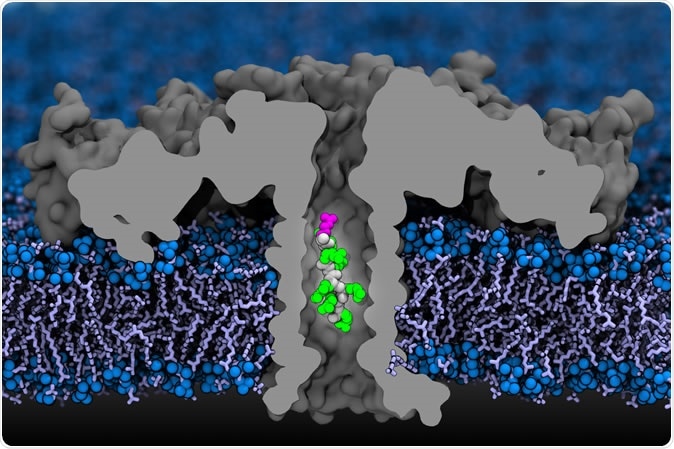
Through careful experimentation with alternating voltage signals, the team distinguished between the rapid effects of rectification and the slower development of gating. This temporal separation proved crucial for understanding the underlying mechanisms. The research revealed that both phenomena stem from the interaction between the nanopore's internal electrical charges and the ions passing through them.
From Molecular Gates to Brain-Like Learning
The team's findings demonstrate that rectification occurs because charges along the nanopore's inner surface make ion movement easier in one direction than the other. Gating, in contrast, happens when heavy ion flow disrupts the charge balance, temporarily destabilizing the pore's structure and blocking passage until the system resets.
By manipulating charge patterns and increasing pore rigidity, researchers gained precise control over these effects. Most remarkably, they engineered nanopores that mimic synaptic plasticity, demonstrating learning capabilities similar to neural synapses. This breakthrough suggests that future computing systems could harness molecular learning processes for entirely new forms of ion-based processing.

Future Applications and Implications
These discoveries open exciting possibilities for engineering biological nanopores with customized properties. Scientists can now design pores that minimize unwanted gating for improved sensing applications or deliberately utilize gating effects for bio-inspired computing. The demonstration of molecular learning in nanopores represents a significant step toward developing ion-based processors that could revolutionize computing technology.
The research, published in Nature Nanotechnology, provides a fundamental understanding that could transform how we design and utilize biological nanopores across multiple fields, from medical diagnostics to next-generation computing systems.