Read on France 24
The Global Wave: How Gen Z's 2025 Protests Reshaped Politics in the Global South
In 2025, a wave of youth-led protests swept across the Global South, from Nepal to Peru, marking a pivotal moment for Generation Z. United by shared frustrations over inequality, corruption, and political exclusion, young people leveraged social media to transform local grievances into a coordinated global movement. While outcomes varied from tangible political change to military coups, the year demonstrated Gen Z's unique ability to organize and demand accountability without seeking traditional power. This retrospective examines the catalysts, key battlegrounds, and lasting implications of a generational force set to influence 2026 and beyond.
In 2025, the political landscape of the Global South was fundamentally reshaped not by established parties or leaders, but by its youngest citizens. From the bustling streets of Kathmandu to the historic plazas of Lima, Generation Z—those born between the late 1990s and early 2010s—took to the streets in a synchronized wave of discontent. Their protests, though rooted in diverse local contexts, were united by a common thread: a profound anger towards elites perceived as out of touch and a resolute demand for a more equitable future. This was not a series of isolated incidents but a shared moment of global mobilisation, powered by digital platforms and driven by universal values of justice and dignity.
The Catalysts of a Global Movement
The spark that ignited this global tinderbox was often a specific, symbolic injustice that resonated with broader systemic failures. In Jakarta, Indonesia, the announcement of housing allowances for members of parliament—reportedly nearly ten times the national minimum wage—acted as a powerful trigger. This blatant display of privilege amidst widespread economic hardship prompted students to mobilize, with their protests quickly adopting the pirate flag from the popular manga "One Piece" as an emblem of rebellion against entrenched power. This imagery spread virally, becoming a visual shorthand for the Gen Z revolt across borders.
Sociologist Michel Wieviorka, director of studies at the School for Advanced Studies in the Social Sciences (EHESS), characterizes this movement as one driven by universal values. "This is a generation that is not acting only for itself, but so that everyone has access to education, healthcare and housing, and to put an end to corruption in power," he observed. The protests emerged in contexts where democracy was often illiberal or weakly institutionalized, and where state responses frequently involved repression, fueling a dangerous spiral of violence.

Key Battlegrounds and Divergent Outcomes
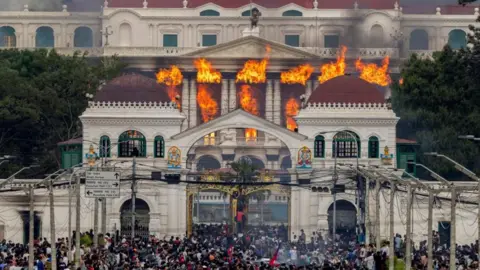
The movement's epicenters revealed both its potent force and its vulnerabilities. In Nepal, the protest wave reached a dramatic climax. Viral social media content exposing the lavish lifestyles of political "nepo-kids" and a government crackdown on digital platforms culminated in the parliament building in Kathmandu being set ablaze. The country was gripped by violent riots for two days, resulting in significant casualties. However, this pressure yielded a historic victory: the fall of the government. In an unprecedented move, an interim prime minister was appointed following a vote organized on the platform Discord, and a commission of inquiry was established to investigate protester deaths.
In contrast, the outcome in Madagascar was a sobering lesson in political co-option. After weeks of youth-led demonstrations against chronic utility cuts and demanding presidential resignation, President Andry Rajoelina was overthrown—not by the protesters, but by a military coup. The subsequent government remained under army control, leading analysts like Wieviorka to conclude that "the military hijacked a protest that had failed to constitute itself as a political force." In Morocco, the Gen Z 212 collective (named for the country's telephone code) used Discord to coordinate demands for school and healthcare reform. While the monarchy announced modernization measures, implicitly acknowledging the protests' legitimacy, severe repression followed, with hundreds of young people, including minors, reportedly detained.
The Digital Backbone and Lasting Momentum
A defining feature of the 2025 protests was their digital-native organization. Platforms like TikTok, Instagram, and Discord were not merely tools for communication but were central to movement building, symbol creation, and even political decision-making, as seen in Nepal's Discord vote. This allowed geographically scattered groups to share tactics, slogans, and a sense of shared struggle almost instantaneously, creating a powerful contagion effect.
As 2026 begins, the question is whether this represents a lasting political realignment or a fleeting wave of anger. In Nepal, the movement has transitioned to a "second phase," focusing on voter registration and anti-corruption efforts ahead of scheduled elections, with protesters vowing "We won't stop." History provides cautionary tales, from the Arab Spring to Occupy Wall Street, about the challenges of sustaining momentum. However, Gen Z's approach is distinct: it seeks to impose themes, extract concessions, and demand systemic change without immediately seeking to seize traditional political power. They may lack a fully formed political platform, but, as Wieviorka notes, they possess "a clear horizon: that of profound change." Their ability to organize and globalize local struggles suggests that the spotlight on this generational movement is far from fading.