Carrying Gaza: An Essay on Leaving, Memory, and the Weight of Home
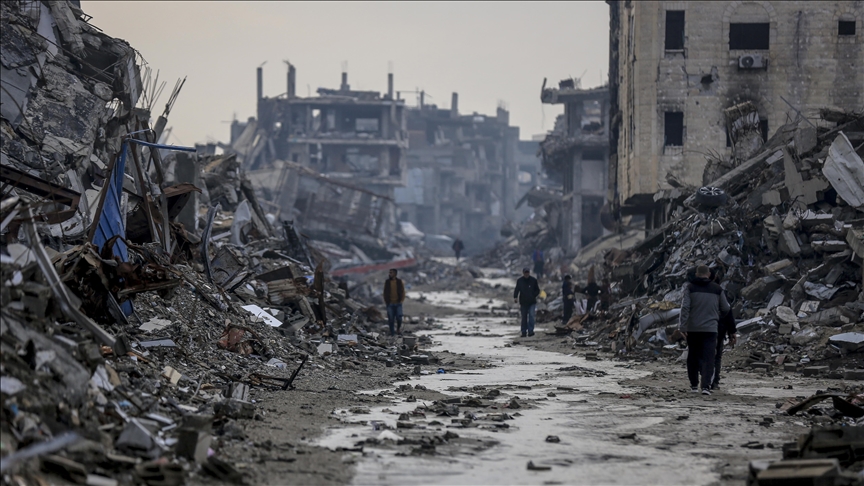
This essay explores the profound experience of leaving Gaza, carrying its memories into exile, and navigating the complex identity of a Palestinian shaped by both homeland and diaspora. Through a personal narrative, it examines how home becomes a psychological and emotional burden that breaks and rebuilds itself within those forced to depart. The piece reflects on the trauma of distance, the collapse of that distance during war, and the ongoing struggle to articulate a life that exists beyond headlines of destruction. It is a meditation on what it means to carry a place that is constantly under siege, both physically and in the world's imagination.
Gaza exists in the global consciousness as a place of conflict, a geopolitical flashpoint, or a humanitarian crisis. Yet, for those who call it home, it is a world of dense familiarity, of childhoods accelerated by circumstance, and of memories that become anchors in a life of exile. This essay is not about politics or war in the abstract; it is about the intimate act of carrying a home that perpetually fractures, about the journey of leaving, and about the memories that define a person long after they have crossed the border. It explores the psychological landscape of the diaspora, where identity is forged in the tension between a place left behind and a world that often fails to comprehend it.

The Closed World: A Childhood in Gaza
Life in Gaza is often described as existing within a folded timeline, a closed world where normal developmental stages are compressed or distorted. Children grow too fast, thrust into adult conversations and concerns, while simultaneously grasping for the ordinary moments of play. One becomes, as noted in personal accounts from the region, "the sharpened tongue"—a child who refuses the expected softening, who understands the weighty discussions of adults while still sewing clothes for dolls. This duality creates a unique consciousness, an awareness born from confinement. The geography itself reinforces this: drives down coastal al-Rashid Street to Rafah become cherished rituals, where the smell of spiced fish and sea breeze temporarily transforms the cage into a cradle of warmth and familial inside jokes. These are not grand, cinematic memories, but they are profoundly personal—the texture of a home known from the inside.
The Act of Leaving: Crossing Thresholds Alone
The decision to leave is often preordained, a quiet certainty amidst local expectations. When peers discuss local universities, the dreamer speaks of abroad, of becoming a journalist like a parent. The actual departure is a bureaucratic and emotional gauntlet. At seventeen, leaving means carrying a court document to permit solo travel, standing at the Rafah crossing to memorize a father's and brother's face, not knowing if this goodbye is temporary or permanent. The journey is a series of thresholds: Egyptian waiting rooms, security checks at Cairo Airport, transit in Istanbul, arrival in Cyprus. Each stop involves extra scrutiny because of a black passport, transforming ordinary questions into existential tests. As described in firsthand narratives, you must "earn a life outside the only world you knew" by successfully navigating this labyrinth of suspicion and procedure.

The Exile's Paradox: Silence and Distance
The first night of freedom brings a deep, unprecedented sleep. Yet, the body remains wired to its origins; a suitcase scraping a floor triggers a panic response meant for explosions. The mind must constantly remind the body: You're not in Gaza anymore. The new environment is defined by an unfamiliar and almost frightening silence. There is no constant hum or hovering threat. Building a new life involves mundane discoveries—finding a campus mini-market, buying an adapter—that feel alien. In classrooms, you become an ambassador for a place that exists in a "vacuum in the world’s imagination." You correct "Pakistan" for "Palestine," show pictures on maps, and field sincere, bewildered questions about whether your home actually exists. This is the exile's paradox: you physically escape the cage, only to find your home is invisible to many in the world you've entered.
The Distance Collapses: War and the Resurfacing of Home
For years, exile can feel like a gradual distancing, a vivid dream fading under layers of new bus routes and ordinary mornings. This illusion shatters utterly when war erupts. The geographic distance collapses into psychological immediacy. You work remotely with a father who is a journalist inside the warzone, translating and monitoring news, each message a lifeline. Fear becomes a physical prison; you shut yourself in a room, terrified to sleep. When sleep finally comes, you wake to news of a cousin's death. The guilt is irrational and immediate—as if your vigilance could have been a shield. The loss compounds: uncles, aunts, entire branches of a family erased in a night. This is when you understand how much of Gaza you carried with you. The exile did not leave home behind; it brought home along, dormant until the breaking point.
Carrying the Breaking Home: Trauma and Reconstruction
The work that follows is not about "getting over" trauma but learning to live while it continues. A diagnosis of post-traumatic stress disorder (PTSD) formalizes the struggle, and therapy becomes a space to navigate a shifting internal landscape. Identity becomes a composite: "born in Palestine, but shaped in Cyprus." Gaza provided the raw awareness of the world's harsh contours; exile provided the language to articulate that understanding. Every new country—Egypt, Oman—adds a layer to the central, unanswered question: How do you carry a home that keeps breaking? The answer lies in forward motion: pursuing education in diplomacy to understand the power structures that dictated your childhood, rebuilding a life with purpose. It is an attempt to master the narrative that was imposed upon you.

Gaza Is People
Ultimately, this narrative challenges the reduction of Gaza to a synonym for destruction. The people of Gaza, as this essay underscores, live lives of complexity, humor, love, and aspiration—their struggle is multiplied by forces beyond their control, but their humanity is not defined by it. This story is one of millions, a single thread in a vast tapestry of displacement and resilience. Its power lies not in its uniqueness, but in its specificity—its ability to translate a headline into a human experience. It is a reminder that Gaza is, first and foremost, people. And people, everywhere, deserve to live, to remember, and to carry their homes—however broken—with dignity into whatever future they can build.