Hidden Brain Maps: How Vision Becomes Touch and Fuels Empathy
Neuroscientists have discovered eight 'body-like' maps in the brain's visual cortex that organize what we see in the same way the brain processes touch. This groundbreaking research reveals how simply watching someone move, get injured, or express emotion can trigger our own sensory systems, creating the physical sensation of empathy. The findings, published in Nature, explain our instantaneous understanding of others' actions and intentions and open new pathways for brain-based therapies and AI development that better comprehend the human bodily experience.
When you watch a friend cut their finger while cooking, you might instinctively wince or pull your own hand back. This isn't just a social reflex—it's a neurological event where your brain literally translates vision into touch. Groundbreaking neuroscience research has uncovered the biological mechanism behind this phenomenon, revealing how our brains create empathy through specialized mapping systems that bridge visual perception and bodily sensation.
The Discovery of Vicarious Body Maps
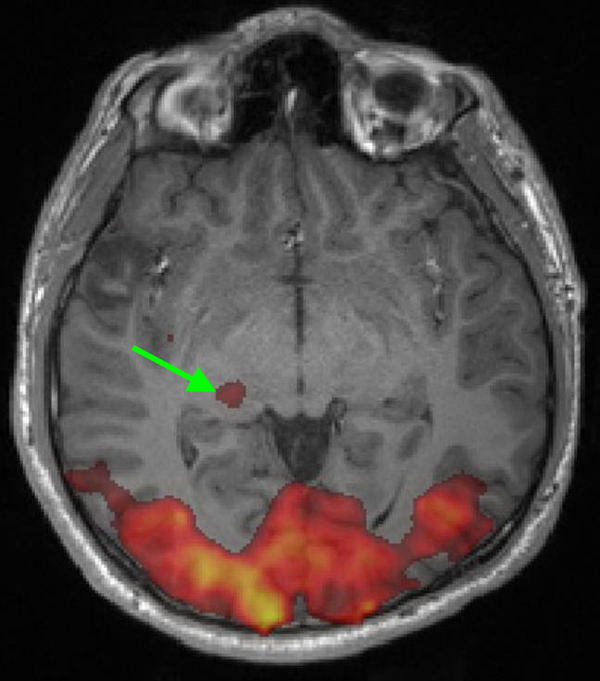
In a global collaboration between researchers from the University of Reading and the Netherlands Institute for Neuroscience, scientists made a remarkable discovery: the visual cortex contains eight distinct body-like maps that organize visual information in the same head-to-toe arrangement found in the brain's touch-processing regions. These "vicarious body maps" function as translation systems, converting what we see into a format that our sensory brain regions can understand as bodily experience.
Lead researcher Tomas Knapen explains the significance: "We found not one, or two, but eight remarkably similar maps in the visual cortex! Finding so many shows how strongly the visual brain speaks the language of touch." This discovery, detailed in the journal Nature, represents a fundamental shift in understanding how humans experience the world through observation.

How the Brain Translates Vision into Sensation
The research team employed an innovative methodology, using Hollywood films like The Social Network and Inception as stimuli while participants underwent brain scanning. This naturalistic approach revealed how the brain responds during everyday viewing experiences rather than controlled laboratory tasks. The findings demonstrate that when we observe another person, our visual cortex structures that information using the same organizational principles as our somatosensory cortex—the region responsible for processing physical touch.
This neural architecture explains why watching someone experience physical sensations can trigger similar responses in our own sensory systems. The brain doesn't merely recognize what it sees; it processes visual information through bodily frameworks that create a lived, physical sense of reality from observation alone.
Functional Specialization of Multiple Maps
The presence of eight distinct body maps suggests sophisticated functional specialization within the visual processing system. According to the researchers, each map appears to support different aspects of bodily understanding. Some maps focus on recognizing specific body parts, while others help determine spatial relationships or interpret emotional states through posture and movement.
Knapen illustrates this specialization: "Say you stand up and grab a cup of coffee. If I'm interested in what you're doing, I will probably focus on your hand grabbing the cup. Now imagine that I'm more interested in your emotional state. In that case, I might focus more on your overall posture or your facial expressions." The multiple mapping systems allow the brain to process various dimensions of bodily information simultaneously, selecting the most relevant translation for each moment.
Implications for Psychology and Medicine
This discovery has significant implications for understanding social cognition and developmental conditions. The researchers note that these body maps appear crucial for emotional understanding and social connection, which could advance research in social psychology and clinical care. Knapen specifically mentions potential applications for autism spectrum disorders: "People with autism can struggle with this sort of processing. Having this information could help us better identify effective treatments."
The findings also open new possibilities for neurotechnology development. Brain-computer interfaces and neural implants often rely on users "thinking" of movements for training. Understanding how bodily processes can be activated through observation could expand training methods and application possibilities for these technologies.
Future Directions for AI and Technology
Perhaps the most forward-looking implications concern artificial intelligence development. Current AI systems primarily process text and video data but lack the bodily dimension that characterizes human experience. These discoveries about how the brain integrates visual and bodily information could inform the development of AI systems with more human-like understanding of physical experience and empathy.
"Our bodies are deeply intertwined with our experiences and understanding of the world," Knapen observes. "Current AI primarily relies on text and video, lacking this bodily dimension. This aspect of human experience is a fantastic area for AI development." The research demonstrates how neuroscience can provide foundational insights for creating more sophisticated, embodied AI systems.
Conclusion: Understanding the Human Experience
The discovery of vicarious body maps represents more than just a neurological finding—it reveals a fundamental mechanism of human connection. These mapping systems allow us to literally feel what we see, creating the shared experiences that form the basis of empathy, social understanding, and emotional connection. As Knapen reflects on the research motivation: "I just want to understand the depths of the human experience, and it really feels like we just found this central ingredient for it."
This research bridges multiple disciplines, from basic neuroscience to clinical psychology and technological development. It demonstrates how understanding fundamental brain mechanisms can illuminate everything from daily social interactions to future technological innovations, all while deepening our appreciation for the sophisticated biological systems that make human connection possible.