The Hidden Brain Maps That Make Empathy Feel Physical
Neuroscientists have discovered eight body-like maps in the visual cortex that organize what we see in the same way the brain organizes touch. These maps allow us to instantly understand actions, emotions, and intentions in others by converting visual information into sensations of touch. This groundbreaking research explains why we physically react when seeing someone get hurt and sheds new light on the neural basis of empathy. The findings have significant implications for psychology, medicine, and the development of more human-like artificial intelligence systems.
When you watch someone cut their finger while cooking, you might instinctively wince or pull your own hand away. This immediate, physical reaction isn't just imagination—it's your brain actively converting visual information into bodily sensation. Recent neuroscience research has uncovered the hidden mechanisms behind this phenomenon, revealing how our brains create empathy through specialized neural maps that bridge vision and touch.
The Discovery of Body Maps in the Visual Cortex
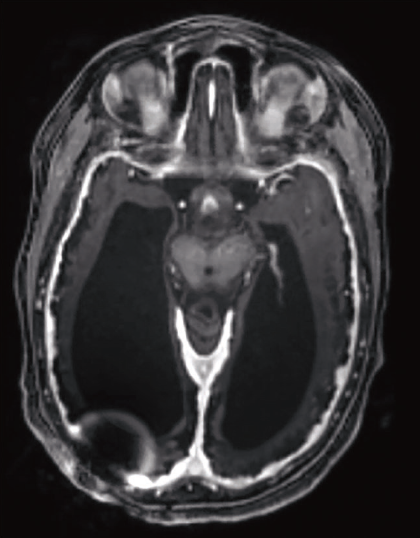
In a global research collaboration, neuroscientists from the University of Reading and the Netherlands Institute for Neuroscience made a remarkable discovery. They identified not just one or two, but eight distinct body-like maps in the visual cortex—the brain region primarily responsible for processing visual information. These maps organize visual input in the same head-to-toe pattern found in the somatosensory cortex, which processes physical touch sensations throughout the body.
The researchers used an innovative approach to make this discovery. Instead of traditional laboratory tasks, they analyzed brain activity while participants watched Hollywood films like The Social Network and Inception in MRI scanners. This natural viewing experience revealed how the brain processes complex social and physical interactions in real-world contexts. According to lead researcher Tomas Knapen, "We found eight remarkably similar maps in the visual cortex! Finding so many shows how strongly the visual brain speaks the language of touch."

How Visual-Touch Translation Works
These newly discovered maps function as translation systems that convert visual information about others' bodies into neural patterns that mimic physical touch. When you see someone's hand reaching for a cup, specific maps activate to process that visual information in bodily terms. The brain essentially creates a vicarious touch experience based purely on visual input.
The eight different maps appear to serve specialized functions. Some focus on recognizing specific body parts, while others help determine spatial relationships between body parts. This multiplicity allows for flexible processing depending on what you're paying attention to in any given moment. As Knapen explains, "If I'm interested in what you're doing, I will probably focus on your hand grabbing the cup. Now imagine that I'm more interested in your emotional state. In that case, I might focus more on your overall posture or your facial expressions."
Implications for Understanding Human Experience
This discovery provides fundamental insights into how humans experience and understand each other. The visual-touch translation system appears to be a core component of empathy, allowing us to literally feel what others are experiencing based on visual cues. This explains why physical reactions to others' experiences happen within milliseconds—they're driven by automatic neural processes rather than conscious thought.
The research suggests that our brains are constantly performing these bodily translations during social interactions. Every time we look at another person, multiple maps work together to create a comprehensive understanding of their physical state, actions, and potential emotions. This system provides the neural foundation for our ability to intuitively grasp others' experiences without verbal communication.
Applications in Psychology and Medicine
The discovery of these body maps has significant implications for clinical psychology and medical treatment. Researchers believe these neural mechanisms may be involved in conditions where social understanding is affected, such as autism spectrum disorders. Knapen notes, "People with autism can struggle with this sort of processing. Having this information could help us better identify effective treatments."
Understanding how the brain converts visual information into bodily sensation could lead to new therapeutic approaches for various conditions. The research may inform treatments for empathy-related disorders and help develop more effective interventions for social communication challenges. Additionally, these findings could advance neurotechnology development, particularly for brain-computer interfaces that rely on understanding bodily processes.
Impact on Artificial Intelligence Development
Perhaps one of the most exciting applications lies in artificial intelligence development. Current AI systems primarily process text and video data but lack the bodily dimension that characterizes human experience. This research reveals how deeply our bodies are intertwined with our understanding of the world—a dimension that could significantly enhance AI capabilities.
Knapen sees tremendous potential in this area: "Our bodies are deeply intertwined with our experiences and understanding of the world. Current AI primarily relies on text and video, lacking this bodily dimension. This aspect of human experience is a fantastic area for AI development." The research demonstrates how large-scale brain imaging datasets could fuel AI advancement, creating what Knapen describes as "a beautiful synergy between neuroscience and AI."
Future Research Directions
While the discovery of eight body maps represents a significant breakthrough, researchers believe there may be even more to uncover about how these systems function. Different maps likely support various aspects of social understanding that haven't yet been tested. Future research will explore how these maps develop, how they vary between individuals, and how they interact with other brain systems involved in emotion and cognition.
The research team plans to investigate how attention modulates which maps become most active in different situations. They're also interested in exploring how these visual-touch translation systems might be trained or modified through experience, which could have implications for rehabilitation and skill development.
Conclusion
The discovery of body maps in the visual cortex represents a fundamental advance in understanding human experience. These neural systems allow us to bridge the gap between seeing and feeling, creating the physical dimension of empathy that characterizes our social interactions. As research continues to unravel how these maps function, we gain not only deeper insights into human psychology but also practical applications for medicine, technology, and artificial intelligence.
Ultimately, this research reminds us that our experience of others is deeply embodied—we don't just observe the world, we feel it through sophisticated neural translation systems. As Knapen reflects on the motivation behind this work, "I just want to understand the depths of the human experience, and it really feels like we just found this central ingredient for it." This discovery opens new pathways for understanding what makes us fundamentally human while pointing toward innovative applications that could enhance both human health and technological capabilities.