The Thwaites Glacier: A Ticking Time Bomb for Global Sea Level Rise
Recent analysis of the Thwaites Glacier in Antarctica reveals a rapid and alarming expansion of cracks over the past two decades, signaling a potential irreversible collapse. This 'Doomsday Glacier' holds enough ice to raise global sea levels by approximately 65 centimeters. A new study by the International Thwaites Glacier Collaboration details a four-phase weakening process, driven by a dangerous feedback loop where cracks accelerate ice flow, which in turn generates more cracks. The findings suggest that the structural connection to a stabilizing seabed ridge has been severed, potentially setting the stage for a rapid, unstoppable retreat with profound implications for coastal communities worldwide.
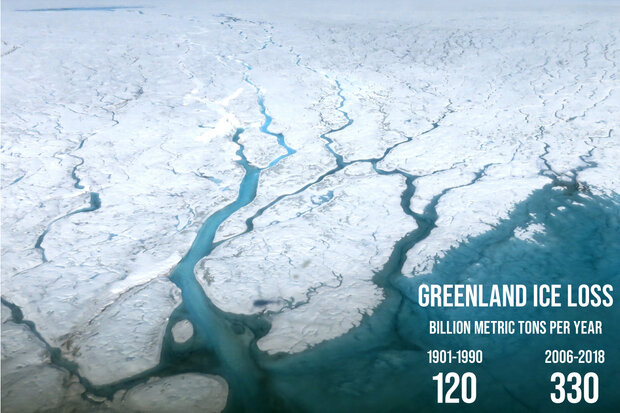
The stability of Antarctica's ice sheets is one of the most critical uncertainties in climate science, and at the heart of this concern lies the Thwaites Glacier. Often dubbed the "Doomsday Glacier," Thwaites is undergoing dramatic structural changes that could precipitate a catastrophic collapse. Analysis of satellite and observational data from 2002 to 2022 paints a concerning picture: the expansion of cracks within the glacier's ice shelf has accelerated, fundamentally weakening its integrity and bringing the possibility of total disintegration closer to reality. This article examines the key findings from recent research, the mechanics of the glacier's decline, and the sobering global implications of its potential fate.

The Anatomy of a Glacier's Decline
The eastern ice shelf of the Thwaites Glacier was historically stabilized by its connection to a submarine ridge on the ocean floor. However, this anchorage point has become a focal point of failure. Researchers from the International Thwaites Glacier Collaboration (ITGC) have documented a precise, four-phase process of weakening over the last 20 years. The initial phase saw the formation of long, flow-parallel cracks, some extending over 8 kilometers. This was followed by a proliferation of shorter, cross-flow cracks, which effectively diced the ice shelf and doubled the total length of fissures from about 165 km in 2002 to roughly 336 km in 2021.
The Destabilizing Feedback Loop
The most alarming discovery is the self-reinforcing feedback loop now in motion. As detailed in the WIRED report, cracks within the ice shelf accelerate the upstream flow of ice. This faster movement, in turn, generates new stresses and additional cracks. Data from GPS units deployed on the ice between 2020 and 2022 captured this process vividly, with structural changes propagating upstream at a rate of about 55 kilometers per year during the winter of 2020. This loop means the glacier's deterioration could accelerate independently of external climatic forces.

Global Implications and Irreversible Retreat
The stakes of Thwaites' instability could not be higher. The glacier contains enough ice to raise global sea levels by approximately 65 centimeters (over two feet). Furthermore, its geological setting makes a collapse particularly dangerous. Thwaites rests on a "reverse-slope bed," where the seabed dips downward as it goes inland. Once the glacier's grounding line begins to retreat, warmer ocean water can flow underneath, lifting and melting the ice from below in a process that is very difficult to stop. Numerical models cited in the research suggest the ice front could retreat nearly one kilometer per year over the coming decades.
The patterns of crack formation and structural weakening observed at Thwaites serve as a warning sign for other vulnerable ice shelves in Antarctica. Historical precedent exists, such as the collapse of the Wadi Ice Shelf on the Antarctic Peninsula, which began with similar stabilizing features that later became points of failure. The data from Thwaites is now crucial for validating and improving predictive models of ice sheet collapse globally.
Conclusion: A Clarion Call for Climate Action
The accelerated cracking of the Thwaites Glacier is more than a remote scientific observation; it is a direct and urgent signal of the planetary changes underway. The research indicates that the weakening process is continuing to accelerate, and the connection to its stabilizing seabed ridge has likely been severed. While the exact timeline for a total collapse remains uncertain, the mechanisms leading toward it are now clearly understood and appear to be self-sustaining. This underscores the critical need for enhanced global climate mitigation efforts and robust coastal adaptation planning. The fate of the Doomsday Glacier will ultimately be determined by both the immutable laws of physics and the decisive actions humanity chooses to take in response to this looming crisis.