Read on bbc.com
NATO Chief Credits Trump for Alliance Strength Amid Russian Threat Warnings
NATO Secretary General Mark Rutte has declared that Donald Trump's pressure on European allies to increase defense spending represents the US leader's "biggest foreign policy success." In a BBC interview, Rutte stated that thanks to Trump, NATO is "stronger than it ever was" and that Trump "is good news for collective defence, for NATO and for Ukraine." This assessment comes alongside stark warnings that Russia could attack NATO allies within five years, prompting the alliance's unprecedented pledge to spend 5% of GDP on defense by 2035. The article examines the complex geopolitical landscape, including ongoing Ukraine war developments and Putin's dismissal of NATO concerns as "hysteria."
In a striking assessment of transatlantic relations, NATO Secretary General Mark Rutte has credited former US President Donald Trump with strengthening the military alliance through his relentless pressure on European members to increase defense spending. Speaking to the BBC, Rutte described NATO's collective pledge to allocate 5% of economic output to defense as Trump's "biggest foreign policy success," asserting that it was thanks to Trump that NATO was "stronger than it ever was." This endorsement comes amid escalating tensions with Russia and warnings that Moscow could attack NATO allies within the next five years, creating a complex geopolitical landscape where traditional alliances are being tested and redefined.

The Trump Effect on NATO Defense Commitments
Donald Trump's approach to NATO has been characterized by harsh criticism of European allies for what he perceived as insufficient defense spending, including threats to withdraw US protection if contributions didn't increase. This pressure culminated in the landmark agreement reached during NATO's June summit in The Hague, where member states committed to raising military spending to 5% of their gross domestic product by 2035. Rutte emphasized the significance of this commitment, telling the BBC that "Russia will see that, with the security guarantees in place, he should never ever try again to attack Ukraine because our reaction will be devastating." The NATO chief's comments represent a notable shift in how European leaders view Trump's confrontational tactics, acknowledging their role in achieving concrete security outcomes.
Russian Threats and NATO's Strategic Response
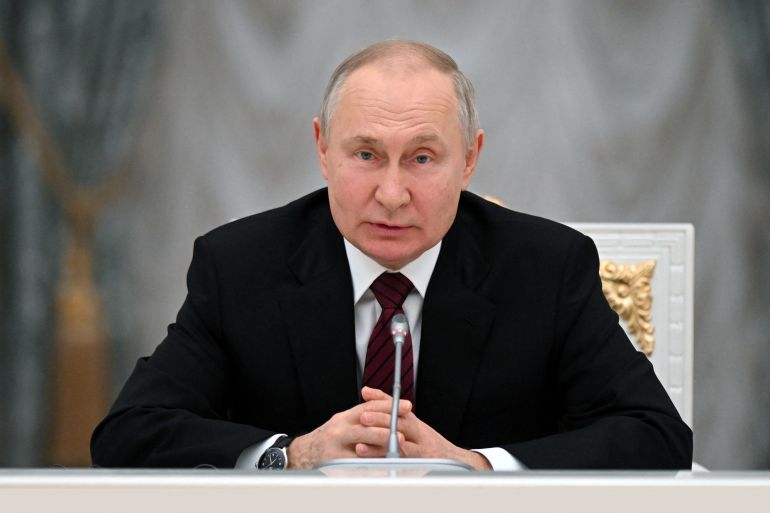
Rutte's praise for Trump comes alongside stark warnings about Russian aggression, with the NATO chief suggesting that Moscow could attack alliance members within five years. This assessment has prompted NATO to adopt what Rutte describes as a "wartime mindset" and pursue a "quantum leap in defence" capabilities. Russian President Vladimir Putin has dismissed such warnings as "hysteria," telling defense officials in Moscow that "it's a lie, nonsense, pure nonsense, about some imaginary Russian threat to European countries." However, NATO's concerns are grounded in Russia's ongoing war in Ukraine, now nearing its fourth anniversary, and Moscow's demonstrated willingness to use military force against neighboring states.
The Ukraine Conflict and Peace Negotiations
The war in Ukraine remains central to NATO's strategic calculations, with Rutte praising Trump's efforts to find an end to the conflict. US envoys have been conducting intense negotiations with Ukrainian officials over a Trump-proposed peace plan that reportedly envisages ceding control of territory in eastern Ukraine to Russia while providing security guarantees for Kyiv. According to the BBC interview, Washington is prepared to offer Ukraine guarantees modelled on NATO's Article 5 mutual protection clause. European allies have also discussed establishing a European-led force to assist in Ukraine's defense regeneration, secure its skies, and support safer seas, potentially operating inside Ukrainian territory—a proposal Putin has strongly opposed.
Military Production Disparities and European Responses
A significant concern for NATO is the disparity in military production between Russia and Western allies. According to a report by the Kiel Institute for the World Economy, Russia has been producing approximately 150 tanks, 550 infantry fighting vehicles, 120 Lancet drones, and more than 50 artillery pieces each month. Analysts suggest it would take years for Western Europe's factories to match Russia's mass-production capabilities. In response, countries like France and Germany have moved to revive voluntary military service for 18-year-olds, while European leaders have grappled with the controversial idea of using frozen Russian assets to finance Ukraine's military and economic needs—a topic on the agenda for recent EU summits in Brussels.
Strategic Implications and Future Outlook
Rutte's interview highlights the complex interplay between Trump's transactional approach to alliances, European security concerns, and Russian aggression. The NATO chief warned that "if we do not implement the Hague decisions, we would be weaker than the Russians in a couple of years and that is extremely dangerous." This statement underscores the high stakes involved in meeting the 5% spending pledge and maintaining alliance cohesion. As Ukrainian President Volodymyr Zelensky urged EU leaders to show courage in supporting his country, the broader question remains how NATO will navigate the competing pressures of domestic politics, alliance management, and external threats in an increasingly volatile security environment.
The convergence of Trump's influence on defense spending, Russia's ongoing aggression in Ukraine, and NATO's adaptation to new security realities represents a pivotal moment for transatlantic relations. Rutte's acknowledgment of Trump's role in strengthening NATO suggests a pragmatic recognition that unconventional approaches can yield concrete security benefits, even as the alliance faces its most significant challenges since the Cold War. As NATO members work to implement their spending commitments and bolster collective defense capabilities, the coming years will test whether this strengthened alliance can effectively deter Russian aggression while maintaining unity across the Atlantic.