Altermagnetism in Ruthenium Dioxide: A New Frontier for High-Speed Memory Technology
A breakthrough discovery by Japanese scientists has confirmed that ultra-thin films of ruthenium dioxide (RuO₂) exhibit altermagnetism, a newly recognized third class of magnetic materials. This property uniquely combines the stability of antiferromagnets with the electrical readability of ferromagnets, presenting a potential solution for next-generation memory devices. The research, published in Nature Communications, demonstrates how controlled crystal orientation can enhance material performance, paving the way for faster, denser, and more reliable data storage technologies that could power future AI systems and advanced computing.
In a significant advancement for materials science and electronics, researchers in Japan have experimentally confirmed a novel magnetic state in ruthenium dioxide (RuO₂) that could redefine the future of data storage. This discovery places RuO₂ within the emerging category of altermagnets, materials that promise to overcome longstanding limitations in current magnetic memory technology. By offering a blend of stability and speed, altermagnetic RuO₂ thin films represent a critical step toward developing memory chips that are both more compact and more efficient, potentially accelerating progress in artificial intelligence and high-performance computing.
Understanding Altermagnetism: The Third Magnetic Class
For decades, magnetic materials have been broadly classified into two fundamental types: ferromagnets and antiferromagnets. Ferromagnets, like the iron in a common refrigerator magnet, have aligned magnetic spins that create a strong net magnetic field. This makes them excellent for writing data easily, as used in traditional hard drives. However, they are susceptible to interference from stray magnetic fields, which can corrupt data and limit storage density. Antiferromagnets, in contrast, have alternating spins that cancel each other out, resulting in no net external magnetic field. This makes them incredibly stable and resistant to external interference, but it also makes reading stored information electrically very challenging, as their internal magnetic state is effectively hidden.
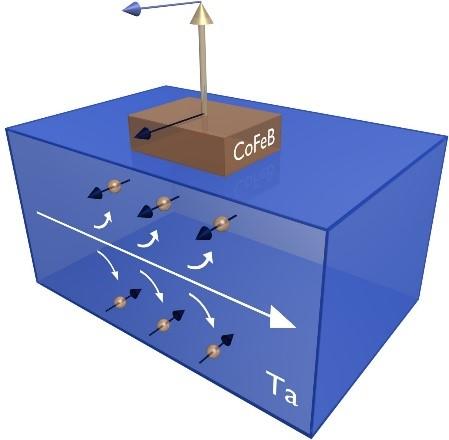
Altermagnetism, a concept proposed only recently, represents a third fundamental category. As detailed in the research published in Nature Communications, altermagnets exhibit a unique electronic structure where the spins are ordered in a way that cancels out the overall magnetization (like an antiferromagnet) but still allows the electrical properties to depend on the spin direction. This spin-split electronic structure means that information can be read electrically through changes in resistance, combining the best attributes of both conventional magnetic worlds.
The Breakthrough with Ruthenium Dioxide Thin Films
The international team, led by researchers from the National Institute for Materials Science (NIMS), The University of Tokyo, Kyoto Institute of Technology, and Tohoku University, focused on ruthenium dioxide. While RuO₂ had been theoretically predicted to be altermagnetic, experimental verification had been inconsistent globally. A major hurdle was the difficulty in producing high-quality, ultra-thin films with a uniform crystal orientation, which is essential for consistent magnetic properties.
The team's key achievement was successfully fabricating RuO₂ thin films with a single, controlled crystallographic orientation on sapphire substrates. By meticulously selecting the substrate and fine-tuning the growth conditions, they created a material platform with the necessary purity and structural integrity for definitive testing. They then employed advanced synchrotron-based techniques, specifically X-ray magnetic linear dichroism, to map the spin arrangement. This analysis confirmed the cancellation of net magnetization. Crucially, they also measured spin-split magnetoresistance—an electrical signal that changes based on spin direction—providing direct evidence of the altermagnetic state. These experimental results aligned perfectly with first-principles theoretical calculations, solidifying the proof.
Implications for Future Memory and Computing Technology
The confirmation of altermagnetism in RuO₂ is not merely an academic milestone; it has profound practical implications. The primary application lies in the field of spintronics, where the spin of electrons is used to store and process information. Current magnetic random-access memory (MRAM) technology often relies on ferromagnetic materials, facing trade-offs between speed, density, and stability.
Altermagnetic RuO₂ offers a path to circumvent these trade-offs. Its inherent stability against magnetic interference allows for much denser packing of memory bits without risk of cross-talk or data corruption. Simultaneously, the electrical readability enabled by the spin-split structure allows for fast data access speeds. This combination is ideal for developing next-generation non-volatile memory that is faster, more energy-efficient, and capable of higher storage densities than current solutions. Such advancements are critical for supporting the massive data processing demands of future AI systems, high-performance computing, and the Internet of Things (IoT).
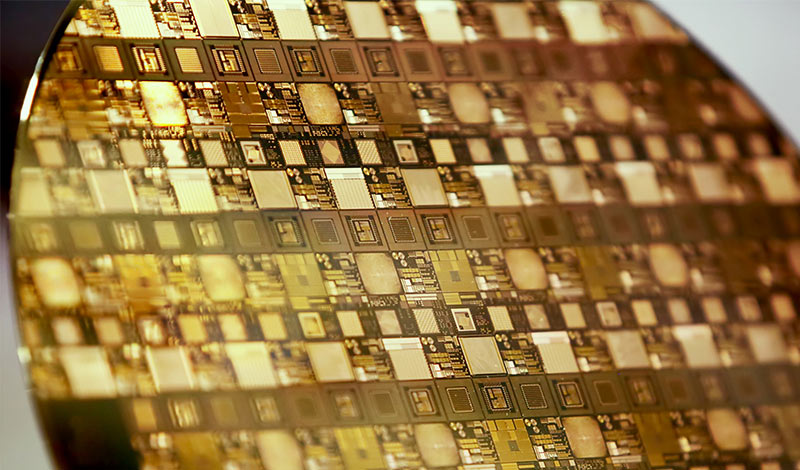
Looking ahead, the research team plans to leverage this discovery to develop prototype magnetic memory devices based on RuO₂ thin films. Furthermore, the sophisticated analysis methods developed during this study provide a blueprint for identifying and characterizing other altermagnetic materials, potentially accelerating the discovery of an entire new family of functional materials for electronics.
This breakthrough, supported by grants from Japanese funding bodies like JSPS and MEXT, underscores the importance of fundamental materials research in driving technological innovation. By unlocking the potential of altermagnetism in a practical material like ruthenium dioxide, scientists have opened a new chapter in the quest for superior memory technology that will power the computational needs of tomorrow.