Read on nature.com
Understanding the Author Correction for a Breakthrough in Electronic Paper Technology
A recent author correction published in Nature details minor amendments to a groundbreaking study on video-rate, tunable color electronic paper with human resolution. This article explains the significance of the original research, the nature of the corrections made to figures and data labels, and what this meticulous process reveals about the standards of scientific publishing. We explore how this technology could revolutionize displays and why transparency in correcting published work is a cornerstone of scientific integrity.
The scientific process is built on a foundation of meticulous verification and, when necessary, correction. A recent author correction published in the prestigious journal Nature on December 2, 2025, for the article "Video‐rate tunable colour electronic paper with human resolution" exemplifies this commitment to accuracy. While the corrections themselves are minor, pertaining to graphical figures and axis labels, they underscore the high standards of peer-reviewed research and bring attention back to the significant underlying technological advancement. This article explores the context of the original discovery and the importance of such transparent correction practices in science.

The Original Breakthrough: Next-Generation Electronic Paper
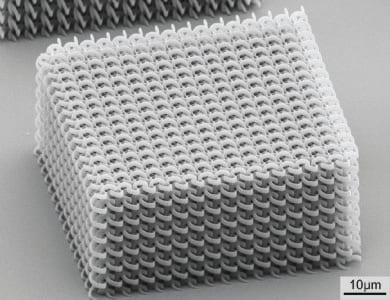
The study, originally published on October 22, 2025, presented a major leap forward in display technology. Researchers from Uppsala University, the University of Gothenburg, and Chalmers University of Technology developed an electronic paper capable of displaying video-rate content in tunable colors with a resolution matching human visual acuity. Unlike traditional e-ink displays, which are often monochrome and slow to refresh, this technology, based on advanced metamaterials, promises vibrant, fast-updating, and energy-efficient screens for a wide range of applications, from e-readers and wearable devices to digital signage.
Details of the Author Correction
The correction notice, accessible via doi:10.1038/s41586-025-09975-z, outlines specific, technical amendments made to the published manuscript and its supplementary information. These are not corrections to the core scientific findings or conclusions but to the presentation of data in figures. The changes include adjusting the position of a y-axis in Figure 2a, shortening a line for clarity in Figure 3a, correcting a numerical range in an Extended Data Figure label from "100 to 200 nm" to "100 to 220 nm", and fixing swapped data labels in Extended Data Figure 9. The original, uncorrected figures remain available in the supplementary information for comparison, ensuring full transparency.
The Importance of Corrections in Scientific Publishing
Publishing author corrections is a standard and vital part of academic integrity. It demonstrates the researchers' commitment to accuracy and allows the scientific community to have complete confidence in the reported data. Journals like Nature maintain rigorous processes to ensure that the record is as precise as possible, even after publication. This practice helps prevent the propagation of minor errors that could confuse future researchers attempting to replicate or build upon the work. The open-access nature of this correction, under a Creative Commons license, further facilitates the dissemination of accurate information.
Looking Forward: The Impact of the Technology
Beyond the procedural correction, the research itself points to a exciting future. Electronic paper with video-rate color and high resolution could drastically reduce the power consumption of displays, extend battery life for portable devices, and improve readability in various lighting conditions. As the technology matures, we may see it integrated into flexible and foldable devices, creating new form factors for consumer electronics and professional tools. The collaborative work of the international team behind this study highlights the global effort driving innovation in materials science and display engineering.
In conclusion, the author correction for "Video‐rate tunable colour electronic paper with human resolution" is a small but important footnote in a larger story of scientific progress. It reaffirms the robustness of the publication process while keeping the spotlight on a potentially transformative display technology. For scientists, it's a reminder of the ongoing responsibility to maintain accuracy. For the wider public and industry, it's a glimpse into a future where our digital screens could be as easy on the eyes as paper, yet as dynamic as the world around us.