Trump Announces Plans for New "Trump Class" Battleships to Anchor "Golden Fleet"
President Donald Trump has announced a major naval expansion plan, approving the construction of a new class of battleships he has dubbed the "Trump Class." Announced from Mar-a-Lago, the plan calls for building the largest battleships in U.S. and world history, with an initial order of two ships and an ultimate goal of 20-25. The announcement, made alongside Defense Secretary Pete Hegseth and Navy Secretary John Phelan, is framed as a critical step to modernize an aging fleet and revitalize the U.S. shipbuilding industry. This initiative forms the cornerstone of what the administration calls the Pentagon's "Golden Fleet," signaling a significant shift in naval strategy and capability.
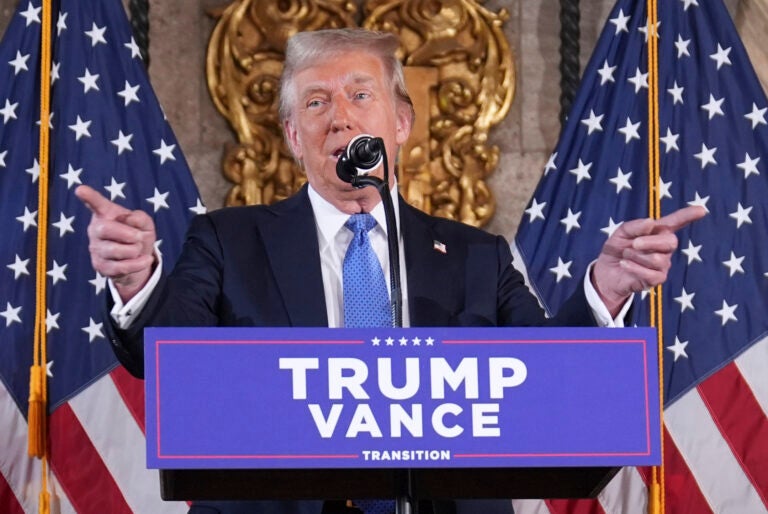
In a significant policy announcement from his Mar-a-Lago estate, former President Donald Trump has unveiled ambitious plans to revitalize the United States Navy through the construction of a new class of warships. Flanked by renderings and top military officials, Trump declared the approval of plans to build what he termed the "Trump Class" of battleships, describing them as the centerpiece of a modernized "Golden Fleet." This announcement marks a decisive move to address perceived shortfalls in U.S. naval power and shipbuilding capacity, aiming to restore what the administration views as American maritime dominance.
The Announcement and Strategic Vision
The announcement, made on December 22, 2025, featured President Trump alongside key figures including Defense Secretary Pete Hegseth, Secretary of State Marco Rubio, and Secretary of the Navy John Phelan. Trump stated he had approved plans for the Navy "to begin the construction of two brand-new, very large, largest we've ever built, battleships," with an expectation to build 10 ships quickly and ultimately 20 to 25. He positioned this decision as the fulfillment of a vision from his first term, questioning why the U.S. had moved away from building powerful battleships. The president argued the nation is "desperately in need of ships" because the current fleet has "gotten old and tired and obsolete."
Capabilities and Design of the Trump Class
According to Navy Secretary John Phelan, the lead ship will be named the U.S.S. Defiant. Phelan described the Trump-class battleship as an updated version of the historic Iowa-class, calling it a "generational investment." He proclaimed it would be "the largest, deadliest, and most versatile, and best-looking warship anywhere on the world's oceans." The new battleship is designed to command a modern battle group, integrating control over traditional warships, drones, and other assets. "We're going to make battle groups great again," Phelan said, framing the ship as a "game-changing capability" that is just one piece of the broader "Golden Fleet" initiative. The administration estimates the construction timeline for each ship to be approximately two and a half years.

Broader Context: The "Golden Fleet" and Naval Strategy
The Trump Class announcement is not an isolated project but the anchor of a comprehensive naval strategy dubbed the "Golden Fleet." This initiative seeks to overhaul American shipbuilding through significant investment, aiming to strengthen the domestic industrial supply chain that has atrophied over decades. The announcement follows Phelan's social media statement the previous week about a new Frigate class, with a goal to have American-designed ships built by American workers, targeting a 2028 launch. "We're done admiring the problem. Our focus is on readiness," Phelan emphasized, signaling a shift from analysis to action in naval procurement.
Geopolitical Implications and Regional Tensions
When asked if the new fleet was aimed at countering China's growing naval power, President Trump offered a broader rationale: "It's a counter to everybody. It's not China. We get along great with China." He expressed a hope that the ships would never need to be used. The announcement coincides with a notable increase in U.S. naval presence in Latin America amid escalating tensions with Venezuela. The Trump administration recently announced a blockade of oil tankers to and from Venezuela and has seized vessels in international waters. During the Mar-a-Lago event, Trump referenced strikes on alleged drug boats and warned Venezuelan President Nicolás Maduro, stating the U.S. has assembled "the biggest we've ever had in South America" and that if Maduro "plays tough, it'll be the last time he's ever able to play tough."
Analysis and Forward Look
President Trump's announcement of the Trump Class battleships represents a bold and symbolic return to an era of capital ship dominance. By personally branding the new class and framing it as a restoration of past greatness, the policy carries significant political and strategic weight. The plan's success will hinge on executing the complex shipbuilding projects on time and within budget, revitalizing a challenged industrial base. Furthermore, deploying the world's largest battleships would undoubtedly alter global naval calculations and power projections. As the cornerstone of the "Golden Fleet," the Trump Class initiative sets a clear direction for U.S. maritime power in the coming years, emphasizing size, capability, and a assertive national stance.