Read on PBS News
Justice Department Defends Partial Release of Epstein Files, Citing Victim Protection
Deputy Attorney General Todd Blanche has defended the Justice Department's decision to release only a fraction of the Jeffrey Epstein documents by the congressionally mandated deadline, stating the move is necessary to protect survivors of sexual abuse. The partial release has sparked significant political controversy, with Democrats accusing the Trump administration of a cover-up, while officials maintain that ongoing document review and redaction are essential for victim safety. This article examines the legal, political, and ethical dimensions of the contentious file disclosure.
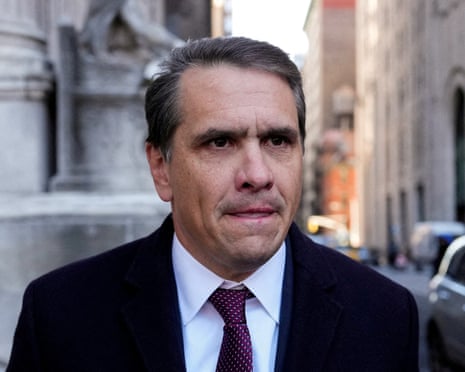
The recent partial release of documents related to the Jeffrey Epstein case by the U.S. Justice Department has ignited a fierce political and legal debate. Deputy Attorney General Todd Blanche, in a televised interview, staunchly defended the department's actions, framing the limited disclosure as a necessary measure to protect the identities and privacy of survivors of sexual abuse. This defense comes amid mounting criticism from Democratic lawmakers and transparency advocates who argue the administration is failing to comply with the law and may be concealing sensitive information.
The Justice Department's Defense and Legal Mandate
At the heart of the controversy is the Epstein Files Transparency Act, a congressionally mandated law requiring the disclosure of thousands of documents related to the government's investigations into the disgraced financier. Deputy Attorney General Blanche, appearing on NBC's "Meet the Press," acknowledged the legal obligation but emphasized a competing duty: protecting victims. He argued that the department is meticulously reviewing a vast trove of materials—including photographs, interview transcripts, and court records—to redact sensitive information that could re-traumatize survivors or expose them to public scrutiny.
Blanche pledged that the Trump administration intends to fully meet its legal obligations over time. He characterized the criticism from Democrats as "disingenuous," suggesting that those demanding immediate, full transparency are disregarding the welfare of the very individuals the law is partly designed to serve. The department's position is that the process is ongoing, and the release of documents is a phased operation to balance transparency with privacy concerns.
Political Backlash and Accusations of a Cover-Up
The partial release has been met with sharp condemnation from Democratic leaders, who perceive it as an act of obstruction rather than protection. Representative Jamie Raskin (D-Md.) articulated a common Democratic viewpoint on CNN, alleging the move is "all about covering up things" that former President Donald Trump wishes to keep hidden regarding his past associations with Epstein and the broader social network involved. This sentiment reflects deep-seated suspicions about the administration's commitment to transparency, particularly concerning a case entangled with powerful political and business figures.
The controversy intensified when several files, including a photograph featuring Donald Trump with Epstein, Melania Trump, and Ghislaine Maxwell, were removed from the Justice Department's public webpage shortly after being posted. Blanche explained the removal was due to the inadvertent inclusion of identifiable victims in those files, not an attempt to shield the former president. He stated the documents would be reposted after proper redactions. However, this action fueled existing allegations of selective concealment and has led some members of Congress, like Rep. Ro Khanna (D-Calif.), to discuss potential impeachment proceedings against Attorney General Pam Bondi for non-compliance with the law.
Broader Implications and Ongoing Scrutiny
The Epstein case continues to cast a long shadow over the U.S. justice system and political landscape. The documents released so far provide further detail into decades of government scrutiny of Epstein's sex trafficking operation, yet key records—such as FBI interviews with survivors and internal DOJ memos on charging decisions—remain undisclosed. These missing pieces are crucial for understanding the investigative failures that allowed Epstein to plead guilty to minor state charges in 2008.
Blanche also revealed that the document review has recently uncovered the names of additional potential victims, underscoring the complexity and sensitivity of the material. Furthermore, he defended the Bureau of Prisons' decision to transfer Ghislaine Maxwell to a less restrictive facility, citing numerous threats against her life. As the Justice Department continues its review under intense political pressure, the conflict between mandated transparency, victim protection, and political accountability remains unresolved, ensuring the Epstein files will remain a focal point of legal and public debate.