Cracking the Code: How 'Junk DNA' Switches Control Alzheimer's Disease Pathways
A groundbreaking study from UNSW Sydney has transformed our understanding of the human genome by identifying functional DNA switches within the vast non-coding regions, often dismissed as 'junk DNA'. Researchers experimentally tested nearly 1,000 potential enhancers in human brain cells called astrocytes, confirming around 150 that actively regulate gene expression. Strikingly, many of these functional switches control genes with known links to Alzheimer's disease, providing a crucial 'wiring diagram' for brain disorders. This discovery not only explains why many disease-associated genetic variants lie outside traditional genes but has also created a valuable dataset now being used to train advanced AI systems like Google's DeepMind AlphaGenome to predict gene control with unprecedented accuracy.
For decades, the vast majority of the human genome—approximately 98%—was dismissed as evolutionary debris, earning the moniker 'junk DNA.' This perspective is undergoing a radical revision. A landmark study published in Nature Neuroscience by researchers from UNSW Sydney has demonstrated that this non-coding DNA is not junk at all, but a critical control panel for our genes. By focusing on brain cells implicated in Alzheimer's disease, the team has uncovered specific DNA switches, or enhancers, that regulate disease-linked genes, offering new insights into the genetic architecture of neurodegeneration and providing a powerful new tool for artificial intelligence in genomics.
The 98% Mystery: From Junk to Functional Genome
The human genome contains roughly 20,000 protein-coding genes, which constitute a mere 2% of our total DNA. The remaining 98% is the non-coding genome, a complex landscape once thought to be functionally inert. However, this region is now understood to be rich with regulatory elements, including enhancers. These are short DNA sequences that can act as powerful switches, turning genes on or off and modulating their activity, even when located hundreds of thousands of DNA 'letters' away from the gene they control. The challenge has been identifying which of the millions of potential enhancer sequences are truly functional in specific cell types, a problem the UNSW team set out to solve.
Pinpointing Switches in Alzheimer's-Linked Brain Cells
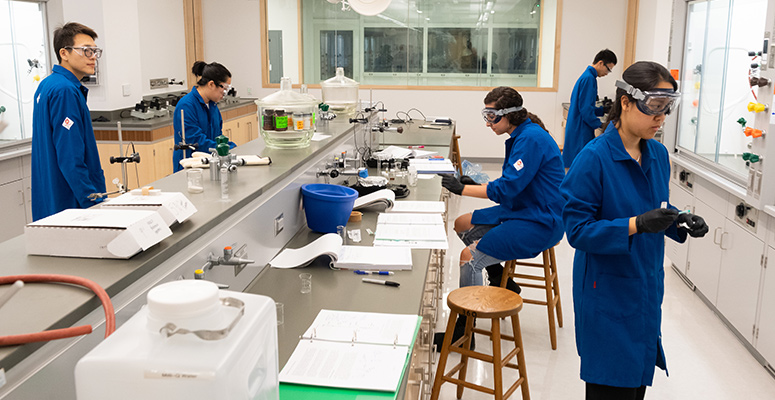
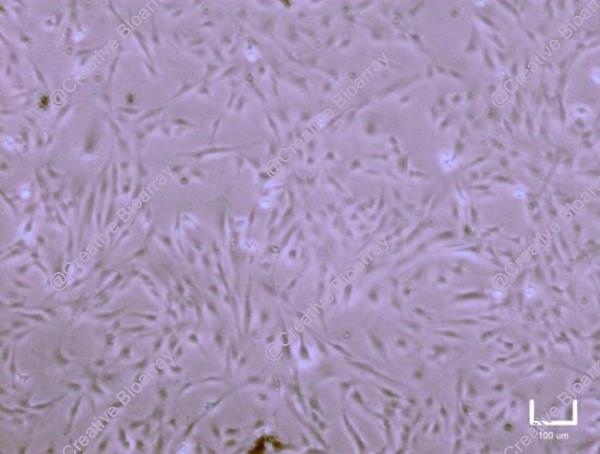
The research focused on astrocytes, a type of glial cell in the brain that provides crucial support to neurons. Astrocytes are increasingly recognized for their role in maintaining brain health and their dysfunction in neurodegenerative diseases like Alzheimer's. The study's lead author, Dr. Nicole Green, explained the team's approach: "We used CRISPRi to turn off potential enhancers in the astrocytes to see whether it changed gene expression. And if it did, then we knew we'd found a functional enhancer."

By combining CRISPR interference (CRISPRi)—a technique that silences DNA without cutting it—with single-cell RNA sequencing, the researchers conducted a large-scale screen. They tested nearly 1,000 candidate enhancer sequences in lab-grown human astrocytes in a single experiment. This innovative methodology allowed them to move from correlation to causation, directly proving which DNA sequences control gene activity.
A Roadmap for Disease Genetics and AI Training
The results were significant. Of the roughly 1,000 candidates tested, about 150 were confirmed as bona fide functional enhancers. Professor Irina Voineagu, who oversaw the study, highlighted the importance: "A large fraction of these functional enhancers controlled genes implicated in Alzheimer's disease." This finding helps solve a persistent puzzle in genetic studies of complex diseases. Genome-wide association studies (GWAS) frequently identify disease-linked genetic variants that reside not within genes themselves, but in these non-coding 'in-between' regions. The UNSW catalogue now provides a reference to interpret these findings, showing which specific enhancers in astrocytes are tied to known Alzheimer's risk genes.
Beyond Alzheimer's, this work creates a foundational 'wiring diagram' of gene control in a critical brain cell type. As Prof. Voineagu stated, "We're not talking about therapies yet. But you can't develop them unless you first understand the wiring diagram." Furthermore, the meticulously generated dataset is a goldmine for computational biology. It is being used as a benchmark to train and validate AI models that predict enhancer function. Notably, Google's DeepMind team is already utilizing this data to test their advanced deep learning model, AlphaGenome, potentially accelerating the discovery of regulatory elements for other diseases.

Future Implications: From Precision Medicine to Targeted Therapies
While clinical applications remain on the horizon, this research points toward a future of highly precise interventions. Because many enhancers are active only in specific cell types—like astrocytes but not neurons—they represent potential targets for fine-tuning gene expression with minimal off-target effects. Prof. Voineagu points to a precedent: "The first gene editing drug approved for a blood disease—sickle cell anemia—targets a cell-type specific enhancer." This suggests a viable pathway for developing neurological treatments.
Dr. Green envisions this work contributing to the field of precision medicine: "This is something we want to look at more deeply: finding out which enhancers we can use to turn genes on or off in a single brain cell type, and in a very controlled way." The ability to manipulate these switches could lead to strategies for correcting dysfunctional gene networks in Alzheimer's and other brain disorders.
Conclusion: Rewriting the Textbook on Genetic Regulation
The UNSW study marks a pivotal shift in genomics, firmly establishing the functional importance of the non-coding genome in human health and disease. By moving beyond correlation to experimentally validate enhancer function in relevant human cells, the researchers have provided a crucial map of the genetic regulatory landscape in Alzheimer's-linked astrocytes. This work demystifies the 'junk DNA' enigma, transforms a vast genetic desert into a navigable control network, and furnishes the raw data to power the next generation of AI-driven genomic discovery. As this integration of wet-lab experimentation and computational modeling advances, our understanding of the brain's genetic circuitry—and our ability to intervene when it malfunctions—will grow exponentially.