The Invisible Threat: Uncovering Earth's History of Cosmic Airbursts
New research reveals that cosmic 'touchdown airbursts'—explosions of comets or asteroids above Earth's surface—may be far more common and destructive than previously understood. Unlike crater-forming impacts, these events unleash extreme heat and pressure without leaving obvious scars, making them historically difficult to detect. Evidence from deep ocean sediments and ancient city ruins suggests these invisible explosions have significantly shaped Earth's climate and human history, presenting a widespread threat that demands greater scientific attention.
For centuries, humanity has looked to the stars with wonder and to the ground for evidence of cosmic encounters. The massive craters dotting our planet's surface tell a dramatic story of asteroid impacts that reshaped continents and ended eras. However, emerging research suggests we may have been missing a far more frequent—and equally destructive—form of cosmic interaction. Cosmic 'touchdown airbursts,' explosions of comets or asteroids above Earth's surface, may represent a more common and widespread threat than the crater-forming impacts that dominate our historical understanding.
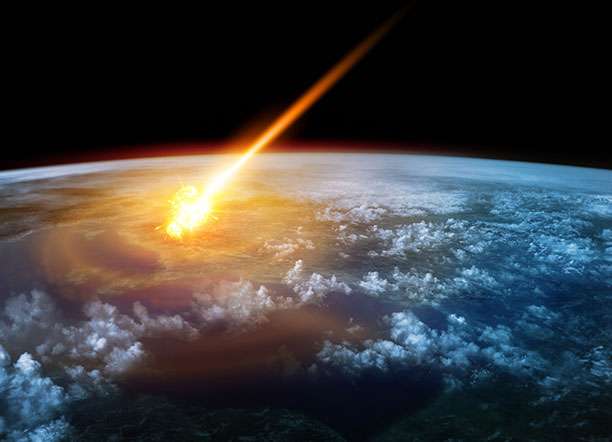
According to research led by UC Santa Barbara Earth Science Emeritus Professor James Kennett and his colleagues, these explosive events deserve far more scientific attention than they've historically received. Unlike direct impacts that leave lasting craters, touchdown airbursts unleash extreme temperatures and pressures without forming obvious geological scars, making them effectively 'invisible' in the historical record. This characteristic has led scientists to potentially underestimate both their frequency and their destructive potential throughout Earth's history.
Understanding Touchdown Airbursts
Touchdown airbursts occur when an incoming cosmic object, such as a comet or asteroid, detonates in Earth's atmosphere before reaching the ground. The resulting explosion releases intense heat and shockwaves that reach the surface with devastating force. As Professor Kennett explains, "Touchdown events can cause extreme damage through very high temperatures and pressures. And yet they don't necessarily form a crater, or they form ephemeral surface disturbances, but they're not the classic major craters that come from direct impacts."
This fundamental difference in physical evidence has created a significant gap in our understanding of cosmic threats. While crater-forming impacts like the Chicxulub event that contributed to dinosaur extinction leave unmistakable geological markers, airburst evidence is more subtle and requires specialized detection methods. Researchers must look for microscopic signatures rather than macroscopic craters.
Evidence from Multiple Historical Events
Recent studies have identified compelling evidence for multiple airburst events at different points in Earth's history. Researchers have examined sites ranging from deep ocean sediments in the North Atlantic to the ruins of ancient desert cities, finding consistent markers of extreme conditions. These include rare elements tied to space objects, glassy material formed from melted Earth sediments, tiny spherical particles created by intense heat, and shocked quartz showing distinctive crack patterns.
One particularly significant discovery comes from deep-sea cores recovered from Baffin Bay, off Greenland's western coast. Published in the journal PLOS One, this research describes the first discovery of airburst-related impact markers in marine sediments connected to the Younger Dryas Impact Hypothesis. According to Kennett, "Baffin Bay is very significant because it's the first time we've found evidence for the Younger Dryas cosmic impact event in the marine record."
The Younger Dryas Connection
The Younger Dryas hypothesis proposes that around 12,800 years ago, fragments of a comet exploded above Earth, triggering a sudden global cooling episode. This period coincided with the disappearance of many large animals and major changes in human populations and cultures. Because the comet likely broke apart, multiple explosions would have occurred, igniting widespread fires that left behind a distinctive carbon-rich layer known as a "black mat."
This layer, found mainly across the Northern Hemisphere, contains platinum, iridium, metallic melt particles, shocked quartz, and fused minerals known as meltglass. As Kennett notes, "The material was thrown up into the atmosphere, and was globally transported and deposited in a broadly distributed layer that we earlier have described." The preservation of these materials in marine sediments as deep as 2,000 meters demonstrates the power and far-reaching effects of these events.
Reexamining Historical Events
The research team has also reexamined two well-known potential airburst sites with new analytical techniques. At the Tunguska site in Siberia, where a massive explosion flattened forests in 1908, researchers conducted the first comprehensive search for microscopic impact evidence. They found shocked quartz showing clear planar fractures—some filled with meltglass—along with tiny impact-formed spheres, melted metal, and carbon.

Similarly, at Tall el-Hammam, an ancient city in the Levant believed to have been destroyed around 3,600 years ago, researchers strengthened the case for an airburst. Alongside previously reported evidence, they documented shocked quartz displaying a wide variety of crack patterns, including classic parallel fractures as well as curved, web-like, and sub-planar features. These patterns suggest intense pressures and complex blast directions similar to those observed at Tunguska.
Implications for Future Risk Assessment
The collective evidence from these studies supports a concerning conclusion: cosmic impacts, particularly touchdown airbursts, may be far more frequent than scientists once assumed. As Kennett emphasizes, "They're far more common, but also possess much more destructive potential than the more localized, classic crater-forming asteroidal impacts. The destruction from touchdown events can be much more widespread."
This research highlights a critical gap in planetary defense strategies that have traditionally focused on tracking large asteroids that might create craters. The more frequent threat of airbursts, which can devastate regions without leaving obvious geological scars, requires different detection and mitigation approaches. The energy released by these events can create significant surface effects, including potential crater-like depressions that may fill with water over time, as suggested by features at the Tunguska site.
Conclusion
The emerging understanding of touchdown airbursts represents a paradigm shift in how we view Earth's relationship with cosmic objects. These invisible explosions have likely played a more significant role in shaping our planet's climate and human history than previously recognized. From the Younger Dryas cooling event to the destruction of ancient cities, the evidence suggests we must expand our search for cosmic threats beyond obvious craters to include more subtle atmospheric signatures.
As research continues to uncover evidence of these events across diverse locations and time periods, it becomes increasingly clear that touchdown airbursts deserve greater scientific attention and resources. Developing better methods to detect past events and predict future risks will be essential for understanding both Earth's history and preparing for potential future threats from space. The invisible explosions that have battered our planet may hold keys to understanding major historical transitions while informing our planetary defense strategies for generations to come.