Read on PBS News
U.S. Seizure of Oil Tanker 'Skipper' Escalates Pressure on Venezuela's Maduro
The dramatic seizure of the oil tanker Skipper by U.S. commandos off the coast of Venezuela represents a significant escalation in the Trump administration's campaign to cut off Nicolás Maduro's access to oil revenues. This action targets the 'shadow fleet' of tankers used to smuggle sanctioned crude from Venezuela, Iran, and Russia. The operation signals a new, more aggressive phase of enforcement that could disrupt global illicit oil networks and increase the risks for those trading with sanctioned regimes.
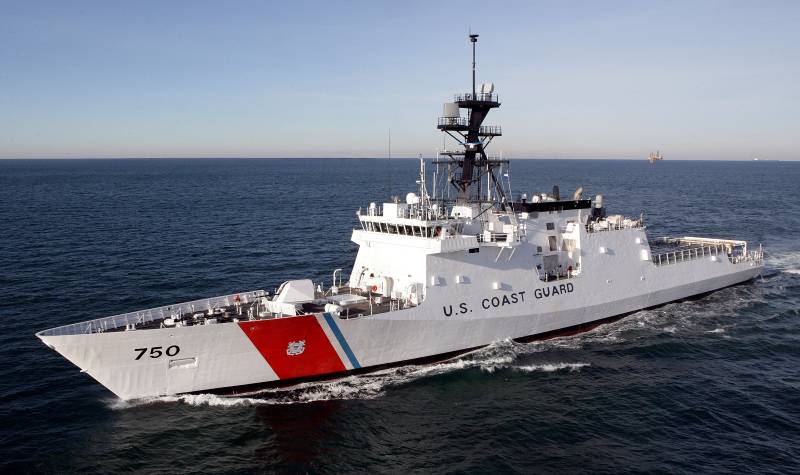
The recent seizure of the oil tanker Skipper by U.S. forces near Venezuela marks a pivotal moment in international efforts to enforce sanctions against authoritarian regimes. This bold military operation, involving commandos fast-roping from helicopters onto the 332-meter vessel, directly targets the clandestine networks that have allowed Venezuela's Nicolás Maduro to sustain his government through illicit oil sales. The action represents a dramatic shift from financial penalties to physical interdiction, signaling a new U.S. strategy to combat the global 'shadow fleet' of tankers that operates outside international maritime laws.
The Shadow Fleet: A Global Sanctions Evasion Network
At the heart of this confrontation lies what maritime experts call the 'shadow fleet'—a collection of aging, often uninsured tankers that operate without proper registration or flags. These vessels have become essential tools for countries facing severe international sanctions, including Venezuela, Iran, and Russia. By manipulating their automated identification systems (AIS), these ships can 'spoof' their locations, appearing to navigate in entirely different regions while actually conducting illicit transfers at sea. The expansion of this fleet following Russia's 2022 invasion of Ukraine has created a parallel shipping industry that operates in the shadows of global trade.
How the Skipper Operated
The seized tanker, previously known as the M/T Adisa, exemplifies the tactics of this shadow network. According to maritime intelligence firm Windward, the Skipper had been digitally manipulating its tracking signals to falsely indicate it was sailing off the coast of Guyana, adjacent to a major Exxon-operated oil field. In reality, it was located 360 nautical miles northwest, near Venezuela. The vessel was also falsely flying the Guyana flag—a serious violation of international maritime regulations that rendered it effectively stateless under international law.

Strategic Implications for Venezuela and Global Markets
The seizure carries profound implications for Venezuela's struggling economy, which has become increasingly dependent on illicit oil sales since the Trump administration first imposed sanctions in 2017. With approximately 2 million barrels of heavy crude aboard—half reportedly destined for a Cuban state-run importer—the Skipper's capture represents a significant financial blow to Maduro's government. According to Venezuelan oil expert Francisco Monaldi of Rice University, black market Venezuelan oil typically sells for about $15 less per barrel than legitimate crude, creating substantial profit margins for those willing to risk sanctions evasion.
Economic and Political Fallout
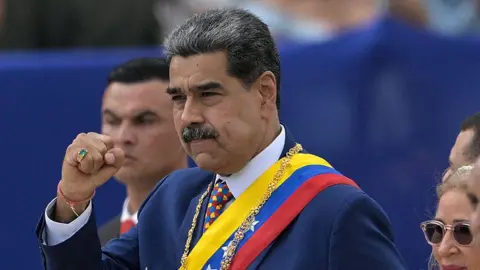
Maduro's response to the seizure has been characteristically defiant, labeling it an 'act of international piracy' and claiming the crew had been 'kidnapped.' However, the operation has drawn praise from U.S.-backed opposition leader Maria Corina Machado, who argues that illicit oil revenues fund repression rather than addressing Venezuela's humanitarian crisis. The immediate market reaction saw oil prices drop by 2%, reflecting concerns about potential disruptions to global supply chains and the possibility of more aggressive U.S. enforcement actions.
The Future of Sanctions Enforcement
This seizure may represent a turning point in how the United States enforces economic sanctions globally. By moving from financial penalties to physical seizures, the U.S. is dramatically increasing the risks for those involved in sanctions evasion. As Michelle Wiese Bockmann of Windward notes, 'They can no longer operate unchallenged.' The operation demonstrates that even vessels operating with sophisticated digital deception tactics remain vulnerable to interception when intelligence capabilities are properly leveraged.
However, experts caution that the long-term impact depends on whether this represents an isolated incident or the beginning of a systematic campaign. A full naval blockade similar to that imposed on Iraq in 1990 would represent a significant escalation with broader implications for global oil markets. The U.S. must balance its desire to pressure Maduro with concerns about potentially driving up gasoline prices—a sensitive political issue domestically.
The seizure of the Skipper off Venezuela's coast represents more than just the capture of a single vessel; it signals a new era in the enforcement of international sanctions. By targeting the physical assets of the shadow fleet, the United States is raising the stakes for all participants in the global illicit oil trade. While the immediate impact on Venezuela's economy may be limited, the psychological effect on shipping operators could be substantial, potentially disrupting the networks that have allowed sanctioned regimes to survive despite international isolation. As this new enforcement paradigm unfolds, the international community will be watching closely to see whether physical interdiction becomes a standard tool in the sanctions enforcement arsenal.