Read on PBS News
Trump Threatens Primary Challenge After Indiana GOP Rejects Redistricting Plan
In a significant political rift, former President Donald Trump has vowed to support a primary challenge against Indiana Senate President Rodric Bray after state Republicans joined Democrats to block a congressional redistricting effort. The 31-19 vote rejected a map redraw that Trump had been pushing to secure GOP advantages ahead of the 2026 midterms. This article analyzes the internal party conflict, the strategic implications for House control, and the growing influence of Trump within state-level Republican politics.
In a striking display of internal Republican discord, former President Donald Trump has declared his intention to back a primary opponent against a top Indiana GOP leader. This threat comes directly after state Senate Republicans broke ranks with the former president to join Democrats in voting down a controversial plan to redraw Indiana's congressional district map. The move highlights the ongoing tensions within the party between traditional legislative strategy and the influence of Trump's political directives.
The Vote That Sparked the Conflict
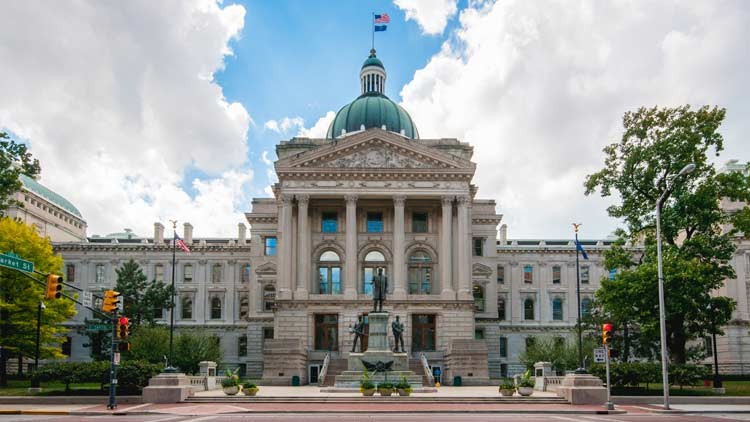
The political confrontation stems from a specific legislative action on Thursday, December 11, 2025. The Indiana State Senate held a vote on a proposal to redraw the state's congressional districts outside of the normal decennial census cycle. The measure was defeated by a vote of 31 to 19, as reported by PBS NewsHour. What made this vote particularly notable was the coalition that formed against it: twenty-one Republican senators joined all ten Democratic senators in opposition.
This redistricting effort was not a routine procedure. It was a mid-cycle attempt to alter district boundaries, a move that Trump had been actively urging Republican legislators across the country to support. The former president's goal, as stated in his criticism, was to help maintain the Republican majority in the U.S. House of Representatives following the 2026 midterm elections. The proposed new map for Indiana was designed to potentially give Republicans two additional congressional seats, shifting the state's delegation from its current 7-2 Republican advantage to a more lopsided 9-0 or 8-1 margin.
Trump's Direct Rebuke and Political Threat
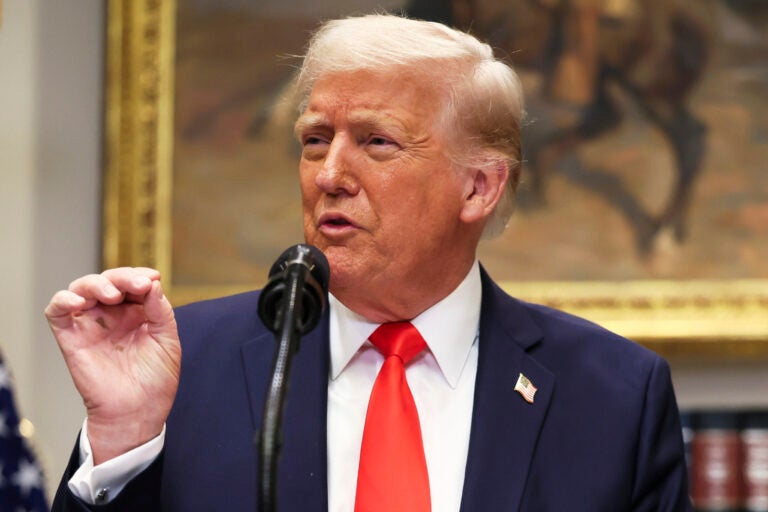
Following the vote, Trump did not mince words when asked for his reaction by PBS NewsHour White House correspondent Liz Landers. He specifically targeted Indiana Senate President Pro Tempore Rodric Bray, the chamber's Republican leader. "I heard he was against it," Trump stated. "He'll probably lose his next primary, whenever that is. I hope he does, because he's done a tremendous disservice." Trump further solidified his position by adding, "I would certainly support anybody who wants to go against him."
This public threat represents a significant escalation in Trump's approach to enforcing party loyalty. Rather than working through private channels or party mechanisms, he issued a direct challenge to a sitting state legislative leader, promising to mobilize his political capital and supporter base against Bray in a future primary election. This tactic underscores the former president's continued influence over Republican electoral politics and his willingness to intervene in state-level matters to achieve national political objectives.
The Republican Defense: Strategy vs. Loyalty
In response to both the vote and Trump's subsequent criticism, Senate President Bray issued a statement defending the decision of his caucus. He clarified that Indiana Senate Republicans share the goal of maintaining a Republican majority in Congress after the 2026 elections. However, he drew a distinction on methodology. "The issue before us today was how to get there," Bray explained, "and many of my caucus members don't think redrawing our Congressional map mid-cycle is a guaranteed way for Indiana – or our country – to achieve that outcome."
This statement reveals a fundamental strategic disagreement within the party. Bray and the dissenting Republicans appear to be questioning the efficacy and propriety of mid-decade redistricting, a process often criticized as gerrymandering when done for purely partisan gain. Their resistance suggests a concern that such a move could backfire politically, either by inviting legal challenges, creating voter backlash, or setting a precedent that could be used against Republicans in other states. This incident frames a larger debate about whether short-term electoral gains through aggressive map-drawing are worth potential long-term reputational damage and democratic norms.
Broader Implications for the GOP and American Politics
The clash in Indiana is not an isolated event but part of a broader pattern of Trump asserting control over Republican Party strategy at all levels of government. The former president's commitment to redistricting efforts is tied to his overarching goal of securing a durable Republican majority in the House of Representatives, which serves as a critical check on Democratic presidential initiatives. When state-level Republicans deviate from this strategy, they risk facing the same kind of primary challenges that have reshaped the party's congressional delegation in recent years.
Furthermore, the coalition of Republicans and Democrats in Indiana to block the map redraw is itself noteworthy. It demonstrates that on certain issues, particularly those related to electoral process and norms, bipartisan agreement can still emerge despite the highly polarized national environment. However, such alliances now carry the added risk of drawing the ire of powerful figures within one's own party, as Senator Bray has discovered.
The situation also raises questions about the autonomy of state legislatures. Traditionally, redistricting has been primarily a state matter, with national party figures offering guidance but not mandates. Trump's very public intervention and threat represent a new level of nationalization of what were once local and state political decisions. This could lead to increased centralization of party strategy but also to more frequent internal conflicts between state Republican officials pursuing their own political calculations and national party leaders demanding loyalty to a unified plan.
Conclusion: A Litmus Test for Party Loyalty
The rejection of the Indiana redistricting plan and Trump's forceful response have created a clear litmus test for Republican officials. The episode forces a choice between adhering to traditional legislative judgment and procedural norms versus demonstrating unwavering loyalty to the former president's political agenda. For Senator Bray and his colleagues, their vote was a statement of institutional and strategic independence. For Trump, it was an act of disloyalty warranting political retaliation.
As the 2026 election cycle approaches, this conflict may serve as a template for future interactions between Trump and Republican officeholders at the state level. The threat of a primary challenge, backed by Trump's endorsement and fundraising network, is a powerful tool to enforce discipline. However, as the Indiana case shows, it is not always sufficient to overcome local political calculations and principled objections. The ongoing tension between centralized party command and decentralized state authority will likely continue to define Republican politics in the coming years, with redistricting battles serving as a key flashpoint.