Read on Global News
CBSA Faces Lawsuit Over Response to Officer Targeted in Indian Disinformation Campaign
A Canada Border Services Agency officer has filed a lawsuit alleging the agency abandoned him after he became the target of an alleged Indian state-sponsored disinformation campaign. The officer, Sandeep Singh Sidhu, claims the CBSA refused to provide assistance when he faced threats after being falsely branded a terrorist in Indian media. This case highlights the complex intersection of international diplomacy, national security, and employee protection responsibilities for government agencies.
The intersection of international diplomacy, national security, and institutional duty is under scrutiny following a lawsuit against the Canada Border Services Agency (CBSA). The case centers on a border officer who alleges the agency failed to protect him after he was targeted by an alleged foreign disinformation campaign, raising critical questions about the obligations of national security employers to their staff.

The Allegations: A Border Officer in the Crossfire
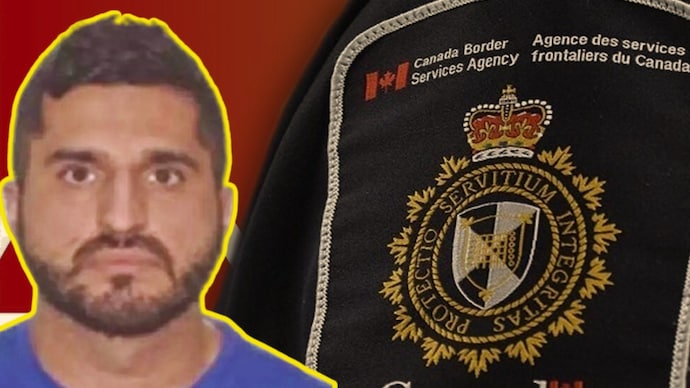
According to a lawsuit filed in Ottawa, border officer Sandeep Singh Sidhu alleges the Indian government falsely identified him as a terrorist in a coordinated media campaign. This campaign emerged amid heightened diplomatic tensions between Canada and India following Canada's 2023 accusation that India was involved in the assassination of a Sikh leader in British Columbia. In what appears to be a retaliatory narrative, Indian media outlets, citing the country's National Investigation Agency (NIA), reported that Sidhu was wanted for a 2020 terrorist attack and was employed by the Canadian government.
The reports utilized a photograph of Sidhu that he had provided only to the Indian government during a visa application process. The narrative framed Canada's employment of a supposed terrorist in a national security role as hypocrisy, directly challenging Ottawa's criticism of New Delhi's actions. Sidhu, a 20-year veteran of the CBSA, maintains he has never been involved in terrorism and was selected as a target precisely because of his visible, uniformed position and his common Sikh name.
The CBSA's Response and the Lawsuit's Core Claim
The heart of the legal action lies in Sidhu's allegation that the CBSA abandoned him when he sought help. After the disinformation spread, Sidhu faced direct threats, including a social media post that displayed his home in Abbotsford, B.C., with a message encouraging violence against him. When he reported these threats to his superiors at the CBSA, seeking support and protection, he claims they told him the matter was not work-related and declined to provide assistance.
In response to media inquiries about the lawsuit, the CBSA issued a statement saying it could not comment on the specific case as it was before the courts. However, the agency outlined its general policy: "The Canada Border Services Agency is committed to protecting, supporting, and assisting employees and their families if they face harassment, assault, or threats against them or their property, while at work or as a direct result of their duties." This statement has become a focal point of contention.
Legal and Institutional Implications
Sidhu's legal team argues the CBSA's stated policy should apply directly to his situation. Lawyer Jeffrey Kroeker contends that the only reason Sidhu was targeted was because of his role as a CBSA officer. "The CBSA knew the risk was real," Kroeker stated, "especially since Mr. Sidhu brought the matter to the CBSA’s attention and because the very reason for the misinformation campaign was about Canada accusing India for conducting assassinations on Canadian soil." He further accused the agency of mocking Sidhu and turning its back on him during a vulnerable time.
The case tests the boundaries of what constitutes a threat "as a direct result of their duties." If a foreign state targets an employee specifically because of their government position and uniform, does the employer's duty of care extend to protecting them from the international fallout of inter-governmental disputes? This lawsuit seeks a judicial answer to that question, with potential ramifications for how all Canadian national security agencies support staff caught in geopolitical conflicts.
Broader Context: Canada-India Relations and Disinformation
This incident cannot be divorced from the strained relationship between Canada and India. Tensions have been high since the killing of Hardeep Singh Nijjar in 2023, which Canada linked to Indian agents. India has long accused Canada of harboring Sikh separatists (Khalistan supporters) it considers terrorists, a claim Canadian intelligence says applies to only a small extremist fringe. The Sidhu case appears to be an extension of this narrative war, where an individual public servant became a pawn in a larger diplomatic struggle.
The Canadian government has reportedly cleared Sidhu of the terrorism allegations, finding no evidence to support India's claims. However, as noted by his lawyers, he continues to suffer the consequences of what they describe as "an orchestrated misinformation campaign." The case underscores the real-world harm that state-sponsored disinformation can inflict on individuals, extending beyond online chatter to tangible threats against personal safety.

Conclusion: A Test of Institutional Responsibility
The lawsuit against the CBSA represents a significant test of institutional responsibility in an era of hybrid threats. It challenges government agencies to define and uphold their duty of care when employees are targeted not by criminals or disgruntled citizens, but by the information operations of a foreign state. The outcome will set a precedent for how Canada protects its frontline national security personnel who may become collateral damage in international disputes. As geopolitical tensions increasingly play out in the information domain, the need for clear protocols and unwavering support for affected employees has never been more critical. The case serves as a stark reminder that the human cost of diplomacy and disinformation is often borne by individuals, and the institutions that employ them must be prepared to respond.