New Simulations Rewrite the Milky Way's Origin Story
Advanced computer simulations are challenging long-held beliefs about the Milky Way's formation. New research reveals that the galaxy's distinct chemical split between two groups of stars may not stem from a single ancient collision, as previously thought. Instead, multiple evolutionary pathways—including star formation bursts, shifting gas flows, and material from the galaxy's outskirts—can create this mysterious pattern. This discovery suggests a more diverse and complex history for our galactic home, with implications for understanding galaxy evolution across the cosmos.
For decades, astronomers have been puzzled by a fundamental mystery at the heart of our galaxy. When observing stars near our Sun, they consistently find two distinct chemical families, a feature known as the "chemical bimodality." This split has long been attributed to a single, cataclysmic event in the Milky Way's distant past. However, groundbreaking new research is challenging this narrative, suggesting our galaxy's story is far more complex and varied than previously imagined.
Decoding the Galactic Chemical Split
The mystery centers on the chemical composition of stars. Astronomers measure the ratios of elements like iron (Fe) and magnesium (Mg) to understand a star's history. In the solar neighborhood, stars clearly separate into two distinct sequences on chemical plots, despite having similar overall metallicities. This "chemical bimodality" has been a persistent enigma, with the prevailing theory pointing to a major merger with a smaller galaxy, often identified as Gaia-Sausage-Enceladus (GSE), as the sole culprit.
Simulations Reveal Multiple Pathways
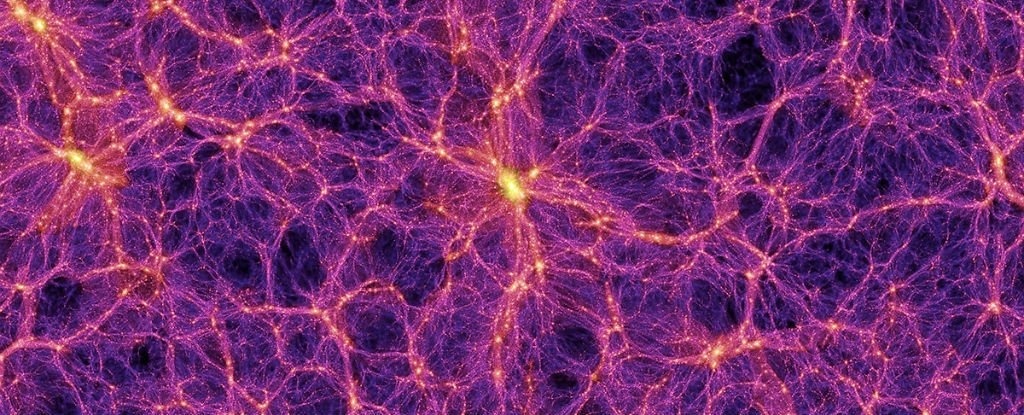
A new study, published in Monthly Notices of the Royal Astronomical Society and led by researchers from the Institute of Cosmos Sciences of the University of Barcelona (ICCUB) and the CNRS, has turned this assumption on its head. Using the sophisticated Auriga suite of computer simulations, the team created 30 virtual Milky Way-like galaxies to trace their evolution. The results were startling: the chemical split can arise from several different evolutionary processes, not just one ancient collision.
Alternative Explanations for the Bimodality
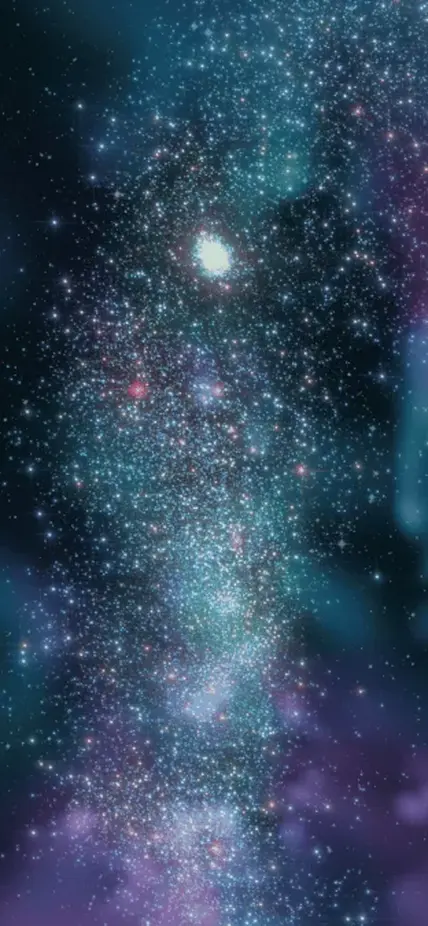
The simulations identified multiple viable pathways to creating the dual chemical sequences. One involves cycles of intense starburst activity followed by quieter periods, which imprints distinct chemical signatures on different generations of stars. Another key mechanism is the variable inflow of gas from a galaxy's surroundings. Perhaps most intriguingly, the research highlights the role of metal-poor gas streaming in from the circumgalactic medium (CGM)—the vast halo of gas surrounding a galaxy—in seeding the formation of the second branch of stars.
Implications for Galactic Evolution
This discovery has profound implications for our understanding of not just the Milky Way, but galaxies in general. As lead author Matthew Orkney stated, "This study shows that the Milky Way's chemical structure is not a universal blueprint." The findings suggest that galaxies can reach similar end states through diverse evolutionary histories. This diversity is crucial for building accurate models of cosmic evolution and challenges the idea of a single, dominant formation mechanism.
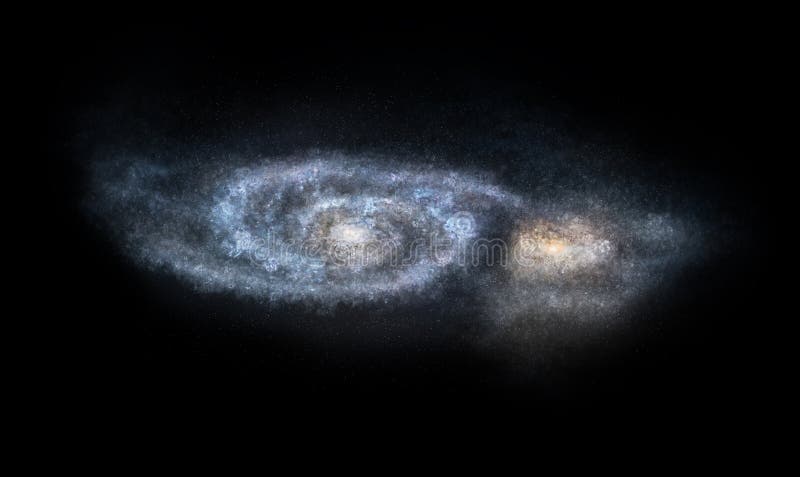
The work also provides context for observations of our nearest galactic neighbor, Andromeda. The fact that a similar chemical bimodality has not been identified there reinforces the idea that each galaxy's history is unique. Understanding the specific processes that shaped the Milky Way's chemical map helps astronomers piece together the conditions of the early universe and the complex roles of gas dynamics and mergers.
The Future of Galactic Archaeology
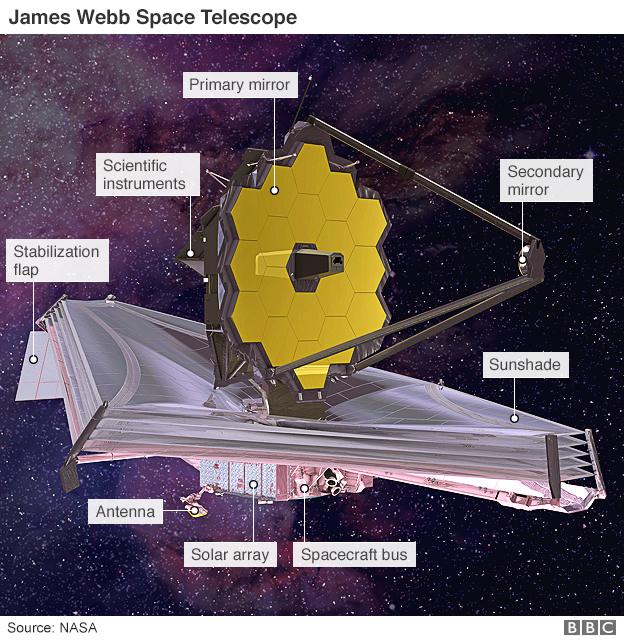
The next generation of astronomical observatories is poised to test these simulation-based predictions directly. Instruments like the James Webb Space Telescope (JWST) and future missions such as PLATO and Chronos will gather unprecedented data on the chemical makeup of stars within and beyond our galaxy. As Dr. Chervin Laporte of ICCUB-IEEC notes, the era of 30-meter telescopes will make detailed chemical studies of external galaxies routine, allowing scientists to observe the predicted diversity of chemical sequences firsthand.
This will not only validate or refine the new models but also help pinpoint the exact evolutionary path the Milky Way took. The quest to understand our galactic home is entering a new, more nuanced phase, where its history is seen not as a simple story of collision, but as a complex tapestry woven from multiple cosmic events.