Read on Global News
The Monroe Doctrine: A 200-Year Legacy of American Influence in the Western Hemisphere
First articulated in 1823, the Monroe Doctrine has served as a cornerstone of U.S. foreign policy for over two centuries, fundamentally shaping America's relationship with Latin America and the broader Western Hemisphere. Originally intended to deter European colonization, its interpretation has evolved dramatically, justifying everything from military intervention to economic dominance under the banner of protecting U.S. interests. This article explores the doctrine's origins, its historical transformations through various presidential 'corollaries,' and its controversial modern-day resurgence as a tool of American preeminence.
For over two centuries, the Monroe Doctrine has stood as one of the most enduring and contentious principles in American foreign policy. First established in 1823, this doctrine has been repeatedly invoked to justify American dominance and influence over the western hemisphere, particularly in Latin America. Its legacy is a complex tapestry of non-interventionist ideals, imperialistic actions, and shifting geopolitical strategies that continue to resonate in contemporary international relations. This article examines the doctrine's foundational principles, its historical evolution through key presidential interpretations, and its modern implications for hemispheric relations.
The Origins and Core Principles
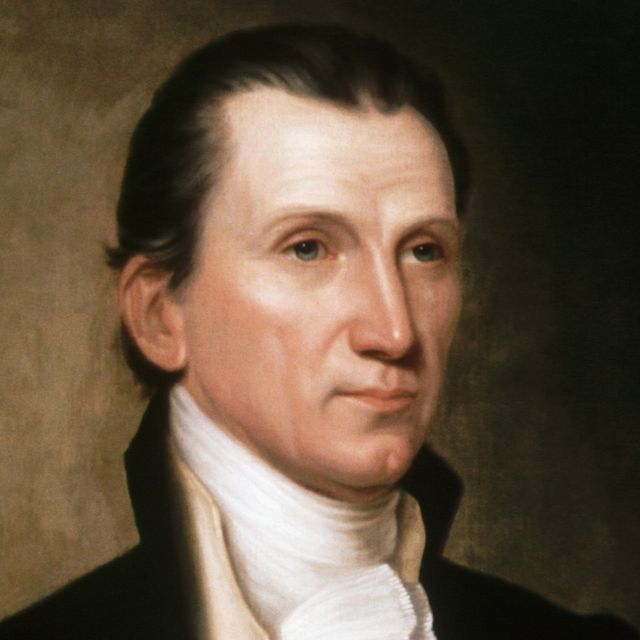
The Monroe Doctrine was born from a specific geopolitical moment. U.S. President James Monroe delivered the foundational statement during his 1823 State of the Union address to Congress, with the text largely developed by his Secretary of State, John Quincy Adams. The immediate context was the wave of independence movements across Latin America as nations broke free from Spanish colonial rule. The doctrine's primary assertion was that the Western Hemisphere—encompassing both North and South America—was closed to future colonization by any European powers. This declaration was initially welcomed by nascent Latin American republics as an affirmation of their sovereignty and a shield against European reconquest.
However, the doctrine contained a crucial second element that would later justify American interventionism. Monroe asserted that any European attempt to extend their political system to the hemisphere or interfere with independent states would be viewed as "dangerous to our peace and safety." This established the United States not merely as a fellow republic but as the hemisphere's dominant power with a self-declared right to police external influences. As noted in contemporary analysis, this portion of the speech would not be formally labeled the "Monroe Doctrine" until the late 1800s, by which time the U.S. had grown into a world power capable of enforcing its vision through military and economic means.

Historical Evolution and Presidential Corollaries
The doctrine's meaning has never been static; it has been reinterpreted and expanded by successive administrations to suit contemporary goals. The first major reinterpretation came in 1904 with President Theodore Roosevelt's "Roosevelt Corollary." Roosevelt positioned the United States as "an international police power" responsible for ensuring that nations in the Western Hemisphere remained "stable, orderly and prosperous." While framed as a reluctant duty to prevent European intervention in cases of financial instability or disorder, this corollary was used to justify numerous U.S. military interventions and occupations in Central America and the Caribbean during the early 20th century—a period often referred to as the era of "gunboat diplomacy" or the "Banana Wars."
The doctrine's application shifted again during the Cold War. The ideological struggle with the Soviet Union transformed it into a tool for countering communist expansionism in the Americas. This rationale underpinned a series of U.S.-backed regime change operations and support for right-wing dictatorships. For instance, the doctrine was cited during the 1954 coup in Guatemala and to justify support for Augusto Pinochet's regime in Chile. In 1962, President John F. Kennedy directly invoked the Monroe Doctrine to explain U.S. efforts to "isolate the communist menace in Cuba," a stance that culminated in the Cuban Missile Crisis.
The Modern Era: Declarations of Death and Trump's Reassertion
In 2013, then-Secretary of State John Kerry declared before the Organization of American States that "the era of the Monroe Doctrine is over," signaling a shift toward partnership and diplomacy in hemispheric relations. However, this pronouncement proved premature. The doctrine has experienced a significant revival under the "America First" foreign policy of former President Donald Trump. A 2025 national security strategy document explicitly called to "reassert and enforce the Monroe Doctrine to restore American preeminence in the Western Hemisphere."
This modern iteration, dubbed the "Trump Corollary," prioritizes combating mass migration, drug trafficking, and countering "hostile foreign incursion or ownership of key assets." Its implementation has been visible in policies like military strikes on suspected drug vessels in the Caribbean and a significant military buildup near Venezuela. Furthermore, strategic economic actions, such as a proposed $20-billion bailout for Argentina, are viewed by analysts as tools to bolster U.S.-aligned leaders and counter the influence of leftist governments in the region, effectively using economic leverage to exert political influence.

Conclusion: An Enduring and Controversial Legacy
The Monroe Doctrine remains a powerful and polarizing force in inter-American relations. For the United States, it represents a foundational principle of hemispheric security and national interest. For many nations in Latin America and the Caribbean, however, its legacy is inextricably linked to a history of intervention, coercion, and undermined sovereignty. The doctrine's cyclical nature—periods of assertive enforcement followed by declarations of its obsolescence—suggests it is less a fixed policy and more a flexible framework invoked to justify American power. As geopolitical dynamics continue to evolve, the tension between the doctrine's original ideal of a hemisphere free from external colonization and its use as an instrument for U.S. dominance ensures it will remain a central, and contested, feature of the Americas' political landscape.