Read on PBS News
The Supreme Court's Conservative Shift: Re-examining Presidential Power and the Fate of Humphrey's Executor
The U.S. Supreme Court's conservative majority, led by Chief Justice John Roberts, is poised to potentially overturn a 90-year-old precedent that limits presidential authority. The case Trump v. Slaughter, concerning the firing of a Federal Trade Commission member, represents a pivotal moment in the decades-long judicial trend toward expanding executive power under the 'unitary executive' theory. This article examines the historical context, the arguments from both sides, and the profound implications for the independence of federal agencies and the balance of power in American government.
The landscape of American presidential power is at a critical juncture, with the U.S. Supreme Court's conservative majority signaling a readiness to dismantle long-standing checks on executive authority. This judicial trend, which began well before Donald Trump's presidency, faces its next major test in the case of Trump v. Slaughter. At its heart is the 1935 precedent Humphrey's Executor v. United States, a unanimous decision that has for ninety years protected the heads of independent federal agencies from being fired by the president without cause. The court's deliberations could redefine the constitutional limits of the presidency and the structure of the modern administrative state.
The Historical Precedent: Humphrey's Executor
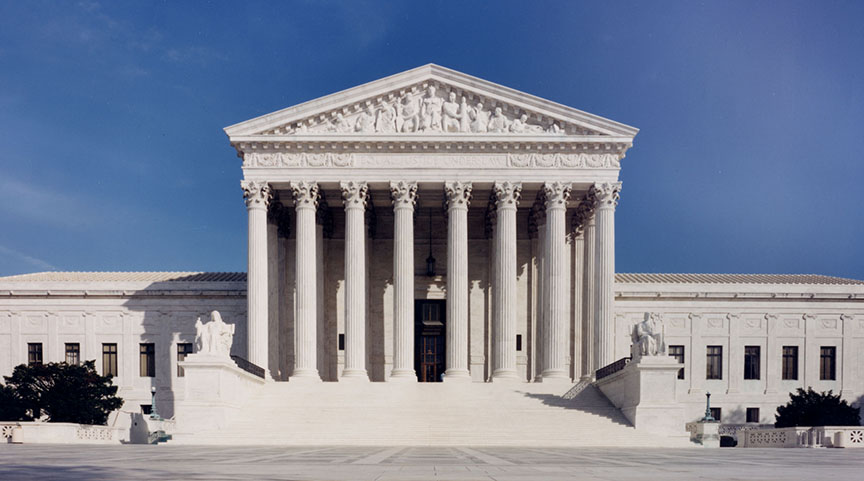
Decided in 1935, Humphrey's Executor v. United States was a landmark ruling that arose from President Franklin D. Roosevelt's attempt to remove a Federal Trade Commission (FTC) member. The Court held that Congress could create independent agencies whose leaders enjoy protection from at-will removal by the president, requiring instead a showing of cause such as inefficiency or neglect of duty. This decision was foundational, ushering in an era of powerful regulatory bodies—like the FTC, the National Labor Relations Board (NLRB), and the Consumer Product Safety Commission—designed to operate with a degree of insulation from direct political pressure. It established a balance, ensuring these agencies could fulfill their statutory missions without fear of being dismantled by a sitting president who disagreed with their actions.
The Conservative Legal Movement and the Unitary Executive Theory
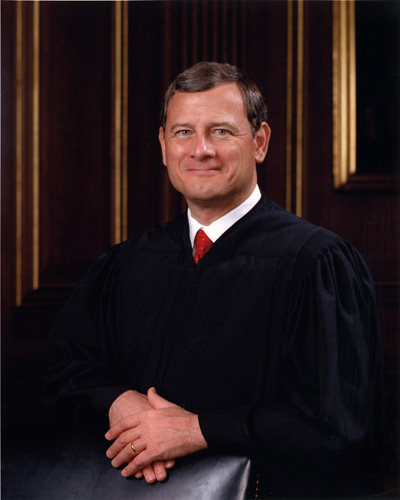
For decades, Humphrey's Executor has been a prime target for the conservative legal movement, which champions an expansive view of presidential power known as the unitary executive theory. Proponents argue that the Constitution vests all executive power in the president, meaning any official within the executive branch must ultimately answer to him. This theory, famously articulated by the late Justice Antonin Scalia in a 1988 dissent, posits that independent agencies with protected leadership are unconstitutional infringements on the president's authority to faithfully execute the laws. The current Court's conservative bloc, under Chief Justice Roberts, has shown increasing sympathy for this view, viewing broad presidential removal power as the constitutional default.
A Steady Judicial March Toward Expanded Power
The potential overturning of Humphrey's Executor would not be an isolated event but the culmination of a steady judicial march. Since 2010, the Roberts Court has incrementally chipped away at laws restricting presidential removal authority. A significant step came in the 2020 case Seila Law LLC v. Consumer Financial Protection Bureau, where Roberts wrote for the majority that "the President’s removal power is the rule, not the exception," upholding Trump's firing of the CFPB director. This trend was further cemented in the Court's 2024 decision on presidential immunity, where Chief Justice Roberts classified the removal power among the president's "conclusive and preclusive" authorities that Congress cannot curb. The practical effect has been visible: President Trump, in his second term, has successfully removed officials from the FTC, NLRB, and other agencies, with only Federal Reserve Governor Lisa Cook and a copyright official surviving removal efforts so far.
The Case at Hand: Trump v. Slaughter
The immediate vehicle for challenging the 90-year-old precedent is the firing of FTC Commissioner Rebecca Slaughter. The Justice Department, representing President Trump, has urged the Court to overturn Humphrey's Executor, with Solicitor General D. John Sauer calling the precedent "egregiously wrong." They argue the president must have plenary power to remove agency heads to effectively implement his policy agenda. Conversely, Slaughter's legal team, along with numerous legal historians, contends that historical practice and the Constitution's text allow for congressionally created limits on removal. These historians have submitted briefs arguing that the early American government did not endorse an unlimited presidential removal power, suggesting the Court's recent historical assertions may be flawed.

Broader Implications and the Road Ahead
Overturning Humphrey's Executor would have seismic implications for the American government. It would fundamentally alter the independence of dozens of federal agencies, potentially subjecting their leadership and regulatory actions to the shifting winds of electoral politics. A second question in the case—whether courts can reinstate illegally fired officials or are limited to awarding back pay—adds another layer of consequence, affecting the practical remedy for affected individuals like FTC Commissioner Slaughter. Furthermore, the Court's cautious approach to the Federal Reserve suggests some agencies may be treated differently, but the overall direction points toward a significant consolidation of presidential control over the executive branch.
The Supreme Court's decision in Trump v. Slaughter will be more than a ruling on a single firing; it will be a definitive statement on the scope of presidential authority and the durability of judicial precedent. As noted by Justice Elena Kagan, the conservative justices appear "raring" to take action. Whether they choose to fully embrace the unitary executive theory or find a more limited path, their judgment will reshape the balance of power among the branches of government for generations to come, determining how much independence the administrative state retains from the Oval Office.