Read on PBS News
Russian Strikes on Kyiv Kill 3 as Ukraine Pursues Peace Talks in U.S.
Russian drone and missile attacks in and around Ukraine's capital killed at least three people early Saturday, officials confirmed, as Ukrainian representatives traveled to the United States for renewed peace negotiations. The strikes wounded dozens and caused significant damage to residential buildings and infrastructure in Kyiv, while Ukrainian forces conducted retaliatory strikes on Russian oil infrastructure. This escalation comes amid complex diplomatic efforts involving U.S. and European leaders to end the nearly four-year conflict.
Early Saturday morning, Russian drone and missile attacks targeted Ukraine's capital region, resulting in at least three fatalities and dozens of injuries. The strikes occurred as Ukrainian officials embarked on a diplomatic mission to the United States, aiming to revitalize peace negotiations to end the ongoing conflict that has persisted for nearly four years.
Casualties and Damage Assessment
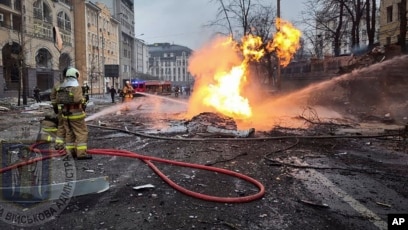
According to the Kyiv City Military Administration, two people were killed in the direct strikes on the capital city. In the broader Kyiv region, regional police reported one woman died and eight others were wounded in a combined missile and drone attack. Mayor Vitali Klitschko confirmed that 29 people were wounded in Kyiv alone, with falling debris from intercepted Russian drones striking residential buildings and causing significant structural damage.
Infrastructure Impact
The attacks had severe consequences for Kyiv's infrastructure. Mayor Klitschko reported that the western part of the capital lost power following the strikes. This pattern of targeting civilian infrastructure aligns with what Ukrainian officials describe as Russia's strategy of "weaponizing" winter conditions by attempting to cripple the power grid and deny civilians access to heat, light, and running water for the fourth consecutive winter.
Diplomatic Developments
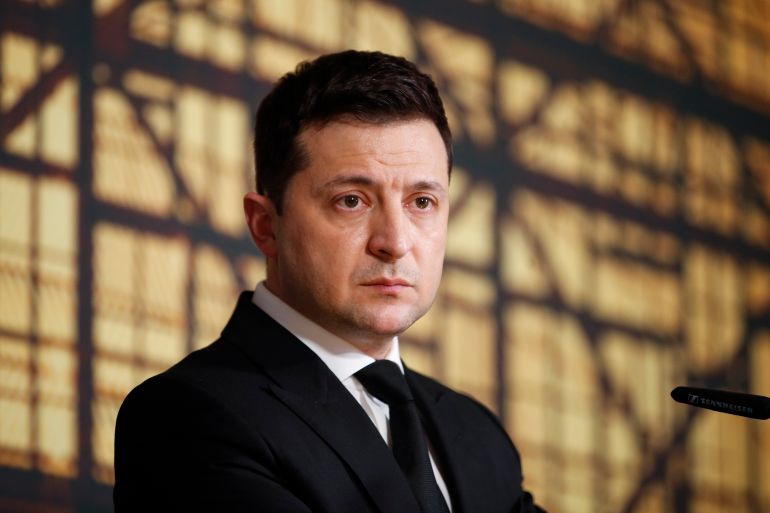
Ukrainian President Volodymyr Zelenskyy announced that a delegation headed by national security chief Rustem Umerov was traveling to the United States to "swiftly and substantively work out the steps needed to end the war." This diplomatic push follows U.S. President Donald Trump's release of a 28-point proposal for ending the conflict last week, which reportedly heavily favored Russian interests according to initial assessments.
Ukrainian Counterstrikes
In response to the attacks on Kyiv, Ukrainian forces conducted strategic strikes against Russian energy infrastructure. The Caspian Pipeline Consortium confirmed that a major oil terminal near the port of Novorossiysk stopped operations after a strike by unmanned boats damaged one of its three mooring points. Andriy Kovalenko, head of the Center for Countering Disinformation at Ukraine's National Security and Defense Council, confirmed Ukrainian responsibility for the attack, stating that "Ukrainian special forces worked on the Russian Federation, its energy sector and infrastructure."
International Engagement
The diplomatic landscape involves multiple international actors. A U.S. delegation is expected to travel to Moscow for talks with Russian President Vladimir Putin in the second half of next week. Meanwhile, President Zelenskyy is scheduled to travel to Paris on Monday for discussions with French President Emmanuel Macron. According to Macron's office, the leaders will "discuss the situation and the conditions for a just and lasting peace, in continuity with the Geneva discussions, the American plan, and in close coordination with our European partners."
Political Developments in Ukraine
The peace negotiations occur amid significant political changes within Ukraine's government. President Zelenskyy announced the resignation of his powerful chief of staff, Andrii Yermak, who also served as the country's lead negotiator in talks with the United States. The resignation followed anti-corruption investigators searching Yermak's residence, representing an unprecedented development at the heart of Ukraine's government that risks disrupting the country's negotiating strategy during a critical period.

Economic Warfare
Ukraine's strategy of targeting Russian energy infrastructure represents a calculated effort to undermine Moscow's financial capacity to continue the war. Months of Ukrainian long-range drone strikes on Russian refineries and terminals have aimed to deprive the Kremlin of crucial oil export revenue. A Ukrainian security service official confirmed that Ukraine used domestically produced Sea Baby naval drones to strike two oil tankers in the Black Sea that were part of Russia's "shadow fleet" used to evade international sanctions.
The ongoing conflict demonstrates the complex interplay between military actions and diplomatic efforts. As civilian casualties mount in Kyiv, both nations continue to pursue strategic objectives through combined military and political means. The success of the current diplomatic initiative will depend on navigating the competing interests of multiple international stakeholders while addressing the immediate humanitarian concerns arising from continued hostilities.