Ocean Carbon Removal: Promising Solution or Premature Gamble?
As global temperatures approach the critical 1.5°C threshold, scientists are exploring whether the ocean can help absorb excess carbon dioxide from the atmosphere. However, new research presented at COP30 reveals that current marine carbon removal technologies remain too uncertain for large-scale deployment. Experts emphasize that while oceans may eventually play a role in climate solutions, immediate focus must remain on proven emissions reduction strategies. The European Marine Board report highlights the urgent need for robust monitoring, verification systems, and environmental safeguards before considering ocean-based carbon removal at scale.
As global temperatures continue to rise and approach the critical 1.5°C threshold, scientists and policymakers are increasingly looking to the world's oceans as potential allies in the fight against climate change. The ocean's natural capacity to absorb carbon dioxide makes it an attractive candidate for carbon removal strategies, but recent findings from COP30 in Brazil suggest we may be moving too quickly toward implementation without adequate safeguards.

The Current State of Marine Carbon Removal
Marine carbon dioxide removal technologies encompass various approaches that leverage the ocean's natural carbon absorption capabilities. Some methods focus on biological processes, such as stimulating plankton or seaweed growth to enhance their carbon uptake. Other approaches involve chemical or physical techniques, including systems designed to directly extract carbon dioxide from seawater. Once captured, this carbon can potentially be stored in deep-sea sediments, ocean floor deposits, geological formations, or long-lasting products.
According to an expert panel reporting to the European Union, these technologies are not yet ready for large-scale deployment. The central concern, as highlighted in the European Marine Board report, is the lack of proven monitoring and verification systems to ensure these methods function as intended without creating new environmental problems.
Why Carbon Removal Remains Necessary
Despite the emphasis on emissions reduction, carbon removal technologies will likely play a crucial role in meeting climate targets. The reality is that certain sectors, such as aviation and shipping, remain extremely difficult to decarbonize completely. Even with extensive research, carbon-free alternatives for these industries are not yet feasible at scale.
To achieve net zero emissions by 2050 and work toward the more ambitious goal of net negative emissions required for the 1.5°C target, societies must balance remaining emissions with equivalent carbon removal. As Helene Muri, the lead researcher from the Norwegian University of Science and Technology, explains, "We must have a net removal of carbon dioxide from the atmosphere to get to 1.5°C and that means that you will likely have some residual emissions from some sectors, such as shipping and aviation, and some industries."
Technical Challenges and Monitoring Requirements
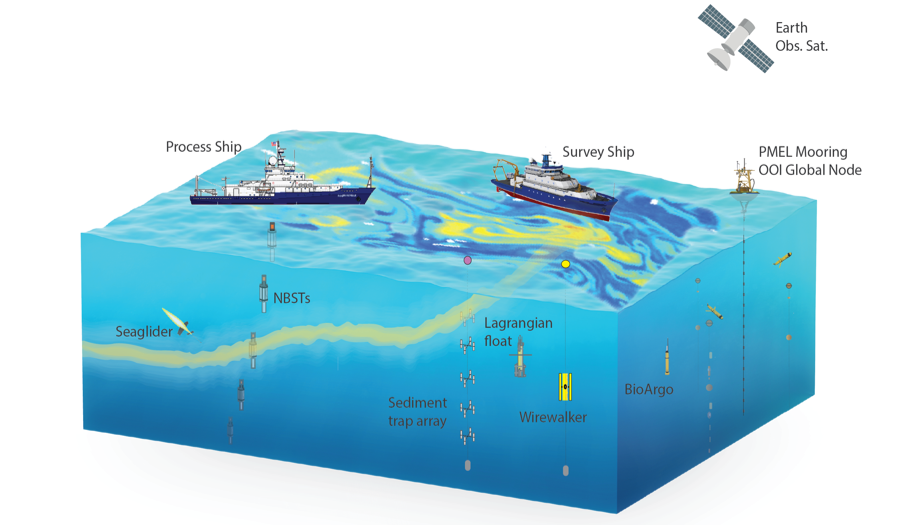
The fundamental challenge with marine carbon removal lies in verification and monitoring. Unlike land-based approaches where carbon storage can be more easily measured and tracked, ocean-based storage presents unique difficulties. The ocean's constant movement and complex chemical processes make it challenging to accurately measure how much additional carbon a particular technology removes and how long that carbon remains sequestered.
Muri emphasizes the complexity: "If you're storing it in the ocean, in some form or another, not in a geological reservoir, it's a lot harder to govern it and also monitor it. The ocean doesn't stay put." This mobility creates significant obstacles for establishing reliable carbon credit systems and ensuring environmental protection.

The Path Forward: Caution and Prioritization
While marine carbon removal shows potential for future climate solutions, experts unanimously agree that immediate action must focus on proven emissions reduction strategies. The European Marine Board report stresses that cutting emissions through existing methods should remain the top priority in climate policy.
As Muri states, "We know how to cut emissions, and we have lots of methods that work. That has to take top priority." The report calls for establishing comprehensive monitoring, reporting, and verification standards before considering scaling up marine carbon removal technologies.
The research community acknowledges that marine carbon removal may eventually contribute to climate solutions, but emphasizes that it should not be viewed as a "miracle ocean fix to climate change." Instead, careful development, rigorous testing, and transparent verification systems must precede any large-scale implementation to ensure both effectiveness and environmental safety.