Read on Global News
Carney's UAE Visit: Economic Diversification Amid Geopolitical Tensions
Prime Minister Mark Carney's landmark visit to the United Arab Emirates represents Canada's strategic push to attract Emirati investment and diversify the economy in response to U.S. trade pressures. The trip, the first by a sitting Canadian prime minister since 1983, focuses on strengthening bilateral ties in sectors like artificial intelligence, energy, and infrastructure while navigating complex geopolitical challenges surrounding the UAE's alleged involvement in Sudan's civil war. This diplomatic mission underscores Canada's balancing act between economic interests and international human rights concerns.
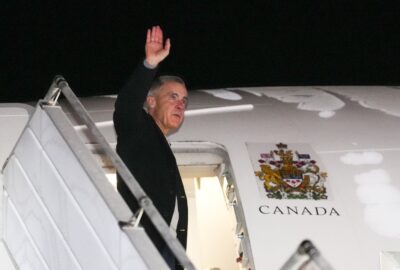
Prime Minister Mark Carney's arrival in Abu Dhabi marks a significant moment in Canada-UAE relations, representing the first visit by a sitting Canadian prime minister to the Emirates since 1983. The diplomatic mission comes at a critical juncture, with Canada seeking to diversify its economy through Emirati investment while navigating complex geopolitical tensions surrounding the UAE's alleged role in Sudan's ongoing civil war.
Economic Diversification Strategy
Carney's visit is strategically timed to address Canada's economic challenges in the face of escalating U.S. trade tensions. The primary objective involves attracting investment from Emirati sovereign wealth funds and the private sector to help diversify Canada's economic portfolio. This approach responds directly to the need for economic resilience against U.S. tariffs and trade restrictions that have impacted Canadian exports and business operations.
The discussions build upon years of negotiations for an investment protection agreement that could significantly expand private sector ties between the two nations. According to Global News reports, both countries see potential for collaboration in sectors including energy, information technology, infrastructure, and health care, with the UAE's massive sovereign wealth funds already having deployed significant capital in Canada.

Bilateral Relations and Trade Dynamics
Canada and the UAE have developed what Global Affairs Canada describes as "a strong and diverse partnership" spanning trade, regional security cooperation, and international development initiatives. The relationship has proven particularly valuable during humanitarian crises, with the UAE serving as a primary partner in Canada's resettlement of Afghans following the Taliban's takeover of Kabul in 2021.
Trade between the two nations has evolved significantly in recent years. Canadian exports to the UAE include arms, aerospace products, motor vehicles, and vegetables, while more than half of Canada's imports from the Emirates involve iron, steel, aluminum, and related products. Notably, Canadian canola exports to the UAE increased substantially after China restricted imports of Canada's crop between 2019 and 2021, with analysts believing much of this canola was subsequently re-exported to China.
Geopolitical Context and Human Rights Concerns
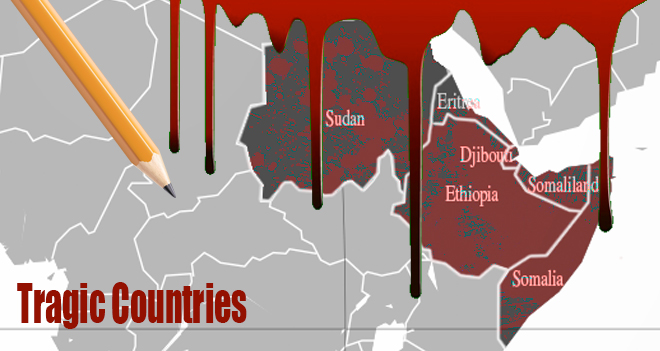
Carney's visit occurs against a backdrop of mounting international pressure on the UAE regarding its alleged support for Sudanese militia groups. Human rights organizations, United Nations panels, and the United States government have accused the Emirates of supporting the Rapid Support Forces (RSF), a paramilitary group implicated in ethnic violence in Sudan's Darfur region.
The U.S. administration under President Joe Biden had previously sanctioned companies in the United Arab Emirates accused of providing arms to militants with government support. However, Canada has not joined the U.S. in formally characterizing the crisis in Sudan as genocide, despite evidence presented by rights groups and research institutions.
Diplomatic Balancing Act
Nicholas Coghlan, a former Canadian ambassador to Sudan, expressed concern about what he characterized as "excessive pussyfooting" in Canada's approach to the UAE's alleged involvement in Sudan. Coghlan argued that publicly calling on the UAE to respect existing UN arms embargoes on the Darfur region would not necessarily cause a diplomatic rupture, yet Canada has refrained from such direct statements.
The UAE embassy in Canada has consistently denied allegations of supporting either side in Sudan's civil war, stating they "categorically reject any claims of providing any form of support to either warring party since the onset of the civil war." The embassy maintains that it follows global standards to track gold shipments and avoid fuelling conflict.
Strategic Implications and Future Outlook
Carney's meetings with senior government and business officials in Abu Dhabi represent a critical test of Canada's ability to balance economic interests with human rights considerations. The visit comes just before the Prime Minister's scheduled attendance at the G20 leaders' summit in South Africa, where international security and humanitarian issues will likely feature prominently in discussions.
The outcome of these diplomatic engagements will signal Canada's approach to navigating complex international relationships where economic opportunities intersect with serious human rights concerns. As global attention remains focused on Sudan's humanitarian crisis, Canada's handling of its relationship with the UAE will be closely watched by international observers and human rights advocates.