Tainrakuasuchus Bellator: The Warrior Crocodile Ancestor That Hunted Before Dinosaurs
Scientists have discovered Tainrakuasuchus bellator, a formidable crocodile ancestor that lived 240 million years ago during the Triassic Period. This armored 'warrior' measured 2.4 meters long and weighed approximately 60 kilograms, using its speed, agility, and sharp teeth to hunt prey in a vibrant ecosystem that existed just before dinosaurs emerged. The fossil discovery in southern Brazil reveals crucial evolutionary links between South America and Africa, providing new insights into prehistoric biodiversity and the complex food chains that preceded the age of dinosaurs.
In a remarkable paleontological discovery, researchers have unveiled Tainrakuasuchus bellator, an armored crocodile ancestor that dominated Triassic ecosystems 240 million years ago. This fierce predator, whose name translates to "pointed-tooth crocodile warrior," represents a crucial missing link in our understanding of prehistoric life just before dinosaurs rose to prominence. The find offers unprecedented insights into the complex web of life that existed during this pivotal period in Earth's history.
The Warrior Crocodile Ancestor
Tainrakuasuchus bellator belonged to the Pseudosuchia group, the precursors of modern crocodiles and alligators. Despite its dinosaur-like appearance, detailed analysis of the pelvic structure and femur joints clearly distinguishes it from true dinosaurs. The creature measured approximately 2.4 meters in length and weighed around 60 kilograms, making it a medium-sized predator in its ecosystem. Its body was protected by bony plates called osteoderms, similar to those found in contemporary crocodiles, providing both protection and structural support.
Hunting Strategy and Ecological Role
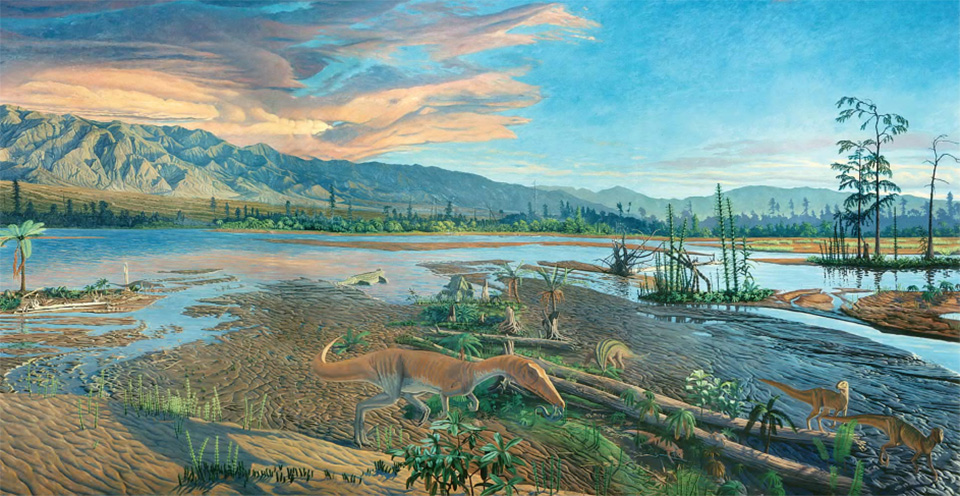
This ancient predator possessed a unique combination of physical attributes that made it an effective hunter. Its long neck and agile body allowed for rapid strikes at prey, while slender jaws filled with sharp, recurved teeth ensured that once captured, prey had little chance of escape. According to lead researcher Dr. Rodrigo Temp Müller from Universidade Federal de Santa Maria, "This animal was an active predator, but despite its relatively large size, it was far from the largest hunter of its time with the same ecosystem home to giants as big as seven meters long."
Evolutionary Significance and Geographic Connections
The discovery of Tainrakuasuchus bellator in southern Brazil provides compelling evidence of the ancient connection between South America and Africa during the Triassic Period. The fossil shows close relationship to Mandasuchus tanyauchen, a species found in Tanzania, demonstrating how organisms freely dispersed across regions that are now separated by oceans. As Dr. Müller explains in the Journal of Systematic Palaeontology study, "This connection between animals from South America and Africa can be understood in light of the Triassic Period's paleogeography when the continents were still united."
Importance for Understanding Pre-Dinosaur Ecosystems
This discovery illuminates a key moment in evolutionary history, revealing the complexity of ecosystems that existed before dinosaurs became the dominant terrestrial vertebrates. The find demonstrates that diverse communities of reptiles had already formed complex ecological relationships with various survival strategies. Tainrakuasuchus bellator lived in a region bordering a vast, arid desert—the same environment where the first dinosaurs would eventually emerge, suggesting that these ecosystems were already highly developed and capable of supporting multiple predator niches.

The discovery of Tainrakuasuchus bellator represents more than just the identification of a new species—it provides a window into a world that existed 240 million years ago, where crocodile ancestors ruled as dominant predators. This finding underscores the importance of continued paleontological research in understanding Earth's evolutionary history and the complex interplay between geography, climate, and biological diversity that has shaped life on our planet.