Read on the Guardian
Little Foot Fossil: A Potential New Species Rewriting Human Ancestry
The Little Foot fossil, one of the most complete hominin skeletons ever discovered, may represent a previously unknown species of human ancestor, according to new Australian-led research. Found in South Africa's Sterkfontein caves, this remarkable specimen challenges existing classifications within the Australopithecus genus and suggests our evolutionary tree may have an entirely new branch. The study identifies distinct cranial features that differentiate Little Foot from both Australopithecus africanus and Australopithecus prometheus, potentially rewriting our understanding of early human diversity in Africa.
The discovery of a nearly complete hominin skeleton in South Africa has long captivated paleoanthropologists, but new research suggests this famous fossil might be more significant than previously imagined. Known as 'Little Foot' for the foot bones first discovered in 1994, this remarkable specimen represents the most complete Australopithecus skeleton ever found, painstakingly excavated over two decades from the Sterkfontein cave system. Now, Australian researchers propose that Little Foot may not belong to any known species of human ancestor, potentially representing an entirely new branch on our evolutionary family tree.

The Little Foot Discovery and Historical Context
Publicly unveiled in 2017 after an extraordinary 20-year excavation, Little Foot has been the subject of scientific debate since its initial discovery. The fossil's completeness—with most bones preserved—provides an unprecedented window into early hominin anatomy. Professor Ronald Clarke of the University of the Witwatersrand, who led the excavation team, originally classified Little Foot as Australopithecus prometheus, while other researchers argued it belonged to the better-known species Australopithecus africanus, first described in 1925 and previously found in the same cave system. This disagreement set the stage for the current research that challenges both classifications.
New Research Challenges Existing Classifications
A study published in the American Journal of Biological Anthropology and led by Australian researchers presents compelling evidence that Little Foot represents neither of the previously proposed species. Dr. Jesse Martin of La Trobe University in Melbourne, who led the research, explains that their analysis reveals distinct anatomical features that differentiate Little Foot from both Australopithecus africanus and Australopithecus prometheus. "We think it is a formerly unknown, unsampled species of human ancestor," Martin stated, noting that the fossil "doesn't look like Australopithecus prometheus... but it also doesn't look like all of the africanus to come out of Sterkfontein."
Key Anatomical Differences
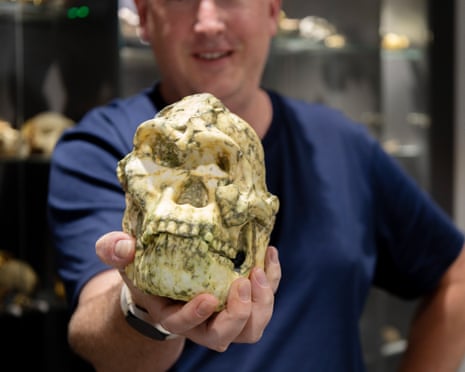
The research team identified significant cranial differences, particularly in the nuchal plane—the region at the back of the skull. Martin emphasized the importance of this finding: "The bottom back of the skull is supposed to be fairly conserved in human evolution, which is to say it doesn't change that rapidly. If you find differences between things in the base of the cranium... those differences are more likely to represent different species, because they just don't change readily, evolutionarily speaking. All of the differences we've found are in that region." This anatomical distinction provides strong evidence for species differentiation, as these conservative features rarely vary within a single species.
Implications for Human Evolutionary History
The potential identification of Little Foot as a new species carries profound implications for our understanding of human evolution. Martin suggests this discovery might reveal "not just a point in our human family tree that we hadn't discovered before, but an entire limb of that tree." This perspective aligns with Professor Clarke's long-held belief that Sterkfontein contained two hominin species, though the researchers differ on which species those might be. The discovery challenges the simplicity of our evolutionary narrative and suggests greater diversity among early hominins in Africa than previously recognized.
Scientific Debate and Future Research
The research team has taken a cautious approach, not formally reclassifying Little Foot but instead suggesting that "it is more appropriate that a new species be named by the research team that has spent more than two decades excavating and analysing the remarkable Little Foot specimen." This respectful approach acknowledges the extensive work of the original excavation team while presenting compelling evidence for reconsideration. The study also touches on ongoing debates about Little Foot's age, with estimates ranging from 3.67 million to 2.8 million years old—a disagreement that further complicates the fossil's placement in evolutionary history.

Conclusion: Rewriting Our Evolutionary Story
The Little Foot fossil continues to challenge and expand our understanding of human origins. As one of the most complete hominin specimens ever discovered, its potential reclassification as a new species represents a significant development in paleoanthropology. The research led by Australian scientists, published in the American Journal of Biological Anthropology, demonstrates how new analytical approaches can reveal hidden diversity in the fossil record. Whether Little Foot ultimately receives a new species designation or not, this research underscores the complexity of human evolution and the ongoing nature of scientific discovery in understanding our ancient past.