Neutron Star's Unusual Wind Challenges Cosmic Physics Models
The XRISM space observatory has made a surprising discovery about neutron star GX13+1, revealing a slow, dense wind that defies current astrophysical models. Instead of the expected high-speed blast, researchers observed a fog-like outflow moving at just 1 million km/h, dramatically slower than winds from supermassive black holes. This unexpected finding suggests that accretion disk temperature plays a crucial role in shaping cosmic winds and could fundamentally change our understanding of how energy flows through the universe.
The XRISM space observatory has uncovered a cosmic mystery that challenges fundamental assumptions about how matter and energy behave in extreme environments. During observations of neutron star GX13+1, scientists witnessed an unexpected phenomenon: instead of the anticipated high-speed wind, they detected a slow, dense outflow moving at approximately 1 million km/h. This discovery, detailed in a recent European Space Agency study, contradicts established models of radiation-driven outflows and suggests we may need to rethink how cosmic winds shape the universe.
The Unexpected Observation
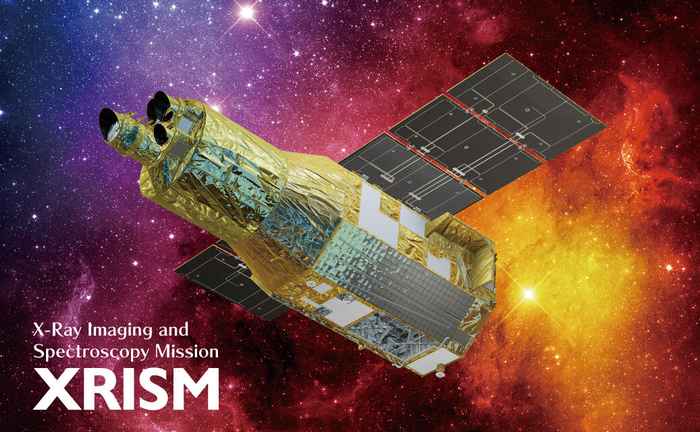
On February 25, 2024, XRISM's Resolve instrument targeted neutron star GX13+1 during a particularly dramatic phase. The system had unexpectedly brightened, reaching or even surpassing what astronomers call the Eddington limit. This critical threshold occurs when radiation pressure from intense energy output becomes strong enough to push incoming matter back into space, typically creating powerful winds. Researchers anticipated seeing the kind of ultrafast outflows previously observed around supermassive black holes, which can reach speeds exceeding 200 million km/h.
Instead, they encountered something entirely different. As lead researcher Chris Done from Durham University explained, "We could not have scheduled this if we had tried. The system went from about half its maximum radiation output to something much more intense, creating a wind that was thicker than we'd ever seen before." Despite the intense outburst, the wind remained remarkably slow by cosmic standards.
Contrasting Cosmic Winds
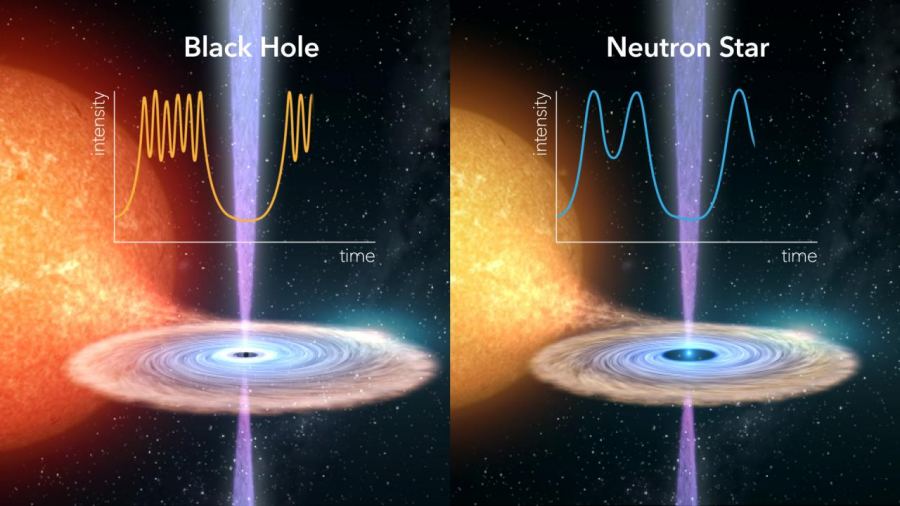
The discovery highlights a fundamental difference between neutron star systems and their supermassive black hole counterparts. Previous XRISM observations of supermassive black holes at the Eddington limit revealed ultrafast, clumpy winds moving at significant fractions of light speed. In stark contrast, the outflow from GX13+1 appeared slow and smooth, creating what researchers describe as a "fog-like" effect that dims surrounding X-ray emissions.
"It is still a surprise to me how 'slow' this wind is," says Chris Done, "as well as how thick it is. It's like looking at the Sun through a bank of fog rolling towards us. Everything goes dimmer when the fog is thick." This dramatic difference in wind characteristics between systems operating at similar Eddington limits poses a significant challenge to current theoretical models.
Temperature as the Key Factor
The research team proposes that the temperature of accretion disks may hold the key to understanding these contrasting wind behaviors. Counterintuitively, accretion disks around supermassive black holes tend to be cooler than those around stellar-mass systems containing neutron stars. This temperature difference affects the type of radiation emitted: supermassive black hole disks primarily emit ultraviolet light, while neutron star systems radiate more strongly in X-rays.
Ultraviolet light interacts with matter more efficiently than X-rays, potentially explaining why radiation pressure generates much faster winds around supermassive black holes. As ESA XRISM project scientist Matteo Guainazzi noted, "When we first saw the wealth of details in the data, we felt we were witnessing a game-changing result. For many of us, it was the realization of a dream that we had chased for decades."
Implications for Cosmic Evolution
These findings have profound implications for our understanding of cosmic evolution. Cosmic winds play a crucial role in regulating star formation and galaxy growth through processes astronomers call "feedback." Winds from central black holes can either compress molecular clouds to trigger star birth or heat and disperse those clouds to halt star formation. In extreme cases, these outflows can regulate the growth of entire galaxies.
The discovery that similar physical processes produce dramatically different outcomes depending on system characteristics suggests we may need to refine our models of cosmic feedback. As Camille Diez, ESA Research fellow, explains, "The unprecedented resolution of XRISM allows us to investigate these objects—and many more—in far greater detail, paving the way for the next-generation, high-resolution X-ray telescope such as NewAthena."
This unexpected observation from GX13+1 demonstrates that even well-established astrophysical principles can yield surprises when examined with advanced instrumentation. The slow, dense wind challenges our fundamental understanding of radiation-driven outflows and opens new avenues for exploring how energy shapes the cosmos across different scales and environments.